Category Archives: Overweight & Obesity

Are We Fat Because We Eat Too Much, Or Lack Physical Activity?

Are we fat because we eat too much, or lack physical activity?

Most people would say, “It’s both.” Most people would be wrong, at least in terms of populations rather than individuals.

Obesity results from a protracted imbalance between energy intake (calories we eat) and energy expenditure (physical activity and resting metabolism).

Overweight and obesity have increased significantly over the last 25 years in most of the developed world. Is it because we started eating more, or that we have so many energy-saving devices that we now expend less energy on physical activity? If we are less active due to technologic advances, yet keep eating as much as in the past, we will gain weight as the excess calories are stored as fat.

Technologic advances over the last 150 years have allowed us to transform from a labor-intensive agrarian economy to one based on services and information. Computers, in particular, have made it much less labor-intensive to get our jobs done. For example, when I was a hospital intern 30 years ago, I made multiple daily trips from the patient care floors downstairs to Radiology to look at x-ray films. Now, the “films” are at my fingertips on computers close to the bedside.

Have trends in technology over the last 25 years continued to reduced the energy expenditure needed to get through our days? Alternatively, are we exercising less? Either explanation would lead to weight gain if caloric intake remained the same.

Researchers in 2008 studied populations in Europe and North America, examining trends in physical activity energy expenditure over time, since the 1980s. Energy expenditure was evaluated with a highly accurate method called “doubly labelled water.” They found that physical activity energy expenditure actually increased over time, although not by much. They conclude that the ballooning waistlines in the study populations are likely to reflect excessive intake of calories.

(All I have is the abstract of the article. I’ll try to get the full article and report back here if anything additional is interesting.)

So according to Westerterp and Speakman, the problem has not been lack of physical activity. We’re simply eating too much.

On the other hand, a 2011 study found that daily work-related energy expenditure decreased by over 100 calories in the U.S. over the last 50 years.  That could certainly contribute to our expanding waistlines.

Steve Parker, M.D.

Reference: Westerterp, K.R., and Speakman, J.R. Physical activity energy expenditure has not declined since the 1980s and matches energy expenditures of wild mammals. International Journal of Obesity, 32 (2008): 1256-1263. Published online May 27, 2008. doi: 10.1038/ijo2008.74

Prostate Cancer Deaths Linked to Overweight and High Insulin Levels

Lancet Oncology in 2008 published a report associating worse prostate cancer outcomes—death, that is—with overweight, obesity, and hyperinsulinemia.

Grapes are an iconic Mediterranean fruit

Researchers looked at data from the respected Physicians’ Health Study, finding 2,546 men who developed prostate cancer during many years of observation. Of these men, 38.8% were overweight (body mass index 25–30) and 3.4% were obese (BMI over 30).

(For definitions of overweight and obesity, and to calculate your body mass index, click here.)

Compared with normal-weight men (BMI under 25) who developed prostate cancer, overweight men with prostate cancer were one-and-a-half times more likely to die from the cancer. Obese men with prostate cancer were two-and-a-half times more likely to die.

A blood test called C-peptide is a marker of insulin resistance and hyperinsulinemia. Obesity is often accompanied by high insulin levels and insulin resistance. Overweight, not so much. Eight hundred twenty-seven of the men with prostate cancer had C-peptide levels drawn at baseline, before diagnosed with cancer. Men with the highest C-peptide levels were almost two-and-a-half times more likely to die of prostate cancer than men with the lowest C-peptide levels.

Study participants having both excess body weight and high C-peptide levels had the worst outcome.

Prostate cancer is the most common invasive cancer in U.S. men, with about 185,000 cases diagnosed every year. It is one of the cancers that can be prevented by following the traditional Mediterranean diet for years. The other prevented cancers are breast, uterus, and colorectal. Obesity predisposes men to cancer of the prostate, colon, rectum, kidney, and esophagus.

The study at hand suggests that if you are overweight or obese and then develop prostate cancer, you have a greater risk of dying from the cancer compared with healthy-weight men. Given that prostate cancer is so common, why not cut your risk of getting it and dying from it by controlling your weight with a Mediterranean-style diet?

Steve Parker, M.D.

Reference: Ma, Jing, et al. Prediagnostic body mass index, plasma C-peptide concentration, and prostate cancer-specific mortality in men with prostate cancer: a long-term survival analysis. Lancet Oncology, online publication October 6, 2008. DOI: 10.1016/S1470-2045(08)70235-3

Are We Fat Because We’re Less Active Now?

Less active

Much of the globe has seen a significant decline in populaton-wide physical activity over the last few decades, according to Nike-sponsored research reported in Obesity Reviews.

Countries involved with the study are the U.S., U.K., Brazil, China, and India.  How did they measure activity levels?

Using detailed historical data on time allocation, occupational distributions, energy expenditures data by activity, and time-varying measures of metabolic equivalents of task (MET) for activities when available, we measure historical and current MET by four major PA domains (occupation, home production, travel and active leisure) and sedentary time among adults (>18 years).

The authors note the work of Church, et al, who found decreased work-related activity in the U.S. over the last half of the 20th century.

Inexplicably, they don’t mention the work of Westerterp and colleagues who found no decrease in energy expenditure in North American and European populations since the 1980s.

More active

My gut feeling is that advanced populations around the globe probably are burning fewer calories by physical activity over the last 50 years, if not longer, thanks to technologic advances.  We in the U.S. are also eating more calories lately.  Since the 1970s, average daily consumption by women is up by 150 calories, and up 300 by men.  Considering both these trends together, how could we not be fat?

Steve Parker, M.D. 

Fat Cell Turnover: Implications for Weight Loss

The number of fat cells in our bodies is constant throughout adult life for both lean and overweight people. When adults gain fat weight, it’s because our individual fat cells store more fat, thereby enlarging. We don’t gain more fat cells. Conversely, when we lose weight, the fat cells shrink.

Our number of fat cells is set during childhood and adolescence. Lean individuals generally have fewer fat cells than overweight people.

In many living tissues, individual cells gradually die off and are replaced by new cells. For example, we shed dead skin cells all the time, but they are replaced just as quickly by new skin cells. A red blood cell lives three months then dies and is replaced. The percentage of cells that die and are replaced over a period of time is called “turnover.”

Researchers in Stockholm recently studied the turnover of fat cells in humans. They measured turnover by analysing the incorporation of carbon-14 derived from nuclear bomb tests in genomic DNA. They found that 10% of fat cells die off and are renewed yearly at all adult ages in both skinny and overweight people.

So what?

Well, if 10% of your fat cells die every year, what if you could prevent them from being replaced with new ones? You would lose weight, as long as your remaining fat cells didn’t swell with more stored fat. Next year, another 10% of your fat cells die, and so on.

How can we prevent dead fat cells from being replaced by new ones? Nobody knows . . . yet. You can bet that pharmaceutical companies are thinking about this.

But I wouldn’t hold my breath. Pharmaceutical intervention will not be available for at least eight to 10 years, if ever.

We already have available, in 2009, a tried and true method for reducing fat mass: Eat Less, Move More.

Steve Parker, M.D.

Reference: Spalding, K.L., et al. Dynamics of fat cell turnover in humans. Nature, 453 (2008): 783-787. Epub May 4, 2008. PMID: 18454136.

Yet Another Epidemic: Fatty Liver In Teens

MedPage Today on May 25, 2012 has an article documenting the rise of fatty liver disease in U.S. teenagers.  Prevalence is now up to one in 10 teens.

An expert quoted in the article says it’s tied in with the rise of childhood obesity.

Youth obesity in the U.S. tripled from the early 1980s to 2000, ending with a 17% obesity rate. Overweight and obesity together describe 32% of U.S. children. Some experts believe this generation of kids will be the first in U.S. history to suffer a decline in life expectancy, related to obesity.

I wrote about a small research study that found a very-low-carb diet more effective against fatty liver, compared to a low-calorie diet.  But that involved adults.

University of Colorado researchers indicate that for weight loss, a low-carb, high-protein diet is safe and effective in adolescents.

Diet researchers found in 2008 that a modified low-carbohydrate Mediterranean diet had significant potential to reduce fatty liver.  My Low-Carb Mediterranean Diet (minus the wine option) would probably help overweight teens with fatty liver disease, but it’s never been tested in such a clinical trial.

Steve Parker, M.D.

Why Are Kidney Stones Increasingly Common?

MedPage Today on May 24, 2012, reported a substantial increase (70%) in the prevalence of kidney stones in the U.S. over the last two decades. Stone prevalence rose from 5.2% to 8.8% of the population.  Prevalence was based on the periodic National Health and Nutrition Examination Survey, which asked participants, “Have you ever had kidney stones?”

Stone prevalence began rising even earlier.  Again according to the third NHANES, prevalence increased from 3.8 percent in the period 1976 to 1980 to 5.2 percent in the years 1988 to 1994.

Older studies estimated that one in 10 men and one of every 20 women will have at least one painful stone by the age of 70.

What are kidney stones make of?  

Three out of four patients with kidney stones form calcium stones, most of which are composed primarily of calcium oxalate or, less often, calcium phosphate.  Pure uric acid stones are less than 10 percent of all stones.

Why the increased stone prevalence?  Does diet count?

Unfortunately, the article doesn’t offer any reasons or even speculation as to why kidney stones are more prevalent.  Kidney stones have a genetic component, but our genes have changed very little over just two decades.  I have to wonder if diet plays a role.

UpToDate.com reviewed diet as a risk factor for kidney stones.  Some quotes:

There are several dietary factors that may play an important role in many patients: fluid, calcium, oxalate, potassium, sodium, animal protein, phytate, sucrose, fructose, and vitamin C intake. Lower intake of fluid, calcium, potassium, and phytate and higher intake of sodium, animal protein, sucrose, fructose, and vitamin C are associated with an increased risk for calcium stone formation. The type of beverage may also influence the risk. The effect of calcium intake is paradoxical, with a decreased risk with increased dietary calcium and an increased or no change in risk with calcium supplements.

The combination of dietary factors may also have a significant impact upon stone risk. As an example, the Dietary Approaches to Stop Hypertension (DASH) diet is high in fruits and vegetables, moderate in low-fat dairy products, and low in animal protein. Based upon an analysis of three large cohorts, adherence to a DASH-style diet lowered the risk for kidney stones among men, older women, younger women, high body mass index (BMI) individuals, and low BMI individuals. Thus, the DASH diet is a reasonable option in the attempt to reduce the risk of stone recurrence.

Higher sucrose [table sugar] intake is associated with an increased risk of stone formation in younger and older women.
Standard advice to prevent initial and recurrent kidney stones is to avoid low urine output.  Do that by drinking plenty of fluid.
Although I pay about $400 a year for access to UpToDate, they offer free public access to some of the website.  Here’s the UpToDate poop sheet on kidney stones.
Extra credit:  Medical conditions that predispose to kidney stones include primary hyperparathyroidism, obesity, gout, diabetes, and medullary sponge kidney.

Yo-Yo Dieting In Women Has No Effect On Death Rates

Yo-yo dieting isn’t so bad after all.

Fifteen years ago there was lots of hand-wringing in the medical community about the potential dire physical consequences of “weight cycling” – also known as yo-yo dieting. You know, lose a bunch of weight, gain it back, lose it again, gain it back, etc.

After a while, yo-yo dieting as a medical issue dropped off the radar screen. 

A 2009 study in the Archives of Internal Medicine reported on the cardiovascular and mortality effects of yo-yo dieting in women in the massive Nurses’ Health Study. One in four of these women could be classified as weight cyclers. The worst ones were defined as those who lost at least 9.1 kg ( 20 pounds) at least three times.

It turns out the weight cyclers had the same rates of death from cardiovascular disease or any cause as the women who didn’t cycle. They did eventually gain more overall weight as they aged, compared to the non-cyclers.

Note that this study investigated death rates only. So there may have been effects on rates of high blood pressure, diabetes, gout, stroke, etc, that we wouldn’t know about.

Steve Parker, M.D.

Field, Alison, et al. Weight cycling and mortality among middle-aged or older women. Archives of Internal Medicine, 169 (2009): 881-886.

Medical Costs of Obesity, Yearly, Per Person: $1,723

The direct yearly medical cost of being obese in the U.S. is $1,723 per obese person, according to a 2009 report in Obesity Reviews. Being overweight is a relative bargain at $266.

These numbers translate into $114 billion yearly, or five to 10 percent of total healthcare spending.

Not included in the numbers are costs such as lost productivity due to obesity-related illness and replacement or repair of items that wear out or break due to excessive amounts of physical stress. Not to mention pain and suffering.

Are you overweight or obese? Find out with an online body mass index calculator.

Want to do anything about it? See my “Prepare for Weight Loss” series.

Steve Parker, M.D.

Reference: Tsai, A.G., et al. Direct Medical Cost of Obesity in the U.S.A. Obesity Reviews, online January 6, 2009. doi: 10.1111/j.1467-789x.2009.00708.x

Can You Hari Hachi Bu?

I loved the sound of this phrase – hari hachi bu – even before I knew what it meant.

“Hari hachi bu” comes from the Japanese islands of Okinawa. It refers to eating a meal until you’re only 80% full, then stop eating. It’s a method to control weight.

Okinawa, remember, is one of the longevity hot spots in Dan Buettner’s Blue Zones.

But would it really work for many in Western culture? Probably not. We don’t have the discipline to stick with it long-term. Maybe for a day.

One of the currently popular dieting gimmicks is to eat every 3-4 hours while awake. The rationale is, “you need the energy.” If you eat 5-6 meals a day, you’re not cutting back on total calories even if you eat only until 80% full.

As long as you’re eating a fair amount of carbohydrates, you can store plenty of energy as glucose in glycogen – in your liver and muscles – to easily live without eating for at least 8-12 hours. So, there’s no “need” to eat every 3-4 hours. If there were, we would have gone extinct years ago. At rest, you’re getting about 60% of your energy supplied by metabolism of fats, not carbohydrates. Most people can live without all food, but not water, for about two months.

Plenty of people have said, “I’m going to lose weight by cutting back on food intake.” I don’t have scientific data to back it up, but I’d bet that a food diary works better.

A simple weight-loss or management plan that would work better for Western world inhabitants would be:

Don’t eat anything man-made.

So off limits are bread, rolls, soft drinks, table sugar, high fructose corn syrup, pancakes, pizza, potato chips, Pringles, pies, cookies, cake, casseroles, cannolis, Doritos, Ding-Dongs, Snickers, etc. I’d complicate it just a bit by also avoiding naturally starchy foods like potatoes and corn.

For those who don’t like the negativity of “don’t eat that,” here’s the positive spin:

Eat only natural, minimally processed food.

In other words, eat fresh fruit, fresh vegetables, eggs, meat, chicken, fish, olive oil, nuts, etc. These are God-made foods, not man-made.

Steve Parker, M.D.

Low-Fat and Low-Carb Diets End Battle in Tie After Two Years, But…

Dieters on low-fat and low-carb diets both lost the same amount of weight after two years, according to a 2011 article in Annals of Internal Medicine. Both groups received intensive behavioral treatment, which may be the key to success for many. Low-carb eating was clearly superior in terms of increased HDL cholesterol, which may help prevent heart disease and stroke.

The study was funded by the National Institutes of Health and was carried out in Denver, St. Louis, and Philadelphia.

How Was It Done?

Healthy adults aged 18-65 were randomly assigned to either a low-fat or low-carbohydrate diet. Average age was45. Average body mass index was 36 (over 25 is overweight; over 30 is obese). Of the 307 participants, two thirds were women. People over 136 kg (299 lb) were excluded from the study—I guess because weight-loss through dieting is rarely successful at higher weights.

The low-carb diet: Essentially the Atkins diet with a prolonged induction phase (12 weeks instead of two). Started with maximum of 20 g carbs daily, as low-carb vegetables. Increase carbs by 5 g per week thereafter as long as weight loss progressed as planned. Fat and protein consumption were unlimited. The primary behavioral goal was to limit carb consumption.

The low-fat diet: Calories were limited to 1200-1500 /day (women) or 1500-1800 (men). [Those levels in general are too low, in my opinion.] Diet was to consist of about 55% of calories from carbs, 30% from fat, 15% from protein. The primary behavioral goal was to limit overall energy (calorie) intake.

Both groups received frequent, intensive in-person group therapy (lead by dietitians and psychologists) periodically over two years, covering such topics as self-monitoring, weight-loss tips, management of weight regain and noncompliance with assigned diet. Regular walking was recommended.

Body composition was measured periodically with dual X-ray absorptiometry.

What Did They Find?

Both groups lost about 11% of initial body weight, but tended to regain so that after two years, both groups average losses were only 7% of initial weight. Weight loss looked a little better at three months in the low-carb group, but it wasn’t statistically significant.

The groups had no differences in bone density or body composition.

No serious cardiovascular illnesses were reported by participants. During the first six months, the low-carb group reported more bad breath, hair loss, dry mouth, and constipation. After six months, constipation in the low-carb group was the only symptom difference between the groups.

During the first six months, the low-fat group had greater decreases in LDL cholesterol (with potentially less risk of heart disease), but the difference did not persist for one or two years.

Increases in HDL cholesterol (potentially heart-healthy) persisted throughout the study for the low-carb group. The increase was 20% above baseline.

About a third of participants in both groups dropped out of the study before the two years were up. [Not unusual.]

My Comments

Contrary to several previous studies that suggested low-carb diets are more successful than low-fat, the study at hand indicates they are equivalent as long as dieters get intensive long-term group behavioral intervention.

Low-carb critics warn that the diet will cause osteoporosis, a dangerous thinning of the bones that predisposes to fractures. This study disproves that.

Contrary to widespread criticism that low-carb eating—with lots of fat and cholestrol— is bad for your heart, this study notes a sustained elevation in HDL cholesterol (“good cholesterol”) on the low-carb diet over two years. This also suggests the low-carbers followed the diet fairly well. The investigators also note that low-carb eating tends to produce light, fluffy LDL cholesterol, which is felt to be less injurious to arteries compared to small, dense LDL cholesterol.

A major strength of the study is that it lasted two years, which is rare for weight-loss diet research.

A major weakness is that the investigators apparently didn’t do anything to document the participants’ degree of compliance with the assigned diet. It’s well known that many people in this setting can follow a diet pretty well for two to four months. After that, adherence typically drops off as people go back to their old habits. The group therapy sessions probably improved compliance, but we don’t know since it wasn’t documented.

How often do we hear “Diets don’t work.” Well, that’s just wrong.

Overall, it’s an impressive study, and done well.

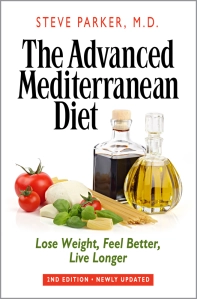
Individuals wishing to lose weight on their own can’t replicate these study conditions because of the in-person behavioral intervention component. There are lots of self-help calorie-restricted balanced diets (e.g., Sonoma Diet, The Zone, Thin For Life, Advanced Mediterranean Diet) and low-carb diets (e.g., the Atkins Diet, the Low-Carb Mediterranean or Ketogenic Mediterranean Diets). On-line support groups—e.g., Low Carb Friends and SparkPeople and 3 Fat Chicks on a Diet—could supply some necessary behavioral intervention strategies and support.

Choosing a weight-loss program is not as easy as many think. (Well, I’ll admit that choosing the wrong one is easy.) I review the pertinent issues in my “Prepare for Weight Loss” page.

Steve Parker, M.D.

Reference: Foster GD, Wyatt HR, Hill JO, Makris AP, Rosenbaum DL, Brill C, Stein RI, Mohammed BS, Miller B, Rader DJ, Zemel B, Wadden TA, Tenhave T, Newcomb CW, & Klein S (2010). Weight and metabolic outcomes after 2 years on a low-carbohydrate versus low-fat diet: a randomized trial. Annals of internal medicine, 153 (3), 147-57 PMID: 20679559