Category Archives: Overweight & Obesity

The Endocrine Society is Worried About Environmental Chemicals: You Should Be, Too

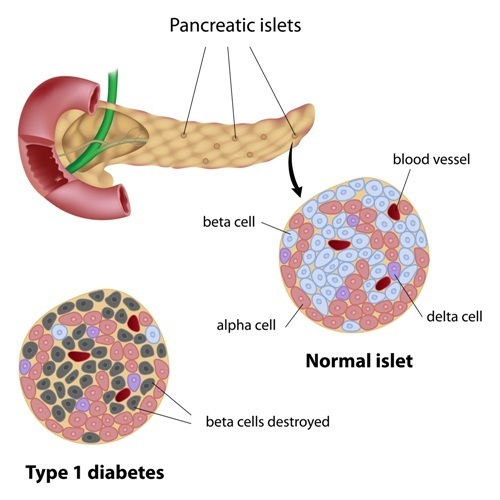
See text for mention of pancreatic alpha and beta cells

See text for mention of pancreatic alpha and beta cells

A panel of university-based scientists convened by The Endocrine Society recently reviewed the available literature on health effects of endocrine-disrupting chemicals (aka EDCs). The executive summary is available free online. Some excerpts:

The full Scientific Statement represents a comprehensive review of the literature on seven topics for which there is strong mechanistic, experimental, animal, and epidemiological evidence for endocrine disruption, namely: obesity and diabetes, female reproduction, male reproduction, hormone-sensitive cancers in females, prostate cancer, thyroid, and neurodevelopment and neuroendocrine systems. EDCs such as bisphenol A, phthalates, pesticides, persistent organic pollutants such as polychlorinated biphenyls, polybrominated diethyl ethers, and dioxins were emphasized because these chemicals had the greatest depth and breadth of available information.

*  *  *

Both cellular and animal models demonstrate a role for EDCs in the etiology of obesity and T2D [type 2 diabetes]. For obesity, animal studies show that EDC-induced weight gain depends on the timing of exposure and the age of the animals. Exposures during the perinatal period [the weeks before and after birth] trigger obesity later in life. New results covering a whole range of EDC doses have underscored the importance of nonmonotonic dose-response relationships; some doses induced weight increase, whereas others did not. Furthermore, EDCs elicit obesity by acting directly on white adipose tissue, al- though brain, liver, and even the endocrine pancreas may be direct targets as well.

Regarding T2D, animal studies indicate that some EDCs directly target 􏰁beta and alpha cells in the pancreas, adipocytes, and liver cells and provoke insulin resistance together with hyperinsulinemia. These changes can also be associated with altered levels of adiponectin and leptin— often in the absence of weight gain. This diabetogenic action is also a risk factor for cardiovascular diseases, and hyperinsulinemia can drive diet-induced obesity. Epide- miological studies in humans also point to an association between EDC exposures and obesity and/or T2D; however, because many epidemiological studies are cross-sectional, with diet as an important confounding factor in humans, it is not yet possible to infer causality.

RTWT.

Bix at Fanatic Cook blog says foods of animal origin are the major source of harmful persistent organic pollutants, some of which act as ECDs.

Keep your eyes and ears open for new research reports on this critically important topic.

Steve Parker, M.D.

Hunger Is NOT an Epidemic in America

I’m hearing ads on the radio that many in the U.S., including children, are suffering from hunger. Nutrition science journals in the last few years are covering “food insecurity,” which many would assume means not having enough food or fearing the lack of food.

These concerns seem at odds with the fact that two-thirds of us are overweight or obese. So how many of us at normal or below-average weights suffer from food insecurity or hunger?

James Bovard breaks it down for you in an excellent article. Read the whole thing. Some morsels (heh):

  • seven times as many (low income) children are obese as are underweight
  • 40% of food stamp (SNAP) users are obese, compared to 30% in the overall U.S. adult population
  • if the food stamp program would prohibit purchase of sugary drinks, it would prevent 141,000 children from becoming fat and save a quarter million adults from type 2 diabetes

Fat hungry people would be less hungry if they’d cut way back on refined, nutrient-poor carbohydrates, replacing with protein and healthy fats.

Steve Parker, M.D.

Sure-Fire Ways to Overcome a Weight-Loss Stall

It's time to re-commit to the program

It’s time to re-commit to the program

It’s common on any weight-loss program to be cruising along losing weight as promised, then suddenly the weight loss stops although you’re still far from goal weight. This is the mysterious and infamous stall.

Once you know the cause for the stall, the way to break it becomes obvious. The most common reasons are:

  • you’re not really following the full program any more; you’ve drifted off the path, often unconsciously
  • instead of eating just until you’re full or satisfied, you’re stuffing yourself
  • you need to start or intensify an exercise program
  • you’ve developed an interfering medical problem such as adrenal insufficiency (rare) or an underactive thyroid; see your doctor
  • you’re taking interfering medication such as a steroid; see your doctor
  • your strength training program is building new muscle that masks ongoing loss of fat (not a problem!).

If you still can’t figure out what’s causing your stall, do a nutritional analysis of one weeks’ worth of eating, with a focus on daily digestible carb (net carbs) and calorie totals. You can do this analysis online at places like FitDay (http://fitday.com/) or Calorie Count (http://caloriecount.about.com/).

What you do with your data depends on whether you’re losing weight through portion control (usually reflecting calorie restriction) or carb counting. Most people lose weight with one of these two methods.

If you’re a carb counter, you may find you’ve been sabotaged by “carb creep”: excessive dietary carbs have insidiously invaded you. You need to cut back. Even if you’re eating very-low-carb, it’s still possible to have excess body fat, even gain new fat, if you eat too many calories from protein and fat. It’s not easy, but it’s possible.

Those who have followed a calorie-restriction weight loss model for awhile may have become lax in their record-keeping. The stall is a result of simply eating too much. Call it “portion creep.” You need to re-commit to observing portion sizes.

A final possible cause for a weight loss stall is that you just don’t need as many calories as you once did. Think about this. Someone who weighs 300 lb (136 kg) is eating perhaps 3300 calories a day just to maintain a steady weight. He goes on a calorie-restricted diet (2800/day) and loses a pound (0.4 kg) a week. Eventually he’s down to 210 lb (95.5 kg) but stalled, aiming for 180 lb (82 kg). The 210-lb body (95.5 kg) doesn’t need 3300 calories a day to keep it alive and steady-state; it only needs 2800 and that’s what it’s getting. To restart the weight loss process, he has to reduce calories further, say down to 2300/day. This is not the “slowed down metabolism” we see with starvation or very-low-calorie diets. It’s simply the result of getting rid of 90 pounds of fat (41 kg) that he no longer needs to feed.

Steve Parker, M.D.

How Many Years Does Obesity Cut From Lifespan?

Are you tired of this stock photo yet?

Are you tired of this stock photo yet?

MedPageToday has the details. A quote:

In a computer modeling study, very obese men lost just over 8 years of life compared with normal-weight men, and very obese women lost as many as 6 years, Steven Grover, PhD, of McGill University, and colleagues reported online in the Lancet Diabetes and Endocrinology.

They also found that very obese men and women (defined as a body mass index [BMI] of 35 and higher) lost about 19 years of healthy life, defined as living free of chronic disease such as diabetes and cardiovascular disease.

Note that “very obese” in this context has a specific definition: body mass index 35 or higher. Calculate yours.

The number of life years lost to obesity and disease were highest for those who were very obese in young adulthood and presumably stayed obese for years. In other words, becoming very obese at age 60 is not as dangerous as at 25.

I first got interested in weight loss in the 1990s when I had an office-based primary care medical practice. It was obvious that many of the medical problems I was treating were related to years of obesity. Believe me, you’re much better off preventing those problems via diet and exercise.

In the 1990’s, both Dr. Dean Ornish’s vegetarian diet and Dr. Robert Atkins low-carb diet were very popular, and you couldn’t find any two diets that were more polar opposites. And do you remember Susan Powter and her “Stop the Insanity” diet? My desire to lead my patients onto the right path resulted in the first edition of my Advanced Mediterranean Diet.

Click for The Lancet study abstract.

Steve Parker, M.D.

Laparoscopic Bariatric Surgery: Gastric Bypass Yields Greater Weight Loss But Higher Complications Compared to Banding

Click for details. Try the Advanced Mediterranean Diet first!

We’re Eating 500 More Calories Per Day Than We Did in the 1970s

The U.S. adult population in the 1970s ate an average of 2400 calories a day. By the 2000s, our calories were up to 2900.

Putting a face on the statistics

Putting a face on the statistics

What did average adult weight do as we increased daily calories by 500? Increased by 8.6 kg, from 72.2 to 80.6 kg. In U.S. units, that’s a 19 lb gain, from 159 to 178 lb.

Children increased their average intake by 350 cals/day over the same time frame.

If I recall correctly, I’ve seen other research suggesting the daily calorie consumption increase has been more like 150 to 350 per day (lower end for women, higher for men).

Details are in the American Journal of Clinical Nutrition.

The study authors don’t say for sure why we’re eating more, but offhand mention an “obesogenic food environment.”  They don’t think decreased physical activity is the cause of our weight gain; we’re fatter because we eat too much.

Steve Parker, M.D.

h/t Ivor Goodbody

Are Estrogens Causing the Obesity Epidemic?

Eating too much tofu?

Too much tofu?

James P. Grantham and Maciej Henneberg of the School of Medical Sciences (University of Adelaide, Adelaide, Australia) suggest that estrogen-like compounds in the environment are causing obesity. Read about their hypothesis in a recent issue of PLOS One. I don’t know if they’re right, but their idea deserves consideration.

A couple estrogen-like substances they mention are in soy and polyvinyl chloride (PVC). We ingest these xenoestrogens. I had not been aware that soy consumption is positively linked to obesity.

The authors don’t instill confidence by using weak references such as #22.

I didn’t see the trendy “endocrine disruptors” moniker in the article.

Read the whole enchilada.

Steve Parker, M.D.

Obese Male Teens Earn Less Later in Life

…according to an article at Science Daily. How much less do they make? “Up to 18%.” The association was found in multiple Western nations.

Not really new info, but there you go.

My Advanced Mediterranean Diet book for about $14 (USD) could pay huge dividends over time to an obese young man. The Kindle version‘s only $8!

Steve Parker, M.D.

Do Artificial Sweeteners Cause Overweight and Type 2 Diabetes?

We don’t know with certainty yet. But a recent study suggests that non-caloric artificial sweeteners do indeed cause overweight and type 2 diabetes in at least some folks. The study at hand is very small, so I wouldn’t bet the farm on it. I’m not even changing any of my recommendations at this point.

exercise for weight loss and management, dumbbells

“Too many diet sodas” doesn’t explain this whole picture


The proposed mechanism for adverse metallic effects is that the sweeteners alter the mix of germs that live in our intestines. That alteration in turn causes  the overweight and obesity. See MedPageToday for the complicated details. The first part of the article is about mice; humans are at the end.

Some quotes:

“Our results from short- and long-term human non-caloric sweetener consumer cohorts suggest that human individuals feature a personalized response to non-caloric sweeteners, possibly stemming from differences in their microbiota composition and function,” the researchers wrote.

The researchers further suggested that these individualized nutritional responses may be driven by personalized functional differences in the micro biome [intestinal germs or bacteria].

***

Diabetes researcher Robert Rizza, MD, of the Mayo Clinic in Rochester, Minn., who was not involved with the research, called the findings “fascinating.”

He noted that earlier research suggests people who eat large amounts of artificial sweeteners have higher incidences of obesity and diabetes. The new research, he said, suggests there may be a causal link.

“This was a very thorough and carefully done study, and I think the message to people who use artificial sweeteners is they need to use them in moderation,” he said. “Drinking 17 diet sodas a day is probably a bad idea, but one or two may be OK.”

I won’t argue with that last sentence!

Finally, be aware the several clinical studies show no linkage between human consumption of non-caloric artificial sweeteners and overweight, obesity, and T2 diabetes.

Steve Parker, M.D.

New Weight Loss Drug, Contrave, May Work But Also Cause Suicidal Thoughts

"These are flying off the shelves!"

“This’ll fix you right up!”

The FDA recently approved a new weight-loss drug for the U.S. market. It’s marketed as Contrave, a combination of naltrexone and bupropion.

Neither of the components is new. Naltrexone’s been used to treat alcohol and narcotic addiction. Bupropion, e.g., Wellbutrin, is for depression and smoking cessation.

Contrave joins two other recent drugs for weight loss. Belviq and Qsymia were approved in 2012. I still haven’t run across anyone using those.

To qualify for the new formulation, you need a body mass index over 30, or over 27 plus one or more weight-related medical condition such as type 2 diabetes or high blood pressure.

If you haven’t lost over 5% of your initial body weight in the first 12 weeks of use, the FDA recommends stopping the drug.

Potential adverse effects include suicidal thoughts and seizures. More commonly, users may experience headache, nausea, constipation, diarrhea, dizziness, insomnia, and dry mouth. Constipation and diarrhea?!

Even with the drug, you still have to be on a reduced-calorie diet and exercise program.

Why not try the Advanced Mediterranean Diet or Ketogenic Mediterranean Diet first?

Steve Parker, M.D.