Category Archives: Low-Carb Mediterranean Diet

Mediterranean Diet Among The Best For Type 2 Diabetes

…announces an article at Reuters.  An excerpt:

Ajala and her colleagues reviewed the results of 20 studies comparing the effect of seven popular diets on adults with type 2 diabetes. Mediterranean diets, low-carb diets, high-protein diets and low glycemic index diets – which rank foods by how quickly their carbs turn into glucose – all lowered participants’ blood sugar.

After following the diet for at least six months, the people on a Mediterranean eating plan also lost an average of 4 pounds. No other diet had a significant impact on weight, according to the findings published in the American Journal of Clinical Nutrition.

“We were quite surprised by the Mediterranean diet in particular,” Ajala said. “I would have thought that low-carb would have been the best for losing weight, but Mediterranean seems to be better.”

Beautiful woman smiling as she is wine tasting on a summer day.Here’s the traditional healthy Mediterranean diet.

The researchers also found that HDL cholesterol (“good cholesterol) and triglycerides improved on the Mediterranean diet, low-carb diets, and low glycemic index diets.  Those moves tend to protect against heart disease.

Steve Parker, M.D.

Do Fruits and Vegetables Prevent Disease? Which Ones?

Potential answers are in the American Journal of Clinical Nutrition (2012).  I quote:

For hypertension, coronary heart disease, and stroke, there is convincing evidence that increasing the consumption of vegetables and fruit reduces the risk of disease. There is probable evidence that the risk of cancer in general is inversely associated with the consumption of vegetables and fruit. In addition, there is possible evidence that an increased consumption of vegetables and fruit may prevent body weight gain. As overweight is the most important risk factor for type 2 diabetes mellitus, an increased consumption of vegetables and fruit therefore might indirectly reduces the incidence of type 2 diabetes mellitus. Independent of overweight, there is probable evidence that there is no influence of increased consumption on the risk of type 2 diabetes mellitus. There is possible evidence that increasing the consumption of vegetables and fruit lowers the risk of certain eye diseases, dementia and the risk of osteoporosis. Likewise, current data on asthma, chronic obstructive pulmonary disease, and rheumatoid arthritis indicate that an increase in vegetable and fruit consumption may contribute to the prevention of these diseases. For inflammatory bowel disease, glaucoma, and diabetic retinopathy, there was insufficient evidence regarding an association with the consumption of vegetables and fruit.

It bothers me that vegetables and fruits are lumped together: they’re not the same.

All of my diets—Advanced Mediterranean, Low-Carb Mediterranean, and Ketogenic Mediterranean—provide plenty of fruits and vegetables.

Low-Carb Research Update

Grapes are an iconic Mediterranean fruit

Grapes are an iconic Mediterranean fruit

As much as possible, I base my nutrition and medical recommendations on science-based research published in the medical literature.

In the early 2000s, a flurry of research reports demonstrated that very-low-carb eating (such as the Atkins diet) was safe and effective for short-term weight management and control of diabetes.  Eighty hours of literature review in 2009 allowed me to embrace low-carbohydrate eating as a logical and viable option for many of my patients. The evidence convinced me that the relatively high fat content of many low-carb diets was nothing to worry about long-term.

By the way, have you noticed some of the celebrities jumping on the low-carb weight-management bandwagon lately?  Sharon Osbourne, Drew Carey, and Alec Baldwin, to name a few.

My primary nutrition interests are low-carb eating, the Mediterranean diet, and the paleo diet.  I’m stay up-to-date with the pertinent scientific research.  I’d like to share with you some of the pertinent research findings of the last few years.

Low-Carb Diets

  • Low-carb diets reduce weight, reduce blood pressure, lower triglyceride levels (a healtlhy move), and raise HDL cholesterol (another good trend).  These improvements should help reduce your risk of heart disease.  (In the journal Obesity Reviews, 2012.)
  • Dietary fat, including saturated fat, is not a cause of vascular disease such as heart attacks and atherosclerosis (hardening of the arteries).  (Multiple research reports.)
  • If you’re overweight and replace two sugary drinks a day with diet soda or water, you’ll lose about four pounds over the next six months.  (American Journal of Clinical Nutrition, 2012.)
  • United States citizens obtain 40% of total calories from grains and added sugars.  Most developed countries are similar.  Dr. Stephan Guyenet notes that U.S. sugar consumption increased steadily “…from 6.3 pounds [2.9 kg] per person per year in 1822 to 107.7 pounds [50 kg] per person in 1999.  Wrap your brain around this: in 1822 we ate the amount of added sugar in one 12-ounce can of soda every five days, while today we eat that much sugar every seven hours.”
  • A very-low-carb diet improves the memory of those with age-related mild cognitive impairment. Mild cognitive impairment is a precursor to dementia.  (University of Cincinnati, 2012.)
  • High-carbohydrate and sugar-rich diets greatly raise the risk of mild cognitive impairment in the elderly. (Mayo Clinic study published in the Journal of Alzheimers’ Disease, 2012.)
  • Compared to obese low-fat dieters, low-carb dieters lose twice as much fat weight.  (University of Cincinnati, 2011.)
  • Diets low in sugar and refined starches are linked to lower risk of age-related macular degeneration in women.  Macular degeneration is a major cause of blindness.  (University of Wisconsin, 2011.)
  • A ketogenic (very-low-carb) Mediterranean diet cures metabolic syndrome (Journal of Medicinal Food, 2011.)
  • For type 2 diabetics, replacing a daily muffin (high-carb) with two ounces (60 g) of nuts (low-carb) improves blood sugar control and reduces LDL cholesterol (the “bad” cholesterol). (Diabetes Care, 2011.)
  • For those afflicted with fatty liver, a low-carb diet beats a low-fat diet for management. (American Journal of Clinical Nutrition, 2011.)
  • For weight loss, the American Diabetes Association has endorsed low-carb (under 130 g/day) and Mediterranean diets, for use up to two years. (Diabetes Care, 2011.)
  • High-carbohydrate eating doubles the risk of heart disease (coronary artery disease) in women.  (Archives of Internal Medicine, 2010.)
  • One criticism of low-carb diets is that they may be high in protein, which in turn may cause bone thinning (osteoporosis).  A 2010 study shows this is not a problem, at least in women.  Men were not studied.  (American Journal of Clinical Nutrition.)
  • High-carbohydrate eating increases the risk of developing type 2 diabetes (American Journal of Clinical Nutrition, 2010.)
  • Obesity in U.S. children tripled from 1980 to 2000, rising to 17% of all children.  A low-carb, high-protein diet is safe and effective for obese adolescents.  (American Journal of Clinical Nutrition, 2010.)

Mediterranean Diet

The traditional Mediterranean diet is well established as a healthy way of eating despite being relatively high in carbohydrate: 50 to 60% of total calories.  It’s known to prolong life span while reducing rates of heart disease, cancer, strokes, diabetes, and dementia.  The Mediterranean diet is rich in fresh fruits, vegetables, nuts and seeds, olive oil, whole grain bread, fish, and judicious amounts of wine, while incorporating relatively little meat.  It deserves your serious consideration.  Here’s the latest scientific literature on this diet.

  • Olive oil is linked to longer life span and reduced heart disease.  (American Journal of Clinical Nutrition, 2012.)
  • Olive oil is associated with reduced stroke risk.  (Neurology, 2012).
  • The Mediterranean diet reduces risk of sudden cardiac death in women.  (Journal of the American Medical Association, 2011.)
  • The Mediterranean diet is linked to fewer strokes visible by MRI scanning.  (Annals of Neurology, 2011.)
  • It reduces the symptoms of asthma in children.  (Journal of the American Dietetic Association, 2011.)
  • Compared to low-fat eating, it reduces the incidence of type 2 diabetes by 50% in middle-aged and older folks.  (Diabetes Care, 2010.)
  •  A review of all available well-done studies on the Mediterranean diet confirms that it reduces risk of death, decreases heart disease, and reduces rates of cancer, dementia, Parkinson’s disease, stroke, and mild cognitive impairment.  (American Journal of Clinical Nutrition, 2010.)
  • It reduces the risk of breast cancer.  (American Journal of Clinical Nutrition, 2010.)
  • The Mediterranean diet reduces Alzheimer’s disease.   (New York residents, Archives of Neurology, 2010).
  • It slowes the rate of age-related mental decline.  (Chicago residents, American Journal of Clinical Nutrition, 2010.)
  • In patients already diagnosed with heart disease, the Mediterranean diet prevents future heart-related events and preserves heart function.  (American Journal of Clinical Nutrition, 2010.)

Clearly, low-carb and Mediterranean-style eating have much to recommend them.  Low-carb eating is particularly useful for weight loss and management, and control of diabetes, prediabetes, and metabolic syndrome.  Long-term health effects of low-carb eating are less well established.  That’s where the Mediterranean diet shines.

That’s why I ask many of my patients to combine both approaches: low-carb and Mediterranean.  Note that several components of the Mediterranean diet are inherently low-carb: olive oil, nuts and seeds, fish, some wines, and many fruits and vegetables.  These items easily fit into a low-carb lifestyle and may yield the long-term health benefits of the Mediterranean diet.  I’ve posted on the Internet a Low-Carb Mediterranean Diet that will get you started, if interested.

Is a carbohydrate-restricted Mediterranean diet healthier than the traditional Mediterranean diet?  Nobody knows.

Steve Parker, M.D.

Study Finds Low-Carb Diet Reduces Heart Disease Risk Factors

Obesity Reviews just published details of a recent meta-analyis of low-carbohydrate diet effects on cardiovascular risk factors.

A systematic review and meta-analysis were carried out to study the effects of low-carbohydrate diet (LCD) on weight loss and cardiovascular risk factors (search performed on PubMed, Cochrane Central Register of Controlled Trials and Scopus databases). A total of 23 reports, corresponding to 17 clinical investigations, were identified as meeting the pre-specified criteria.

Over a thousand obese patients were involved.  By eating low-carb, blood pressure dropped by 3–4 mmHg, average body weight decreased by 7 kg (15 lb), body mass index dropped by 2, triglycerides decreased by 30 mg/dl, hemoglobin A1c dropped by 0.21% (absolute decrease), insulin levels fell by 2.23 micro IU/ml, while HDL cholesterol rose by 1.73 mg/dl.  LDL cholesterol didn’t change.

The authors conclusion:

Low-carboydrate diet was shown to have favourable effects on body weight and major cardiovascular risk factors; however the effects on long-term health are unknown.

I haven’t see the full text of the article yet, so I don’t know the carbohydrate level under review.  I bet it’s under 50 g of digestible carb daily.  My Low-Carb Mediterranean Diet starts at 20-30 grams a day.

Steve Parker, M.D.

Reference:  Santos, F.L., et al. Systematic review and meta-analysis of clinical trials of the effects of low carbohydrate diets on cardiovascular risk factors. Obesity Reviews. Article first published online: 20 AUG 2012. DOI: 10.1111/j.1467-789X.2012.01021.x

Best Weight Loss Diet? Mediterranean and Low-Carb Diets Beat Low-Fat Diet Over Six Years

Israeli flag

Remember Shai et al’s 2008 DIRECT study that compared weight loss over two years on either a low-fat, Mediterranean, or low-carb diet?  I didn’t think so.  I reviewed it at length in 2008.

The same researchers in Israel recently reported the results of an additional four years of follow-up.  Do you know of any other weight loss study over that length of time?  I don’t either.

Of the 322 original study participants, 259 were available for follow-up for an additional four years.  Of these, 67% told researchers they had continued their originally assigned diet.

Over six years, the weight loss was as follows:

  • 0.6 kg (about a pound) in the low-fat group
  • 1.7 kg (almost 4 pounds) in the low-carb cohort
  • 3.1 kg (almost 7 pounds) in the Mediterranean group

The difference between the low-carb and Mediterranean groups was not statistically significant.

Almost all the original study participants (86%) were men, so it’s debatable whether these results apply to women.  I bet they do.  I assume most of the participants were Israeli, so you can also debate whether results apply to other nationalities or ethnicities.

Bottom Line

For long-term weight management, Mediterranean and low-carb diets appear to be more effective than traditional low-fat, calorie-restricted dieting.

Beth Mazur at her Weight Maven blog has some worthwhile comments about the study.  See also Laura Dolson’s remarks at About.com.

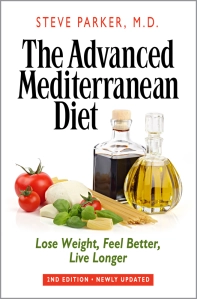
Incidentally, my Advanced Mediterranean Diet (2nd Edition) book has both Mediterranean and low-carb diets.

Steve Parker, M.D.

In U.S. Adolescents, Diabetes and Prediabetes Doubled in the Last Decade

In June, 2012, the journal Pediatrics had an article stating that the incidence of diabetes and prediabetes in U.S. adolescents increased from 9% in 1999 to 23% in 2008.  The finding is based on the NHANES survey of 12 to 19-year-olds, which included a single fasting blood sugar determination.

The investigators offered no solution to the problem.  I’m no pediatrician, but my guess is that the following measures would help prevent adolescent type 2 diabetes and prediabetes:

I’m sure many of the adolescent type 2 diabetics and prediabetics are overweight or obese.  A 2010 study out of Colorado found a low-carbohydrate, high-protein diet safe and effective for adolescents.  Fortunately, the decades-long ascent of the adolescent obesity rate in the U.S. seems to have peaked for now.

Steve Parker, M.D.

PS: I scanned the article quickly and don’t remember if the researchers broke down the diabetes cases by type 1 and type 2.  I’d be shocked if type 1 diabetes rose this much over the last decade.

Reference: Martinez-Gonzalez, M.A., et al.  Adherence to Mediterranean diet and risk of developing diabetes: prospective cohort study.  British Medical Journal, BMJ,doi:10.1136/bmj.39561.501007.BE (published online May 29, 2008).

Which Diet Is Better for Weight Loss: Low-Carb or Low-Fat?

I’ve written about a 2009 New England Journal of Medicine article comparing weight-loss diets of various macronutrient (fat, protein, carbohydrate) composition. Its conclusion: Cut back on calories and you will lose weight, regardless of macrontrient percentages.

A blurry low-carb high-fat breakfast

A blog reader, Matt, brought up some interesting comments and questions. What follows will make little sense unless you read that prior post.

Matt writes:

Dr. Parker,

If the study folks didn’t do the real low carb diet because they “knew” that ketosis wouldn’t occur, couldn’t they at least have tried it, since what they were trying to prove was a calorie is a calorie?

Looking at the menus, the diet that they are purporting as low carb is really nothing close to a real low carb diet. It is a slightly lower carb diet, and not high enough in fat to prove anything. 35% carb is not Atkins phase anything. For a participant consuming 1600 calories, that’s 140g carb — too high for anyone attempting to restrict carbohydrates for health.

Please comment on the fact that the highest carb diet provided the worst lipid improvement.

Following up a little more, there really is no inference whatsoever that can be made with regard to a low carb diet with this study. Did you read the sample menu? No low carb diet phase would have any of the following as a typical meal. You can tell by looking at the menus that they had to be really PC about a “high fat” diet as well. I mean skim milk on a low carb / high fat diet? Note my level of surprise by the ? and ! in the parens with each “typical meal” option:

Breakfast:

1 poached egg

1/2 bagel (??)

4 oz apple juice (????!!!!)

skim (????) milk

Lunch:

1/2 cup spaghetti (??!!)

1/2 cup squash

1/2 cup peppers

1/2 cup mushrooms

1.5 T Olive Oil

1 small banana (????)

Dinner:

2 oz beef

1 small potato (????!!!!)

3/4 mixed veggies/legumes corn/carrots/lima/peas/green beans (???? since these are among the higher carb veggie choices)

1/2 cup cabbage

1 mini box raisins (??)

1 small apple (?????)

4 t Olive Oil

7 walnut halves

Snack

Skim (???) Milk

1 Graham cracker sheet (??????)

If you want a LC diet with what LC would consider a higher level of carbs (~60g) you need to do this:

Breakfast:

2-4 poached eggs

2 T olive oil

spinach

1 cup whole milk

Lunch:

1/2 cup squash

1/2 cup peppers

1/2 cup mushrooms

2 T Olive Oil

4-6 oz fish

Dinner:

4-6 oz beef

3/4 mixed lower carb (cruciferous/leafy) veggies such as broccoli, collards or other greens,

1/2 cup cabbage

2 T Olive Oil

20 walnut halves

1/2 cup low carb fruit such as cantaloupe

Snack

1/2 cup strawberries

1 cup whole milk yogurt ot cottage cheese

*******************************************

My response:

Thanks for your thoughtful comments/questions, Matt.

You’re right: The “low-carb” diet they studied indeed was not very low-carb, as succinctly illustrated by the sample menu you provided. (I didn’t read the supplementary appendix myself.)

You mention that the “highest carb diet provided the worst lipid improvement.” It’s not that clear-cut.

(Lipid changes are on pages 865-7 of the article, for anyone following along. Conventional wisdom is that better cardiovascular health is associated, generally, with lower total cholesterols, higher HDL chol, lower total LDL chol, and lower triglycerides.)

The study had two low-fat diets, with either 55 or 65% of total calories derived from carbohydrates. The two high fat diets had either 35 or 45% of total calories from carbohydrates.

Total cholesterol levels dropped by about 3 mg/dl in the low-fat diets compared to “no change” in the high-fat diets (2-year values). Measured at 6 months, total chol levels were down by about 5.5 mg/dl in the low-fat groups, and about 3 mg/dl in the high-fat groups. Baseline total chol levels for the whole group averaged 202 mg/dl.

The authors on page 865 write:

All the diets reduced risk factors for cardiovascular disease and diabetes at 6 months and 2 years. At 2 years, the two low-fat diets and the highest-carbohydrate diet decreased low-density lipoprotein [LDL] cholesterol levels more than did the high-fat diets or lowest-carbohydrate diet.

The lowest-carb diet increased HDL chol more than the highest carb diet, but we’re only talking about a 2 mg/dl difference measured at 2 years. HDL rose in all groups. Average baseline HDL level for the entire study group was 49 mg/dl.

All diets decreased triglycerides similarly, by 12-17%.

The magnitude of these changes is not great, and I question whether clinically important. The take-home point for me is that low-carb eating may not be (and probably isn’t) as atherogenic as warned by the medical community 15-20 years ago, judging purely from lipid changes. Other studies found similar numbers. But we’ve already agreed the this was not a serious trial of low-carb dieting.

The study authors write that HDL chol is a biomarker for carbohydrate intake: reducing dietary carbs tends to increase HDL chol levels, and vice versa.

If I understand “Nutrient Intake per Day” in Table 2 correctly, the participants who were told to increase their percentage of calories from fat really didn’t do it: they reduced it by 3.5% (!?). The low-fat cohorts had more success with compliance.

Clearly, it’s quite difficult to get free-living people to change their macronutrient intake and sustain the change for even six months, much less two years. Would compliance have been better if subjects had been allowed to choose a diet according to their natural inclinations? Maybe.

A recent study suggests that eating low-carb helps with prevention of weight regain because it burns an extra 300 calories a day compared to those eating low-fat.  Dr. Barbara Berkeley took a close look at this research on June 30.

Steve Parker, M.D.

Low-Carb Mediterranean Diet Beats Low-Fat For Recent-Onset Type 2 Diabetes

A low-carbohydrate Mediterranean diet dramatically reduced the need for diabetic drug therapy, compared to a low-fat American Heart Association diet. The Italian researchers also report that the Mediterranean dieters also lost more weight over the first two years of the study.

Investigators suggest that the benefit of the Mediterranean-style diet is due to greater weight loss, olive oil (monunsaturated fats increase insulin sensitivity), and increased adiponectin levels.

The American Diabetes Association recommends both low-carbohydrate and low-fat diets for overweight diabetics. The investigators wondered which of the two might be better, as judged by the need to institute drug therapy in newly diagnosed people with diabetes.

Methodology

Newly diagnosed type 2 diabetics who had never been treated with diabetes drugs were recruited into the study, which was done in Naples, Italy. At the outset, the 215 study participants were 30 to 75 years of age, had body mass index over 25 (average 29.5), had average hemoglobin A1c levels of 7.73, and average glucose levels of 170 mg/dl.

Participants were randomly assigned to one of two diets:

  1. Low-carb Mediterranean diet (“MED diet”, hereafter): rich in vegetables and whole grains, low in red meat (replaced with poultry and fish), no more than 50% of calories from complex carbohydrates, no less than 30% of calories from fat (main source of added fat was 30 to 50 g of olive oil daily). [No mention of fruits. BTW, the traditional Mediterranean diet derives 50-60% of energy from carbohydrates.]
  2. Low-fat diet based on American Heart Association guidelines: rich in whole grains, restricted additional fats/sweets/high-fat snacks, no more than 30% of calories from fat, no more than 10% of calories from saturated fats.

Both diet groups were instructed to limit daily energy intake to 1500 (women) or 1800 (men) calories.

All participants were advised to increase physical activity, mainly walking for at least 30 minutes a day.

Drug therapy was initiated when hemoglobin A1c levels persisted above 7% despite diet and exercise.

The study lasted four years.

Results

By the end of 18 months, twice as many low-fat dieters required diabetes drug therapy compared to the MED dieters—24% versus 12%.

By the end of four years, seven of every 10 low-fat dieters were on drug therapy compared to four of every 10 MED dieters.

The MED dieters lost 2 kg (4.4 lb) more weight by the end of one year, compared to the low-fat group. The groups were no different in net weight loss when measured at four years: down 3–4 kg (7–9 lb).

Compared to the low-fat group, the MED diet cohort achieved significantly lower levels of fasting glucose and hemoglobin A1c throughout the four years.

The MED diet group saw greater increases in insulin sensitivity, i.e., they had less insulin resistance.

The MED group had significantly greater increases in HDL cholesterol and decreases in trigylcerides throughout the study. Total cholesterol decreased more in the MED dieters, but after the first two years the difference from the low-fat group was not significantly different.

Comments

The MED diet here includes “no more than 50% of calories from complex carbohydrates.” The authors don’t define complex carbs. Simple carbohydrates are monosaccharides and disaccharides. Complex carbs are oligosaccharides and polysaccharides. Another definition of complex carbs is “fruits, vegetables, and whole grains,” which I think is definition of complex carbs applicable to this study.

The editors of the Annals of Internal Medicine conclude that:

A low-carbohydrate, Mediterranean-style diet seems to be preferable to a low-fat diet for glycemic control in patients with newly diagnosed type 2 diabetes.

I’m sure the American Diabetes Association will take heed of this study when they next revise their diet guidelines. If I were newly diagnosed with type 2 diabetes, I wouldn’t wait until then.

This study dovetails nicely with others that show prevention of type 2 diabetes with the Mediterranean diet, reversal of metabolic syndrome—a risk factor for diabetes—with the Mediterranean diet (supplemented with nuts), and prevention of type 2 diabetes and pre-diabetes in people who have had a heart attack.

Studies like these support my Low-Carb Mediterranean Diet.

For general information on Mediterranean eating, visit Oldways.

Steve Parker, M.D.

Reference: Esposito, Katherine, et al. Effects of a Mediterranean-style diet on the need for antihyperglycemic drug therapy in patients with newly diagnosed type 2 diabetes. Annals of Internal Medicine, 151 (2009): 306-314.

Is a Low-Carb Diet Safe for Obese Adolescents?

I answered this question last year at the Diabetic Mediterranean Diet Blog, based on research from the Department of Pediatrics, University of Colorado.

It’s an important question. Childhood obesity in the U.S. tripled from the early 1980s to 2000, ending with a 17% obesity rate. Overweight and obesity together describe 32% of U.S. children. Some experts believe this generation of kids will be the first in U.S. history to suffer a decline in life expectancy, related to obesity.

Steve Parker, M.D.

Low-Carb Diets Killing People?

Animal-based low-carb diets are linked to higher death rates, according to a study in the Annals of Internal Medicine. On the other hand, a vegetable-based low-carb diet was associated with a lower mortality rate, especially from cardiovascular disease.

As always, “association is not causation.”

Since I created the Low-Carb Mediterranean Diet, it’s just a matter of time before someone asks me, “Haven’t you heard that low-carb diets cause premature death?” So I figured I’d better take a close look at the new research by Fung and associates.

It’s pretty weak and unconvincing. I have little to add to the cautious editorial by William Yancy, Matthew Maciejewski, and Kevin Schulman published in the same issue of Annals.

The study at hand was observational over many years, using data from the massive Nurses’ Health Study and Health Professionals’ Follow-up Study. To find the putative differences in mortality, the researchers had to compare the participants eating the most extreme diets. The 80% of study participants eating in between the extremes were neutral in terms of death rates.

They report that “…the overall low-carbohydrate diet score was only weakly associated with all-cause mortality.” Furthermore,

These results suggest that the health effects of a low-carbohydrate diet may depend on the type of protein and fat, and a diet that includes mostly vegetable sources of protein and fat is preferable to a diet with mostly animal sources of protein and fat.

In case you’re wondering, all these low-carb diets derived between 35 and 42% of energy (total calories) from carbohydrate, with an average of 37%. Anecdotally, many committed low-carbers chronically derive 20% of calories from carbohydrate (100 g of carb out of 2,000 calories/day). The average American eats 250 g of carb daily, 50-60% of total calories.

Yancy et al point out that “Fung and coworkers did not show a clear dose-response relationship in that there was not a clear progression of risk moving up or down the diet deciles.” If animal proteins and fats are lethal, you’d expect to see some dose-response relationship, with more deaths as animal consumption gradually increases over the deciles.

The Fung study is suggestive but certainly not definitive. Anyone predisposed to dietary caution who wants to eat lower-carb might benefit from eating fewer animal sources of protein and fat, and more vegetable sources. Fung leaves it entirely up to you to figure out how to do that. Compared to an animal-based low-carb diet, the healthier low-carb diet must subsitute more low-carb vegetables and higher-fat plants like nuts, seeds, seed oils and olive oil, and avocadoes, for example. What are higher-protein plants? Legumes?

You can see how much protein and fat are in your favorite vegetables at the USDA Nutrient Database.

The gist of Fung’s study dovetails with the health benefits linked to low-meat diets such as traditional Mediterranean and DASH. On the other hand, if an animal-based low-carb diet helps keep a bad excess weight problem under control, it too may by healthier than the standard American diet.

See the Yancy editorial for a much more detailed and cogent analysis. As is so often the case, “additional studies are needed.”

Steve Parker, M.D.

Reference: Fung, Teresa, et al. Low-carbohydrate diets and all-cause and cause specific mortality: Two cohort studies. Annals of Internal Medicine, 153 (2010): 289-298.