Category Archives: Longevity

Why Is My Green Tea Brown?

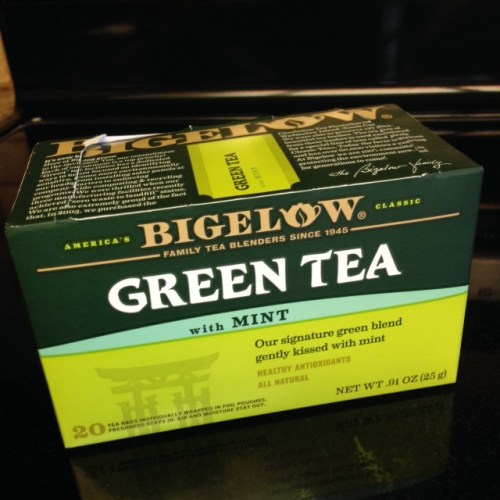
At least the box is green

At least the box is green

I’ve been reading for years how green tea is or might be particularly healthful for us. It’s not just hearsay. Respected journals like the American Journal of Clinical Nutrition suggest green tea’s virtues: longevity and less risk of type 2 diabetes, heart disease, and dementia, to name a few off the top of my head.

I’ve never been a tea drinker. Oh, sure, I’ve drunk iced tea at restaurants now and then. That’s black tea.

I drink coffee, about five cups a day. I work a fair number of night shifts, and the caffeine helps wake me up and keep me alert.

On a lark recently, I thought I’d cut back on the coffee and try green tea. In case you’re wondering, green tea has a third of the caffeine content of coffee.

So I go to the supermarket tea section and pick up a box of Bigelow green tea bags. There were five or 10 other options. Why Bigelow? I think I’ve heard the name before. Or the box appealed to me subconsciously. I brew it up easy-peasy per directions and this is what I see:
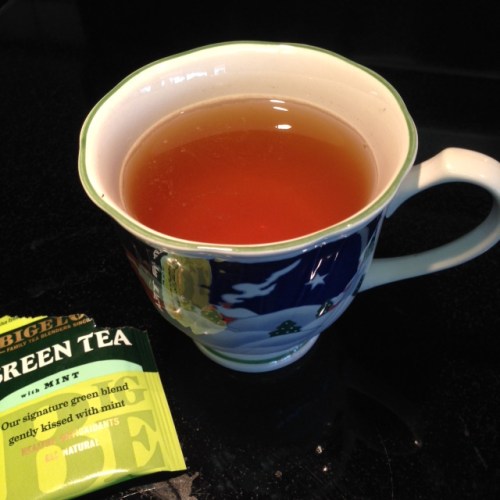
Mild, pleasant flavor but may not have the phytonutrients I seek

Mild, pleasant flavor but may not have the phytonutrients I seek

WTF?!

Does that look green to you?

I didn’t think so.

Naturally I start googling. The rest of this paragraph may or may not be true, like everything you read on the Internet. Green tea by tradition should be green. The supermarket teas are not traditional. They are oxidized, not fresh, or processed incorrectly. They’re a bastardization of traditional green teas with primary goals of mass distribution and adequate shelf life. They don’t have much of the “healthy” components you are looking for: anti-oxidants, polyphenols, EGCG, catechins, etc. Phytonutrient content of teas varies from batch to batch. The epidemiological studies that support green tea as healthful involved mostly Asian populations, often Japanese, who were drinking traditional green tea that’s green. Brewing is important: 170°F (77°C) for no more than 2–3 minutes. The fresher the tea leaves, the better. Special packaging may help preserve freshness. A Japanese-sounding brand may use tea grown outside of Japan.

I don’t know any avid green tea drinkers. So I go to Amazon.com and start reading reviews. Apparently there’s a whole world of green tea culture and I’ve just scratched the surface. I’ve already spent three hours on this green tea thing. Judging from Amazon reviews, here are some green teas that might be worth trying: Kirkland Ito En Matcha Blend Japanese Green Tea Bags and Yamamotoyama Green Tea—Sushi Style. (Kirkland is a Costco brand.) (See update below for more teas.) I probably also need to seek out a local Japanese ethnic food store and see what they’ve got or recommend.

I’m not raggin’on Bigelow green tea specifically. I bet most supermarket green teas in the U.S. will come out brown. For all I know, Bigelow may be jam-packed with healthy phytonutrients that will help you live to 110. It has a mild pleasant taste that I enjoyed. I didn’t miss the higher caffeine load of coffee. But it’s not traditional green tea.

I still want to try a green tea habit. If you can give me some pointers, please do so below or email me at steveparkermd AT gmail DoT com. (Do we still have to hide email addresses from bots?)

Steve Parker, M.D.

PS: Just because green tea may be healthful for Southeast Asians, that’s no guarantee it works for other ethnicities.

PPS: I’m not at all convinced that green tea is a panacea that will help me stay healthy or live longer.

PPPS: Green tea is one of Franziska Spritzler’s low-carb beauty foods.

Update July 1, 2016: Camelopardalis on Twitter recommended Fuijukyu loose leaves. I’m also reading good reviews on Jade Leaf Matcha Ceremonial Grade tea.
Steve Parker MD, Advanced Mediterranean Diet

Two diet books in one

Obesity May Soon Affect Overall Longevity in U.S.

That excess weight can shorten your life

That excess weight can shorten your life

“The medical community seems to be under a fog that we can constantly and forever reduce death rates, and that’s simply not true,” said Professor Olshansky, who published a study in 2012 showing that life spans for white women without a high school diploma had declined, a rare event in developed countries.

“You need to look at the health status of the living,” not the mortality statistics of the dead, he said, adding that obesity is afflicting younger generations in a way that will eventually make the numbers worse.

RTWT at The New York Times. 

Do something about your obesity before it’s too late.

Steve Parker, M.D.


Book Review: “Stop the Clock: The Optimal Anti-Aging Strategy”

dementia, memory loss, Mediterranean diet, low-carb diet, glycemic index, dementia memory loss

“I wish we could have read PD Mangan’s book thirty years ago!”

I read P.D. Mangan’s 2015 book, Stop the Clock: The Optimal Anti-Aging Strategy. I give it five stars in Amazon’s rating system. High recommended.

♦   ♦   ♦

I approached this book with trepidation. I like PD Mangan even though I’ve never met him. We’ve interacted on Twitter and at our blogs. You can tell from his blogging that he’s very intelligent. I don’t know his educational background but wouldn’t be surprised if he has a doctorate degree. My apprehension about the book is that I was concerned it would be brimming with malarkey and scams. Fortunately, that’s not the case at all.

Twin studies have established that 25% of longevity is genetic. That leaves a lot of lifestyle factors for us to manipulate.

I’m not familiar with the anti-aging scientific literature and don’t expect it will ever be something I’ll spend much time on. But it’s an important topic. I’ll listen to what other smart analysts—like Mr. Mangan—have to say about it.

It’s quite difficult to do rigorous testing of anti-aging strategies on free-living humans. So the best studies we have were done with worms, rodents, and monkeys; the findings may or may not apply to us. For example, long-term calorie restriction—about 30% below expected energy needs—is known to prolong life span in certain worms and rodents, with mixed results in rhesus monkeys. It’s the rare person who would follow such a low-calorie diet for years as an experiment. I doubt I would do it even if proven to give me an extra five years of life. I like to eat.

There are several prominent theories of how and why animals age. The author thinks the major factors are:

  1. oxidative stress
  2. inflammation
  3. a decline in autophagy (perhaps most important)

An effective anti-aging program should address these issues.

In the anti-aging chapter of his book, The South Asian Health Solution, internist Ronesh Sinha says that “Lifestyle practices that reduce excess inflammation in the body will help delay the aging process.” Dr. Sinha is a huge exercise advocate and low-carb diet proponent.

Mr. Mangan makes a convincing argument that a good way to forestall aging is to apply hormetic stress. Hormesis is a phenomenon whereby a beneficial effect (e.g., improved health, stress tolerance, growth, or longevity) results from exposure to low doses of an agent or activity that is otherwise toxic or lethal when given at higher doses.

Needs a bit more hormetic stress

Needs a bit more hormetic stress

In case you’re not familiar with hormesis, here’s a major example. Lack of regular exercise leads is linked to premature death from heart disease and cancer. Starting and maintaining an exercise program leads to greater resistance to injury and disease and longer life span. On the other hand, too much exercise is harmful to health and longevity. We see that in professional athletes and excessive marathon runners. Something about exercise—in the right amount—enhances the body’s intrinsic repair mechanisms. That’s the hormetic effect of exercise; one mechanism is by turning on autophagy.

Autophagy is the body’s natural process for breaking down and removing or recycling worn-out cellular structures. This wearing-out occurs daily and at all ages.

If you’re thinking Mr. Mangan recommends exercise as an anti-aging strategy, you’re exactly right. Especially resistance training and high intensity training. His specific recommendations are perfectly in line with what I tell my patients.

Calorie restriction is another form of hormesis; the body reacts by up-regulating stress defense mechanisms. As a substitute for calorie restriction, the author recommends intermittent fasting. Intermittent fasting increases insulin sensitivity, which leads to enhanced autophagy. Fasting seems perfectly reasonable if you think about it, which very few do. Many of us eat every three or four hours while awake, whether a meal or a snack. If you think about it, that’s not a pattern that would be supported by evolution. In the Paleolithic era, we often must have gone 12–16 hours or even several days without food. Hominins without the resiliency to do that would have died off and not passed their genes down to us.

Steve Parker MD, Advanced Mediterranean DIet

Naturally low-carb Caprese salad: mozzarella cheese, tomatoes, basil, extra virgin olive oil

Another anti-aging trick is a low-carb diet, defined as under 130 grams/day, or under 20% of total calories. It may work via insulin signaling and weight control.

Glutathione within our cells is a tripeptide antioxidant critical for clearing harmful reactive oxygen species (free radicals). We need adequate glutathione to prevent or slow aging. Cysteine is the peptide that tends to limit our body’s production of glutathione. We increase our cysteine supply either through autophagy (which recycles protein peptides) or diet. Dietary sources of cysteine are proteins, especially from animal sources. Whey protein supplements and over-the-counter n-acetyl cysteine are other sources. Fasting is another trick that increases cysteine availability via autophagic recyling.

I don’t recall the author ever mentioning it, but if you hope to maximize longevity, don’t smoke. Even if it has hormetic effects. Maybe that goes without saying in 2015.

When I read a book like this, I always run across tidbits of information that I want to remember. Here are some:

  • those of us in the top third of muscular strength have a 40% lower risk of cancer (NB: you increase your strength through resistance training not aerobics)
  • exercise helps prevent cognitive decline and dementia, at least partially via enhanced autophagy
  • exercise increases brain volume (in preparing to do this review I learned that our brains after age 65 lose 7 cubic centimeters of volume yearly)
  • optimal BMI may be 20 or 21, not the 18.5-25 you’ll see elsewhere (higher BMI due to muscle mass rather than fat should not be a problem)
  • Scientist Cynthia Kenyon: “Sugar is the new tobacco.” (in terms of aging)
  • phytochemicals (from plants, by definition) activate AMPK, a cellular energy sensor that improves stress defense mechanisms and increases metabolic efficiency
  • curcumin (from the spice turmeric) activates AMPK
  • coffee promotes autophagy
  • he does not favor HGH supplementation
  • in the author’s style of intermittent fasting, you’re not reducing overall calorie intake, just bunching your calories together over a shorter time frame (e.g., all 2,500 calories over 6-8 hours instead of spread over 24)
  • mouse studies suggest that intermittent fasting could reduce risk of Alzheimer’s disease and Parkinsons disease
  • consider phytochemical supplements: curcumin, resveratrol, green tea extract
  • calorie-restriction mimetics include resveratrol, curcumin, nicotinamide, EGCG, and hydroxycitrate
  • supplemental resveratrol at 150 mg/day improved memory and cognition in humans

The author provides very specific anti-aging recommendations that could be followed by just about anyone. Read the book for details. Scientists are working feverishly to develop more effective anti-aging techniques. I look forward to a second edition of this book in three to five years.

Steve Parker, M.D.

PS: People with certain medical conditions, such as diabetics taking drugs that can cause hypoglycemia, should not do intermittent fasting without the blessing of their personal physician. If you have any question about your ability to fast safely, check with your doctor.

PPS: If you need to lose weight on a low-carb diet, consider my Advanced Mediterranean Diet or Ketogenic Mediterranean Diet.

Omega-3 Fatty Acids Linked to Improved Strength and Muscle Size in Elderly

Rich sources of omega-3 fatty acids include salmon, sardines, herring, trout, and mackerel

Rich sources of omega-3 fatty acids include salmon, sardines, herring, trout, and mackerel

Admittedly it was a small study but it was randomized and the only intervention applied was for the experimental group to take 1.86 grams of EPA and 1.5 grams of DHA daily for six months. The control group was given corn oil. Study participants were 60–85 years old. The specific form of the fish-derived fatty acids was a proprietary product called Lovaza.

Improved strength during aging should help with maintenance of independent daily activities and prevention of falls. In other words, these fatty acids are anti-aging. I’d like to see the study replicated with more study participants.

I don’t know if the study was paid for by Lovaza’s manufacturer, nor whether that would influence results.

This study supports my recommendation of cold-water fatty fish (great sources of omega-3 fatty acids) in all my diets:

Steve Parker, M.D.


How Many Years Does Obesity Cut From Lifespan?

Are you tired of this stock photo yet?

Are you tired of this stock photo yet?

MedPageToday has the details. A quote:

In a computer modeling study, very obese men lost just over 8 years of life compared with normal-weight men, and very obese women lost as many as 6 years, Steven Grover, PhD, of McGill University, and colleagues reported online in the Lancet Diabetes and Endocrinology.

They also found that very obese men and women (defined as a body mass index [BMI] of 35 and higher) lost about 19 years of healthy life, defined as living free of chronic disease such as diabetes and cardiovascular disease.

Note that “very obese” in this context has a specific definition: body mass index 35 or higher. Calculate yours.

The number of life years lost to obesity and disease were highest for those who were very obese in young adulthood and presumably stayed obese for years. In other words, becoming very obese at age 60 is not as dangerous as at 25.

I first got interested in weight loss in the 1990s when I had an office-based primary care medical practice. It was obvious that many of the medical problems I was treating were related to years of obesity. Believe me, you’re much better off preventing those problems via diet and exercise.

In the 1990’s, both Dr. Dean Ornish’s vegetarian diet and Dr. Robert Atkins low-carb diet were very popular, and you couldn’t find any two diets that were more polar opposites. And do you remember Susan Powter and her “Stop the Insanity” diet? My desire to lead my patients onto the right path resulted in the first edition of my Advanced Mediterranean Diet.

Click for The Lancet study abstract.

Steve Parker, M.D.

Mediterranean Diet Linked to Longer Telomeres. So What?

Grapes are an iconic Mediterranean fruit

Grapes are an iconic Mediterranean fruit

Telomeres are very trendy in the research community. Like chia seeds and kale with hipster foodies.  Telomeres are repetitive chains of amino acids attached to strands of your DNA. The longer your telomeres, the lower your risk of chronic disease and premature death, generally speaking.

The massive Nurses Health Study showed that women who ate a Mediterranean-style diet had the longer telomeres, which is good. That fits with other evidence of greater longevity and lower chronic disease rates in Mediterranean dieters.

Click for a brief pertinent article at NEJM Journal Watch, which includes a link to the original research report.

To lose weight with the Mediterranean diet, check out my book, The Advanced Mediterranean Diet (2nd edition).

Steve Parker, M.D.

PS: We don’t know if telomeres are longer in men eating Mediterranean-style

Do Low-Carb Diets Cause Death?

Adult life is a battle against gravity. Eventually we all lose.

Adult life is a battle against gravity. Eventually we all lose.

Japanese researchers say low-carb diets are causing premature death. I’m skeptical.

The potentially healthful side effects linked to low-carb eating include reduced weight, higher HDL cholesterol, and lower triglycerides and blood pressure. The Japanese investigators wondered if the improved cardiovascular risk factors seen with low-carb diets actually translate into less heart disease and death.

How Was the Study At Hand Done?

The best way to test long-term health effects of a low-carb diet (or any diet) is to do a randomized controlled trial. You take 20,000 healthy and very similar people—not rodents—and randomize half of them to follow a specific low-carb diet while the other half all eat a standard or control diet. Teach them how to eat, make damn sure they do it, and monitor their health for five, 10, or 20 years. This has never been, and never will be, done in humans. The Nazis may have done it, but it’s not published. In the old days, we could do this study on inmates of insane asylums or prisons.

What we have instead are observational studies in which people voluntarily choose what they’re eating, and we assume they keep eating that way for five or 10+ years. You also assume that folks who choose low-carb diets are very similar to other people at the outset. You depend on regular people to accurately report what and how much they’re eating. You can then estimate how much of their diet is derived from carbohydrate and other macronutrients (protein and fat), then compare health outcomes of those who were in the top 10% of carb eaters with those in the bottom 10%. (We’ve made a lot of assumptions, perhaps too many.)

Of the observational studies the authors reviewed, the majority of the study participants were from the U.S. or Sweden. So any true conclusions may not apply to you if you’re not in those countries. In looking for articles, they found no randomized controlled trials.

The observational studies estimated carb consumption at the outset, but few ever re-checked to see if participants changed their diets. That alone is a problem. I don’t know about you, but I’ve had significant changes in my diet depending on when I was in college and med school, when I was a bachelor versus married, when my income was higher or lower, and when I had young children versus teenagers. But maybe that’s just me.

The researchers looked at all-cause mortality, deaths from cardiovascular disease, and incidence of cardiovascular disease. They don’t bother to define cardiovascular disease. I assume heart attack, strokes, and peripheral vascular disease. (But aren’t aneurysms, deep vein thrombosis, and pulmonary embolism vascular diseases, too?) Wouldn’t you think they’d carefully define their end-points? I would. Since they were going to all this trouble, why not look at cancer deaths, too?

What Did the Investigators Conclude?

Very low-carbohydrate dieters had a 30% higher risk of death from any cause (aka all-cause mortality) compared to very high-carb eaters. The risk of cardiovascular disease incidence or death were not linked with low-carb diets. Nor did they find protection against cardiovascular disease.

Finally, “Given the facts that low-carbohydrate diets are likely unsafe and that calorie restriction has been demonstrated to be effective in weight loss regardless of nutritional composition, it would be prudent not to recommend low-carbohydrate diets for the time being.”

If Low-Carb Dieters Die Prematurely, What Are They Dying From?

The top four causes of death in the U.S. in 2011, in order, were:

  1. heart attacks
  2. cancer
  3. chronic lower respiratory tract disease
  4. stroke

You’ll note that two of those are cardiovascular disease: heart attacks and stroke. So if low-carb diets promote premature death, it’s from cancer, chronic lung disease, or myriad other possibilities. Seventy-five percent of Americans die from one of the top 10 causes. Causes five through 10 are:

  • accidents
  • Alzheimer disease
  • diabetes
  • flu and pneumonia
  • kidney disease
  • suicide

Problem is, no one has ever linked low-carb diets to higher risk of death from any specific disease, whether or not in the top ten. Our researchers don’t mention that. That’s one reason I’m very skeptical about their conclusion. If you’re telling me low-carb diets cause premature death, tell me the cause of death.

Another frustration of mine with this report is that they never specify how many carbohydrates are in this lethal low-carb diet. Is it 20 grams, 100, 150? The typical American eats 250-300 grams of carb a day. If you’re going to sound the alarm against low-carb diets, you need to specify the lowest safe daily carb intake.

For most of my career—like most physicians—I’ve been wary of low-carb diets causing cardiovascular disease. That’s because they can be relatively high in total fat and saturated fat. In 2009, however, I did my own review of the scientific literature and found little evidence of fats causing cardiovascular disease.

If you’re looking for a reason to avoid low-carb diets, you can cite this study and its finding of premature death. I’m not convinced. I’ll turn it around on you and note this study found no evidence that low-carb diets cause cardiovascular disease. The risk of cardiovascular disease had been the traditional reason for physicians to recommend against low-carb diets.

Steve Parker, M.D.

Reference: Noto, Hiroshi et al. Low-Carbohydrate diets and all-cause mortality: A systematic review and meta-analysis of observational studies. PLoS One, 2013; 8(1): e55050

Despite Ebola, Life Expectancy in U.S. Reaches Record High

Life expectancy at birth reached a record high of 78.8 years in 2012, according to the Centers for Disease Control.

Life expectancy was 81.2 years for females and 76.4 for males. The leading causes of death were the same as in 2011.

Magnesium Supplementation May Enhance Effects of Exercise in Elderly Women

…according to this study published at American Journal of Clinical Nutrition.

Average age of study subjects was 71

Average age of study subjects was 71

Weekly mild exercise sessions were supplemented with 300 mg/day of magnesium. Those taking the supplement showed improved physical performance compared with control subjects. Whether effects are long-lasting is unknown; the study lasted only 12 weeks.

Steve Parker, M.D.

Vegetables and Fruits Once Again Linked to Longevity

MedPageToday has some of the details.  A quote:

The largest benefits were seen in people who ate seven or more servings of fruits and vegetables a day compared with those who ate less than one serving, with the higher level of consumption associated with significantly lower all-cause mortality (hazard ratio 0.67; 95% CI 0.58-0.78), lead researcher Oyinlola Oyebode of University College London, and colleagues, reported online in the Journal of Epidemiology and Community Health.

Zucchini, roma tomatoes, and spaghetti squash

Zucchini, roma tomatoes, and spaghetti squash

The population under study was English. In addition to lower risk of death, the heavy fruit and vegetable consumers had lower rates of cancer and cardiovascular disease. Click for the actual research report.

If seven servings a day seems like a lot, note that a typical serving is only half a cup. You’ll get those on my Advanced Mediterranean Diet.

Steve Parker, M.D.