Category Archives: Diet Reviews

DASH Diet Reduces Risk of Heart Disease and Stroke in Women

U.S News and World Report recently ranked the DASH diet as the No.1 Healthiest Diet.  Today I partly explain why.

The Dietary Approaches to Stop Hypertension (DASH) diet has been shown to lower blood pressure.  Another study associated a DASH-style diet with lower incidence of heart attack and stroke.

The DASH diet is low in total and saturated fats and cholesterol, moderate in low-fat dairy products, high in fruits and vegetables, low in salt, low in sweetened beverages, moderate in whole grains, and low in animal protein but has substantial amounts of plant protein from nuts and legumes.

The DASH diet was designed as a healthy way of eating, not a weight-loss diet.  It is promoted by the National Heart, Lung, and Blood Institute for the prevention and treatment of high blood pressure.  It is also included as an example of a healthy diet in the 2005 Dietary Guidelines for Americans.  Yet many people still have never heard of it.

Researchers affiliated with multiple Boston and Atlanta institutions looked at the participants in the massive Nurses Health Study.  88,517 middle-aged women free of stroke, diabetes, and coronary heart disease were followed between 1980 to 2004.  They filled out food frequency questionnaires designed to assess average food intake over the preceding year.  The researchers constructed a DASH diet score and graded all the study participants in terms of adherence or conformity to the ideal DASH diet.

Over the course of the study, there were 2129 cases of nonfatal heart attack, 976 deaths from coronary heart disease, and 2317 strokes.  (If you read the original study, please note that some numerical errors were corrected in a later journal issue.)

Women with the highest adherence to the DASH Diet had 24% lower risk for coronary heart disease, compared with the women who had the lowest conformity.  Again comparing the same two groups for stroke, the high-adherence women had 18% less incidence of stroke.  There were clear trends for less coronary heart disease and stroke as adherence to the DASH diet increased.

Blood samples were analyzed for a subset of participants.  Higher DASH compliance was significantly associated with lower plasma levels of interleukin-6 and C-reactive protein.  These are markers for the inflammation felt to underlie atherosclerosis and cardiovascular disease.  You want to avoid high inflammatory markers.  The DASH diet scores in this study were not associated with serum lipid changes, although other DASH studies found lower LDL cholesterol and an undesirable reduction in HDL cholesterol.

The researchers examined causes of death in participants, yet did not report any association – positive, negative, or neutral – with DASH score.  I wonder why?  It’s possible that higher DASH scores were associated with higher overall death rates even though they had fewer heart attacks and strokes.  I imagine they also had access to cancer death statistics.  Why no mention?  Academicians are under pressure to publish research reports.  Are they saving the mortality and cancer data for future articles?  Abscence of all-cause mortality numbers is a major weakness of this study.

The DASH diet is similar in composition to the traditional Mediterranean diet.  The main differences are that the Mediterranean diet ignores salt intake, allows wine and other alcohol, and places more emphasis on olive oil and whole grains.  The Mediterranean diet has numerous supportive studies showing prolonged lifespan and less chronic disease: fewer heart attacks and strokes, less cancer, less dementia.  And very recently the Mediterranean diet was associated with a lower incidence of type 2 diabetes mellitus.

Steve Parker, M.D.

References:

Fung, Teresa, et al.  Adherence to a DASH-Style Diet and Risk of Coronary Heart Disease and Stroke in Women.  Archives of Internal Medicine, 168 (2008): 713-720.

Your Guide to Lowering Your Blood Pressure with DASH, from the National Heart, Lung, and Blood Institute

Book Review: The New Sonoma Diet

Last year I read The New Sonoma Diet: Trimmer Waist, More Energy in Just 10 Days, by Dr. Connie Guttersen, RD, PhD, published in 2010. Per Amazon.com’s rating system, I give it four stars (I like it).

♦ ♦ ♦

The New Sonoma weight-loss method works because it counteracts the major cause of overweight—excessive consumption of sugars and refined starches—through portion control. This Mediterranean-style program is likely to reap the major health benefits of the traditional Mediterranean diet: longer life and less chronic disease (heart attacks, strokes, high blood pressure, diabetes, dementia, and cancer).

The New Sonoma Diet: Trimmer Waist, More Energy in Just 10 DaysMost of the food recommendations herein are consistent with Monica Reinagel’s wonderful new book, Nutrition Diva’s Secrets for a Healthy Diet: What to Eat, What to Avoid, and What to Stop Worrying About. On Sonoma, you’ll eat natural, minimally processed, whole foods.

The primary improvements over the 2005 version of Sonoma are the time-saving and budget-saving strategies. The recipes are easier and quicker. I didn’t try any, but they sound yummy. Dr. Guttersen also exands the “Power Foods” from 10 to 12, adding beans and citrus fruit. I’m glad to see the author addressed many of my criticisms of her great 2005 book. I do miss the old refrigerator-ready pull-out depicting the subdivided plates.

Here’s a brief summary for those unfamiliar with Sonoma. There are three Waves. Wave 1 lasts 10 days and is supposed to break your addiction to sugar and refined flour. Wave 2 lasts until your weight-loss goal is reached, and provides more calories, wine if desired, and more variety. Wave 3 is the lifelong maintenance phase: more fruit and veggies, plus occasional sugary desserts, potatoes, and refined flour. Portion size is controlled either by following her exact recipes or through her plate method. Breakfast fits on a 7″ plate (or 2-cup bowl), while lunch and dinner are on 9″ plates, subdivided into various food groups such as proteins, grains, or veggies. Optional recipes are provided for Wave 1 and the first two weeks of Wave 2.

As in 2005, Dr. Guttersen doesn’t reveal how many calories you’ll be eating. My estimate for Wave 3 is 2000 a day. Less for the earlier Waves.

You’ll find indispensible information on shopping and food preparation. Keeping a food journal is rightfully promoted in certain circumstances. I like the discussion of psychological issues, mindful eating, dining out tips, and weight-loss stalls. The mindful eating portion reminded me of Evelyn Tribole’s Intuitive Eating: A Revolutionary Program That Works and Intuitive Eating: A Practical Guide to Make Peace with Food, Free Yourself from Chronic Dieting, Reach Your Natural Weight.

The author makes a few claims that are either wrong or poorly supported by the scientific literature. Examples include: 1) beans are linked to longer life and reduced heart disease risk, 2) grapes are almost as good as wine for heart protection, 3) the health benefits of spinach “border on the miraculous,” and spinach helps prevent inflammatory conditions such as arthritis and asthma, 4) whole grains prevent stroke, gastrointestinal cancer, and diabetes, 5) adding salt and butter for flavor is unhealthy, 6) medicinal qualities of herbs and spices are well documented, 7) saturated fats “are found exclusively in highly processed food products,” 8) you’ll break a lifetime craving for sugary sweets in Wave 1, 9) 64 ounces of water a day is ideal, 10) exercise significanlty helps most people with weight loss, 11) low-carb eating cannot be maintained because it’s unhealthy and unsatisfying, and 12) saturated fats raise the risk of heart disease.

Much of the book reads like an infomercial; at times I even wondered if it was ghost-written by a marketing professional. The author is unflaggingly optimistic. The testimonials would have more credibility if attributed to full names, not just “Betty” or “Bill.” She overstates the health benefits of the individual Power Foods, which are all plant-derived. I’d like to see cold-water fatty fish on the list.

Dr. Guttersen has great faith in observational studies linking specific foods to health outcomes; I have much less faith. Such studies are far from proof that specific foods CAUSE the outcome. They’re just associations, such as swimsuit sales being linked to warm weather. Warm weather doesn’t cause folks to buy swimsuits; the desire to swim does.

Speaking of associations, a multitude of observational studies link whole grain consumption with 20-25% lower risk of heart disease. We may never have proof of cause and effect because the appropriate study is so difficult. Sonoma recommends two whole grain servings a day, which is the heart-healthy “dose” supported by science.

The author’s discussion of exercise is improved over 2005’s, but is still minimal. Why not refer readers to respected Internet resources? We agree that exercise can help with weight-loss stalls and long-term maintenance of weight loss.

Overall, this is one of the healthiest weight-loss programs available. The average person won’t go wrong with Sonoma. In fact, Sonoma-style eating may be the healthiest of all for the normal-weight general public, with the exception of its avoiding saturated and total fat.

Steve Parker, M.D.

Book Review: The Dukan Diet

With a suspicion that the Dukan Diet may be the next diet fad in the U.S., I reviewed The Dukan Diet: 2 Steps to Lose the Weight, 2 Steps to Keep It Off Forever by Pierre Dukan (2011, first American edition). On Amazon.com’s rating system, I give it two stars.

♦ ♦ ♦

Think of Dukan as a Low-Fat Atkins Diet.

The Dukan Diet is apparently very popular in Europe. It’s comprised of four phases. The Attack Phase, also called “Pure Protein,” lasts usually two to seven days. Eat all you want from the protein-rich food list, mostly skinless chicken, low-fat meat, fish, and nonfat dairy. No carbs at all except for the dairy. The Cruise Phase is next: Alternate Pure Protein days with proteins and non-starchy vegetables until you’re at your goal weight. Eat all you want from the low-carb veggie list. Consolidation Phase lasts five days for every pound lost. Eat more variety but limited quantities: two slices of whole grain bread, one portion each of fruit and cheese daily, one or two servings of starchy carbs (e.g., legumes, flour, cereals), plus two “celebration meals” a week, carefully defined. Proteins and low-carb veggies are still unlimited. Finally, the Permanent Stabilization Phase is lifelong and similar to Consolidation Phase, but requires one Pure Protein day per week, such as Thursdays. Also, take no stairs or elevators. All phases include prescribed servings of oat bran.

During the active weight loss phases, this diet is low-fat, low-carb, and high-protein. You don’t have to count carb grams, fat grams, or calories. Presumably, Dr. Dukan has done all that for you, although he never shares the average calories consumed nor the macronutrient breakdown (i.e., what percentage of calories are derived from protein, fat, or carbs). The latter two phases are still very low-fat but allow a bit more carbs.

I liked this book more than I expected. It’s obvious the author has copious experience with dieters, especially women. The writing is clear. He’s a serious, earnest man, not a charlatan. Although some will criticize the book’s repetitiveness, it’s a proven educational technique. For weight management, Dr. Dukan and I agree that 1) weighing daily is good, 2) abstinence from sugar rarely eliminates the longing for sweets, 3) artificial no-calorie sweeteners are OK, 4) the 4-7 pound weight loss in Attack Phase is mostly water, not fat, 5) discipline and willpower are important, 6) after losing weight, you’ll regain it if you ever return to your old ways, and 7) a realistic weight goal is essential.

Dr. Dukan recommends at least 20-30 minutes a day of walking. He provides little information on resistance training, although increasing evidence supports it as a great weight control measure. I wish he’d mentioned high intensity interval training (HIIT).

The book contains numerous recipes, including a week of menus for the Attack Phase. Disappointingly, none of the recipes include nutritional analysis.

You’ll find an index. It doesn’t list glycogen. Insulin, a primary fat-storage hormone, is mentioned on only one page, one sentence.

This is one fat-phobic diet. In Dr. Dukan’s view, “fat in food is the overweight person’s most deadly enemy.” All fat consumption contributes to fatness, and animal fats “pose a potential threat to the heart.” It seems Dr. Dukan never got the memo that total and saturated fat content of foods have little, if anything, to do with heart or other cardiovascular disease. While criticizing Dr. Atkins’ diet for demonizing carbohydrates, Dr. Dukan demonizes fats. Yet Dr. Dukan does all he can to banish both carbohydrates and fats from his weight loss phases.

Dr. Dukan makes several erroneous statements, including 1) all food is made up of only three nutrients, 2) all alcoholic beverages are high in carbohydrates, 3) all shellfish are carbohydrate-free, 4) he implies that when dieting or fasting, we convert much of our fat into glucose, 5) there are no indispensable fats, 6) fat is bad for the cardiovascular system, 7) vinegar is the only food containing sour taste, 8) fruit is the only natural food containing rapid-assimilation sugars, 9) “Anyone who loses and regains weight several times becomes immune to dieting,” 10) weight loss releases into the bloodstream artery-toxic fat and cholesterol, 11) many overweight folks are unusually good at extracting calories from food, 12) some people can gain weight even while they sleep, 13) exercise is vitally important for losing weight, and 14) the Atkins diet raises triglycerides and cholesterol levels dangerously.

Will the diet work? I’m sure many have lost weight with it and kept it off. It does, after all, limit two of the major causes of excess weight: sugars and refined starches.

In considering rating this book two or three stars, I asked myself if I’d recommend it to one of my patients looking to lose weight. Initially I had concern that the diet may be deficient in essential fatty acids since it’s so fat-phobic. “Essential” means necessary for life and health. Then I figured that the body’s own fat stores would provide adequate essential fatty acids, at least in the first two phases. The later stages, I’m not so sure. Carefully choosing specific foods would eliminate the risk, but how many people know how to do that? Separate from that potential drawback, there are other diets that are better, such as The New Atkins Diet for a New You, Protein Power, The Advanced Mediterranean Diet, the Ketogenic Mediterranean Diet (free on the Internet), and The New Sonoma Diet. You’ll have no risk of fatty acid deficiency with those.

If you limit carbs, there’s just no need for fat-phobia.

Steve Parker, M.D.

Mediterranean Diet Ranked No.2 Overall

US News and World Report last year ranked 20 popular diets for weight loss, overall healthfulness, and diabetes and heart disease management. Overall best diet was awarded to the DASH diet. Mediterranean came in No.2. The Mayo Clinic has free info on the DASH diet. Here’s my definition of the Mediterranean diet.

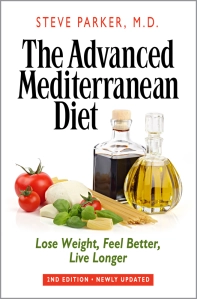
Click for my weight-loss version of the Mediterranean diet: The Advanced Mediterranean Diet (2nd Edition).

Steve Parker, M.D.

“LCHF Diet” Popular in Sweden

LCHF Cheese

Dr. Eenfeldt of DietDoctor.com gave a talk at the recent Ancestral Health Symposium in California, on the rationale of the current low-carb, high-fat diet (LCHF) so popular in his home country of Sweden. It’s very understandable to the general public and is a good introduction to low-carb eating. The entire YouTube video is 55 minutes; if you’re pressed for time, skip the 10-minute Q&A at the end.

He also discusses the benefits of LCHF eating for his patients with diabetes.

If you reduce carbohydrates, you’re going to replace it with either protein, fat, or both. As Dr. Eenfeldt recommends, the Ketogenic Mediterranean and Low-Carb Mediterranean Diets replace carbs more with fats than protein.

Steve Parker, M.D.

Book Review: The Blood Sugar Solution

I just finished reading the No.1 book at Amazon.com, The Blood Sugar Solution: The UltraHealthy Progam for Losing Weight, Preventing Disease, and Feeling Great Now!  Published in 2012, the author is Dr. Mark Hyman. I give it three stars per Amazon’s rating system (“It’s OK”).  Actually, I came close to giving it two stars, but was afraid the review would have been censored at the Amazon site.

♦   ♦   ♦

The book’s promotional blurbs by the likes of Dr. Oz, Dr. Dean Ornish, and Deepak Chopra predisposed me to dislike this book.  But it’s not as bad as I thought it’d be.

The good parts first.  Dr. Hyman favors the Mediterranean diet, strength training, and high-intensity interval training.  His recommended way of eating is an improvement over the standard American diet, improving prospects for health and longevity.  His dietary approach to insulin-resistant overweight/obesity and type 2 diabetes includes 1) avoidance of sugar, flour, processed foods, 2) preparation of your own meals from natural, whole food, and 3) keeping glycemic loads low.  All well and good for weight loss and blood sugar control.  It’s not a vegetarian diet.

The author proposes a new trade-marked medical condition: diabesity. It refers to insulin resistance in association with (usually) overweight, obesity, and/or type 2 diabetes mellitus.  Dr. Hyman says half of Americans have this brand-new disorder, and he has the cure.  If you don’t have overt diabetes or prediabetes, you’ll have to get your insulin levels measured to see if you have diabesity.

He reiterates many current politically correct fads, such as grass-fed/pastured beef, organic food, detoxification, and strict avoidance of all man-made chemicals, notwithstanding the relative lack of scientific evidence supporting many of these positions.

Dr. Hyman bills himself as a scientist, but his biography in the book doesn’t support that label.  Shoot, I’ve got a degree in zoology, but I’m a practicing physician, not a scientist.

The author thinks there are only six causes of all disease: single-gene genetic disorders, poor diet, chonic stress, microbes, toxins, and allergens.  Hmmm… None of those explain hypothyroidism, rheumatoid arthritis, systemic lupus erythematosis, tinnitus, migraines, irritable bowel syndrome, Parkinsons disease, chronic fatigue syndrome, or multiple sclerosis, to name a few that don’t fit his paradigm.

Dr. Hyman makes a number of claims that are just plain wrong.  Here are some:
  – Over 80% of Americans are deficient in vitamin D
  – Lack of fiber contributes to cancer
  – High C-reactive protein (in blood) is linked to a 1,700% increased probability of developing diabetes
  – Processed, factory-made foods have no nutrients
  – We must take nutritional supplements

Furthermore, he recommends a minimum of 11 and perhaps as many as 16 different supplements even though the supportive science is weak or nonexistent.  Is he selling supplements?

After easily finding these bloopers, I started questioning many other of the author’s statements.   

I was very troubled by the apparent lack of warning about hypoglycemia (low blood sugar).  Many folks with diabetes will be reading this book.  They could experience hypoglycemia on this diet if they’re taking certain diabetes drugs: insulin, sulfonylureas, meglitinides, pramlintide plus insulin, exenatide plus sulfonylurea, and possibly thiazolidinediones, to name a few instances.

If you don’t have diabetes but do need to lose weight, this book may help.  If you have diabetes, strongly consider an alternative such as Dr. Bernstein’s Diabetes Solution or my Conquer Diabetes and Prediabetes.

In the interest of brevity, I’ll not comment on Dr. Hyman’s substitution of time-tested science-based medicine with his own “Functional Medicine.”

Steve Parker, M.D.