The findings of this systematic review and meta-analysis of randomized controlled trials suggest that Mediterranean-based interventions are associated with reductions in systolic blood pressure, triglycerides, total cholesterol, and LDL-Cholesterol and an increase in HDL-Cholesterol among children and adolescents. These results underscore the importance of promoting healthy eating habits in youths, as these habits may lead to substantially improved cardiometabolic health, even during the early stages of life.
Posted onApril 4, 2025|Comments Off on Ketogenic Diet May Prevent Cardiovascular Disease
In July, 2023, the journal Nutrients published a review of literature on the effect of ketogenic diets on cardiovascular disease. The abstract mentions potentially beneficial changes blood lipids, inflammation, blood pressure, etc., without going where the rubber meets the road: the effect on mortality and incidence of cardiovascular events in live humans. Click the link to see the entire article.
The Abstract:
“The most common and increasing causes of death worldwide are cardiovascular diseases (CVD). Taking into account the fact that diet is a key factor, it is worth exploring this aspect of CVD prevention and therapy. The aim of this article is to assess the potential of the ketogenic diet in the prevention and treatment of CVD. The article is a comprehensive, meticulous analysis of the literature in this area, taking into account the most recent studies currently available. The ketogenic diet has been shown to have a multifaceted effect on the prevention and treatment of CVD. Among other aspects, it has a beneficial effect on the blood lipid profile, even compared to other diets. It shows strong anti-inflammatory and cardioprotective potential, which is due, among other factors, to the anti-inflammatory properties of the state of ketosis, the elimination of simple sugars, the restriction of total carbohydrates and the supply of omega-3 fatty acids. In addition, ketone bodies provide “rescue fuel” for the diseased heart by affecting its metabolism. They also have a beneficial effect on the function of the vascular endothelium, including improving its function and inhibiting premature ageing. The ketogenic diet has a beneficial effect on blood pressure and other CVD risk factors through, among other aspects, weight loss. The evidence cited is often superior to that for standard diets, making it likely that the ketogenic diet shows advantages over other dietary models in the prevention and treatment of cardiovascular diseases. There is a legitimate need for further research in this area.”
Steve Parker, M.D.
PS: If you have the 2nd edition of The Advanced Mediterranean Diet, you already have my ketogenic Mediterranean diet.
Posted onApril 3, 2025|Comments Off on Specific Diets That Lower CRP Levels May Prevent Chronic Diseases
Olive oil is a prominent component of the Mediterranean diet
C-reactive protein (CRP) is a bloodstream marker of body-wide inflammation. A prominent theory is that if your CRP is too high, it causes chronic disease states like hypertension, dementia, and cardiovascular disease. A 2024 meta-analysis published in British Journal of Nutrition looked at the effects of various diets on CRP. The implication is that your odds of developing particular chronic diseases is lowered if you adopt a diet that lowers your CRP. Check the Abstract below to see how your diet stacks up:
Adopting a healthy dietary pattern may be an initial step in combating inflammation-related chronic diseases; however, a comprehensive synthesis evaluating current evidence is lacking. This umbrella review aimed to summarise the current evidence on the effects of dietary patterns on circulating C-reactive protein (CRP) levels in adults. We conducted an exhaustive search of the Pubmed, Scopus and Epistemonikos databases, spanning from their inception to November 2023, to identify systematic reviews and meta-analyses across all study designs. Subsequently, we employed a random-effects model to recompute the pooled mean difference. Methodological quality was assessed using the A Measurement Tool to Assess Systematic Reviews 2 (AMSTAR 2) checklist, and evidence certainty was categorised as non-significant, weak, suggestive, highly suggestive or convincing (PROSPERO: CRD42023484917). We included twenty-seven articles with thirty meta-analyses of seven dietary patterns, fifteen of which (50 %) exhibited high methodological quality. The summary effects of randomised controlled trials (RCT) found that the Mediterranean diet was the most effective in reducing circulating CRP levels, followed by Vegetarian/Vegan and Energy-restricted diets, though the evidence was of weak quality. In contrast, Intermittent Fasting, Ketogenic, Nordic and Paleolithic diets did not show an inverse correlation with circulating CRP levels. Some results from combined interventional and observational studies, as well as solely observational studies, also agreed with these findings. These dietary patterns show the potential in reducing CRP levels in adults, yet the lack of high-quality evidence suggests future studies may alter the summary estimates. Therefore, further well-conducted studies are warranted.
Posted onJune 12, 2024|Comments Off on I Told You So: Mediterranean Diet Prevents Cardiovascular Disease
Branzino, aka European Bass, live in Mediterranean waters
Yet another epidemiologic study supports the contention that the Mediterranean diet reduces cardiovascular disease. The higher the adherence to the Medi diet, the less cardiovascular disease over the next 20 years. I scanned the report down to the Discussion section and, surprisingly, didn’t catch their definition of cardiovascular disease. It usually refers to heart attacks, strokes, angina, congestive heart failure, and hypertension. Some would include aneurysms. The study at hand was done in Greece. You can read the whole thing.
Regarding the fish above…. I was eating at a fancy French restaurant in Pensacola, FL, about 30 years ago and a table mate ordered fish (du poisson?). When it arrived with head ON, she immediately demanded it be taken back to the kitchen for removal of the head!
Abstract
Background and aims
Only few studies have assessed longitudinal dietary trends in relation to cardiovascular disease (CVD) risk. We aimed to evaluate the association between adherence to the Mediterranean diet, both baseline and longitudinal, and 20-year CVD incidence.
Methods and results
This was a prospective study among 1988 Greek adults (50% men, age: 45 ± 14years). Adherence to the Mediterranean diet was evaluated at baseline and 10 years through the MedDietScore, based on which longitudinal Mediterranean diet trajectories were identified. CVD incidence was recorded at 20 years. Each one-unit increase in baseline MedDietScore was associated with an 8% reduction in 20-year CVD incidence. Compared to subjects in the lowest tertile of baseline MedDietScore, those in the highest exhibited a 44% lower 20-year CVD risk (relative risk: 0.56, 95% confidence interval: 0.32, 0.97) adjusted for age, sex, baseline body mass index, smoking, physical activity, presence of hypercholesterolemia, hypertension and diabetes mellitus, and family history of CVD; further adjustment for high-sensitivity C-reactive protein, uric acid and estimated glomerular filtration rate attenuated this association. Results were similar in models adjusted for longitudinal changes in body weight, physical activity and smoking, and 10-year medical status. Mediterranean diet trajectory analysis revealed that 24.7%, 8.6%, 45.8% and 20.9% of participants longitudinally sustained a low adherence, moved closer, moved away or sustained a high adherence, respectively; among those, the corresponding CVD incidence was 63.3%, 65.5%, 28.1% and 9.4% (p-value<0.001).
Conclusion
The Mediterranean diet offers long-term protection against CVD, part of which is mediated by inflammation, uricemia and renal function.
Steve Parker, M.D.
PS: The study is in Nutrition, Metabolism & Cardiovascular Disease: “Mediterranean diet trajectories and 20-year incidence of cardiovascular disease: The ATTICA cohort study (2002–2022),” published in January 2024.
Decaffeinated, ground, and instant coffee, particularly at 2–3 cups/day, were associated with significant reductions in incident cardiovascular disease and mortality.
“Cardiovascular disease” includes coronary artery disease (e.g., heart attacks), heart failure, and ischemic strokes.
The study was done by Australian researchers using a UK database.
The Mediterranean diet is constantly lauded in the nutrition world—in fact, U.S. News has named it the “best diet overall” for five years straight—but as a registered dietitian, I think it’s time to think about it a little differently: It’s time to dethrone the Mediterranean diet as being the very best way to eat.
Now, the Mediterranean diet—which emphasizes whole grains and plant foods such as fruits, vegetables, legumes, tree nuts, seeds, and olives, and limits red meat, sugar, and saturated fat—is not the only culturally based way of eating that’s been celebrated. The Japanese diet, rich in foods such as seafood, steamed rice, tofu, natto, seaweed, and pickled fruits and vegetables, has been promoted for its longevity-promoting aspects as well. But as scrolling through social media or even many news and health websites will show, it still doesn’t come close to the Mediterranean diet in terms of widespread recognition.
As an RD, I’ve noticed an overwhelming belief in our society that eating Mediterranean-style is just the way to go. So if your cultural foods don’t hail from one of the countries that make up that area, how does this make you feel?
Spoiler: Probably not so good—and that’s why I believe we need to rethink how we talk about cultural foods and ways of eating.
You know I’m a Mediterranean diet advocate. There are other healthy ways of eating. I’m an advocate of free speech and open debate. No censorship here! Read Shana’s article and see what you think. I’m not sure what the “Japanese diet” is. I’ve written good things about the Okinawan diet as discussed in Dan Buettner’s Blue Zones books. Click for my review of Blue Zones.
Posted onApril 30, 2022|Comments Off on CT Versus Invasive Angiography in Stable Chest Pain
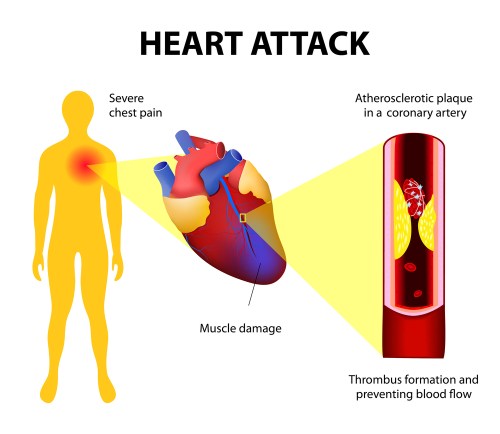
Heart attacks and chest pains are linked to blocked arteries in the heart
We’re all gonna die of something, right?
The #1 cause of death in the U.S. is coronary artery disease (CAD), which causes heart attacks and sudden cardiac death. Blockage in the heart arteries typically develops over years and many people are walking around not knowing it’s there. The lucky ones develop warning signs like chest pain or shortness of breath on exertion. After consulting a physician, the next step may be a “stress test” or some sort imaging of the arteries of the heart.
Angiography refers to imaging of arteries or veins. Angiography of the heart arteries is helpful in diagnosing blockage of arteries that may cause heart attacks or sudden cardiac death in the future.
CT stands for computerized tomography: x-rays obtain images that are then manipulated by computer technology to provide more information than plain x-ray technology alone. CT angiography of the heart arteries is done with iodinated contrast injected into the low-pressure venous system of circulation. In contrast, standard arterial angiography involves introduction of a needle (and catheter) into the high-pressure arterial system, usually the femoral artery in the groin or the smaller radial artery in the wrist. Standard arterial angiography is associated with a higher risk of complications such as leakage of blood from the artery. Another potential complication is embolization of arterial plaque or clots downstream from the arterial puncture. Because of the higher complication rate in the arterial system, standard angiography is considered “invasive.”
Among patients referred for invasive coronary angiography (ICA) because of stable chest pain and intermediate pretest probability of coronary artery disease, the risk of major adverse cardiovascular events was similar in the CT group and the ICA group. The frequency of major procedure-related complications was lower with an initial CT strategy.
I bet the non-invasive CT is also less expensive that standard arterial angiography.
Posted onFebruary 26, 2022|Comments Off on Ultra-Processed Foods ——> Higher Coronary Artery Disease Risk
Heart attacks and chest pains are linked to blocked arteries in the heart (coronary artery disease)
What are ultra-processed foods? I’m not paying $35 for the scientific article to find out. If you can grab the definition from your copy, please share in the Comments section. The 2020 profit from my publishing company was only $937.08, so I’m watching my expenses.
Here’s the free abstract:
ABSTRACT
Background
Higher ultra-processed food intake has been linked with several cardiometabolic and cardiovascular diseases. However, prospective evidence from US populations remains scarce.
Objectives
To test the hypothesis that higher intake of ultra-processed foods is associated with higher risk of coronary artery disease.
Ultra-processed versus processed?
Methods
A total of 13,548 adults aged 45–65 y from the Atherosclerosis Risk in Communities study were included in the analytic sample. Dietary intake data were collected through a 66-item FFQ. Ultra-processed foods were defined using the NOVA classification, and the level of intake (servings/d) was calculated for each participant and divided into quartiles. We used Cox proportional hazards models and restricted cubic splines to assess the association between quartiles of ultra-processed food intake and incident coronary artery disease.
Results
There were 2006 incident coronary artery disease cases documented over a median follow-up of 27 y. Incidence rates were higher in the highest quartile of ultra-processed food intake (70.8 per 10,000 person-y; 95% CI: 65.1, 77.1) compared with the lowest quartile (59.3 per 10,000 person-y; 95% CI: 54.1, 65.0). Participants in the highest compared with lowest quartile of ultra-processed food intake had a 19% higher risk of coronary artery disease (HR: 1.19; 95% CI: 1.05, 1.35) after adjusting for sociodemographic factors and health behaviors. An approximately linear relation was observed between ultra-processed food intake and risk of coronary artery disease.Conclusions
Higher ultra-processed food intake was associated with a higher risk of coronary artery disease among middle-aged US adults. Further prospective studies are needed to confirm these findings and to investigate the mechanisms by which ultra-processed foods may affect health.
I admit I must eat some ultra-processed foods, but try to limit them.
Heart disease is the #1 killer in the developed world, even more lethal the COVID19! If you’ve abandoned your New Years’ weight-loss diet, consider one low in ultra-processed foods, like the Mediterranean diet.
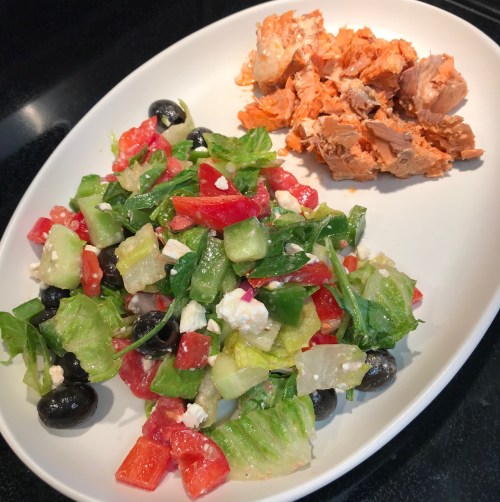
Greek salad with canned salmon. Salmon is rich in heart-healthy omega-3 fatty acids.
Posted onFebruary 23, 2022|Comments Off on Yet Another Study Supports the Life-Preserving Effect of the Mediterranean Diet
Cardiovascular diseases include heart attacks and strokes. Those are major killers. So it’s good to know about dietary habits that counteract the threat.
Examining a variety of diet quality methodologies will inform best practice use of diet quality indices for assessing all-cause and CVD [cardiovascular disease] mortality.
Objective
To examine the association between three diet quality indices (Australian Dietary Guideline Index, DGI; Dietary Inflammatory Index, DII; Mediterranean-DASH Intervention for Neurodegenerative Delay, MIND) and risk of all-cause mortality, CVD mortality and non-fatal CVD events up to 19 years later.Design
Data on 10,009 adults (51.8 years; 52% female) from the Australian Diabetes, Obesity and Lifestyle study were used. A food frequency questionnaire was used to calculate DGI, DII and MIND at baseline. Cox proportional hazard models were used to estimate hazard ratios (HR) and 95% CI of all-cause mortality, CVD mortality and non-fatal CVD events (stroke; myocardial infarction) according to 1 SD increase in diet quality, adjusted for age, sex, education, smoking, physical activity, energy intake, history of stroke or heart attack, and diabetes and hypertension status.Results
Deaths due to all-cause (n = 1,955) and CVD (n = 520), and non-fatal CVD events (n = 264) were identified during mean follow-ups of 17.7, 17.4 and 9.6 years, respectively. For all-cause mortality, HRs associated with higher DGI, DII and MIND were 0.94 (95% CI: 0.89, 0.99), 1.08 (95% CI: 1.02, 1.15) and 0.93 (95% CI: 0.89, 0.98), respectively. For CVD mortality, HRs associated with higher DGI, DII and MIND were 0.93 (95% CI: 0.85, 0.99), 1.10 (95% CI: 1.00, 1.24) and 0.90 (95% CI: 0.82, 0.98), respectively. There was limited evidence of associations between diet quality and non-fatal CVD events.Conclusions
Better quality diet predicted lower risk of all-cause and CVD mortality in Australian adults, while a more inflammatory diet predicted higher mortality risk. These findings highlight the applicability of following Australian dietary guidelines, a Mediterranean style diet and a low-inflammatory diet for the reduction of all-cause and CVD mortality risk.
Cornell University reported 903 cases of Covid-19 among students between December 7-13, and a “very high percentage” of them are Omicron variant cases in fully vaccinated individuals, according to university officials.
The school’s Covid-19 dashboard was updated late Tuesday afternoon, accounting for the jump in case numbers reported.”Virtually every case of the Omicron variant to date has been found in fully vaccinated students, a portion of whom had also received a booster shot,” said Vice President for University Relations Joel Malina in a statement.
As of result, the school has decided to shut down its Ithaca, New York, campus, where it has about 25,600 students.
“While I want to provide reassurance that, to date, we have not seen severe illness in any of our infected students, we do have a role to play in reducing the spread of the disease in the broader community,” Pollack said.
Ninety-seven percent of people on campus are fully vaccinated, the university says on its website.
Those vaccines are really great, aren’t they?!
New York Governor Cuomo sent COVID-19 patients to nursing homes from the hospital, to help spread the infection, I guess.
As U.S. hospitals continue to grapple with a surge of COVID-19 patients and ongoing staffing shortages, the vaccine mandate debate is heating up once again.
Now, some of the largest U.S. hospital systems have dropped their vaccine mandate for employees.
Tenet Healthcare and Cleveland Clinic are among the companies dropping the mandates, according to information reported by The Wall Street Journal.Caption: Some of the largest U.S. hospital systems have dropped their vaccine mandate for employees, reports Lexi Nahl. (WPEC)
This comes as several hospitals deal with ongoing labor shortages due to burnout and increasing labor costs.
Cleveland Clinic and AdventHealth have also abandoned their vax mandates.
I hear that healthcare systems with a staffing crisis bring in “traveling nurses” to help fill the gap at a salary three times greater than the “healthcare heroes” that that have been there since the beginning. How would that make you feel if you were that loyal nurse who has been there for the long haul, but no change in salary and forced to take the vax?
Some hospitals will pay a “finder’s fee” of $2,000 or more if you refer a frontline healthcare worker that they hire.
From Steve Kirsch: This comes as no surprise to those of us who have been paying attention.
Next time you talk to your county health official, ask them why. The officials will then explain that they just follow orders. They don’t make public policy.
They are simply never going to figure this stuff out that their interventions are making things worse. It’s too embarrassing to admit. So they don’t talk about it and hope you don’t notice.
Supermarket chain Kroger announced Tuesday it will eliminate paid emergency leave for unvaccinated employees who contract COVID-19 in addition to requiring some of them to pay a monthly $50 health insurance surcharge starting in 2022, according to a company memo.
The country’s largest supermarket chain, which employs roughly 465,000 workers….
In a stunning admission, virologist Dr. Andrew Hill acknowledged in a zoom call that publication of his study could lead to the deaths of at least a half million people.
In defending his reversal on the effectiveness of ivermectin as a treatment for COVID-19, he discussed his “difficult situation” and said, “I’ve got this role where I’m supposed to produce this paper and we’re in a very difficult, delicate balance.”
Andrew Hill, PhD, is a senior visiting Research Fellow in Pharmacology at Liverpool University. He is also an advisor for the Bill and Melinda Gates Foundation and the Clinton Foundation. As a researcher for the WHO evaluating ivermectin, Hill wielded enormous influence over international guidance for the drug’s use.
Hill had previously authored a analysis of ivermectin as a treatment for COVID-19 that found the drug overwhelmingly effective.
On Jan. 6 of 2021, Hill testified enthusiastically before the NIH COVID-19 Treatment Guidlelines (sic) Panel in support of ivermectin’s use. Within a month, however, Hill found himself in what he describes as a “tricky situation.” Under pressure from his funding sponsors, Hill then published an unfavorable study. Ironically, he used the same sources as in the original study. Only the conclusions had changed.













 Advanced Mediterranean Diet