
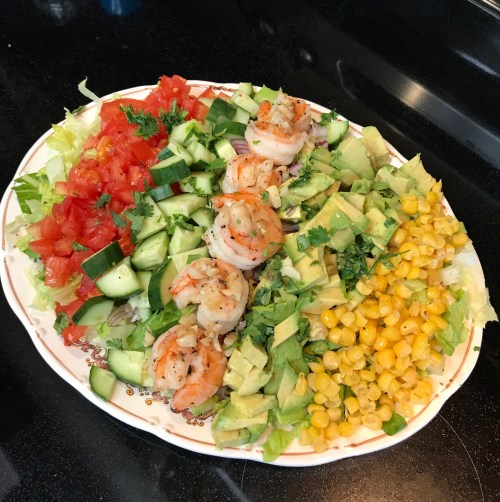
Researchers compared three low-calorie diets and concluded that the Mediterranean option was the healthiest. The study at hand today is way too small to be considered anything but a pilot study. So results may not be replicable on a larger scale. I’d like to know how compliant study subjects were with the protocol, because 700 calories a day for six weeks is quite a challenge.
Link to article article
Comparison of short-term hypocaloric high-protein diets with a hypocaloric Mediterranean diet: Effect on body composition and health-related blood markers in overweight and sedentary young participants
Highlights
A hypocaloric Mediterranean diet provides all the necessary nutrients.
The hypocaloric Mediterranean diet reduces body mass and fat mass and maintains fat-free mass.
The hypocaloric Mediterranean diet is beneficial on metabolic and inflammation/muscle- damage indices.
Hypocaloric high-protein diets with and without whey supplementation reduce body mass and fat-free mass but not fat mass.
Hypocaloric high-protein diets with and without whey supplementation are adverse on metabolic and inflammation/muscle-damage indices
Abstract
Objectives
The aim of the present study was to compare the short-term effects of a hypocaloric Mediterranean diet and two high protein diets, with and without whey protein supplementation, on body composition, lipidemic profile, and inflammation and muscle-damage blood indices in overweight, sedentary, young participants.
Methods
Thirty-three young, overweight, male and female participants (mean ± SD age: 22.8 ± 4.8 y; body mass: 85.5 ± 10.2 kg; body fat percentage: 34.3% ± 8.1%) were randomly allocated to three different hypocaloric (−700 kcal/d) diets: a Mediterranean diet (MD; n = 10), a high-protein diet (HP; n = 10) diet, and a high-protein diet with whey supplementation (n = 10). The intervention lasted 6 wk. Body composition and biochemical indices were evaluated 1 wk before and after the nutritional interventions.
Results
Body and fat mass were decreased in the MD and HP groups (−3.5% ± 1.1% and −5.9% ± 4.2% for body and fat mass respectively in MD, and −1.7% ± 1.2% and −2.0% ± 1.8% for body and fat mass respectively in HP;P < 0.05), with no significant decline of fat-free mass observed in the MD group. The MD group’s diet beneficially altered the lipid profile (P < 0.05), but the HP and HPW groups’ diets did not induce significant changes. Subclinical inflammation and muscle-damage indices significantly increased in the HP and HPW groups (7.4% ± 3.5% and 66.6% ± 40.1% for neutrophils and CRP respectively in HP, and 14.3% ± 6.4% and 266.6% ± 55.1% for neutrophils and CRP respectively in HPW; P < 0.05) but decreased in the MD group (1.8% ± 1.2% and −33.3% ± 10.1% for neutrophils and CRP respectivelyc; P < 0.05). Energy intake of carbohydrates and proteins were significantly related to the changes in body composition and biochemical blood markers (r = −0.389 and −0.889; P < 0.05).
Conclusions
Among the three hypocaloric diets, only the Mediterranean diet induced positive changes in body composition and metabolic profile in overweight, sedentary individuals.
Steve Parker, M.D.
Click to purchase at Amazon.com. E-book also available at Smashwords. com.

 Advanced Mediterranean Diet