Monthly Archives: October 2012

U.S. Diabetes Prevalence From 1935 to 1979 and Beyond

From 1935 to 1996, the prevalence of diagnosed type 2 diabetes [in the U.S.] climbed nearly 765%.

This shocking statistic is from the Centers for Disease Control and Prevention as cited in Increased Consumption of Refined Carbohydrates and the Epidemic of Type 2 Diabetes in the United States: an Ecologic Assessment, American Journal of Clinical Nutrition, 2004, vol. 79, no.5, pp: 774-779.

I thought 765% might be a misprint, so I did some digging.  A similar figure is in DHHS Publication No. (PHS) 82-1232 published in 1981:

  • Diabetes prevalence rose from 0.4% of the population in 1935,  to 2.4% in 1979.

This is a six-fold increase.  The major part of the upward trend started in 1960.  Interestingly, that’s when corn syrup started working its way into our food supply.  Coincidence?  The authors of the Department of Human Services paper write:

Preliminary evaluation of these trends suggests that the change in the prevalence of known diabetes has resulted from improvements both in detection of diabetes among high-risk groups and in survivorship among persons with diabetes.

Like type 1 diabetics, many type 2’s need insulin shots

To me, it sounds like they weren’t considering an true increase in the number of new diabetes cases (incidence), but better detection of existing cases and improved longevity of existing patients (prevalence).  Incidence and prevalence are often confusing.  Wikipedia has a clarifying article.  These days, both incidence and prevalence of type 2 diabetes are greatly increased over 1935 levels.

In January of 2011, the U.S. Centers for Disease Control and Prevention released the latest estimates for prevalence of diabetes and prediabetes.

  • 8.3% of the total U.S. population has either diagnosed or undiagnosed diabetes (earlier percentages in this post were for diagnosed cases only)
  • 6% of the U.S. adult population has diagnosed diabetes (My calculation: Population in 2011 was 311 million; with 18.8 million diagnosed cases of diabetes, 7 million undiagnosed)
  • Nearly 27% of American adults age 65 or older have diabetes (overwhelmingly type 2)
  • Half of Americans 65 and older have prediabetes
  • 11% of U.S. adults (nearly 26 million) have diabetes (overwhelmingly type 2)
  • 35% of adults (79 million) have prediabetes, and most of those affected don’t know it

Even if type 2 diabetes runs in your family, you may well be able to avoid it.  Here’s a post about prevention of type 2 diabetes.

Steve Parker, M.D.

Boy Scout Campout at Cave Creek Regional Park

Scottsdale’s Troop 131 had our annual overnight “family campout” at this large park immediately west of Cave Creek, Arizona.  All scout siblings and parents are invited.  Twenty or thirty were in attendance, a good turnout.  A few headed back to town late in the evening rather than stay the night.

We stayed in the group camping area, which had restrooms, hot and cold running water, and showers.  The park is clean, well-run, and safe.

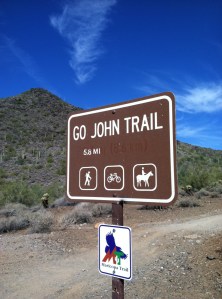
Trailhead at Cave Creek Regional Park

A tradition with this campout is that the boys cook dinner and breakfast for the adults.  Usually the boys cook for themselves, as do the adults.  Thank you, scouts!

We arrived on Saturday AM, Oct. 20, and set out on four-mile hike, a loop involving Go John and Overton trails.  Nice scenery and a little altitude gain.  I’d call it an easy hike; you could do it in sneakers but I was glad I had hiking boots because of the rocks underfoot.  We shared the trail with runners, a few of whom were doing a 50-km (31-mile) endurance run!  In 90° F weather (32.2° C).

U.S. Flag

After skits around the campfire, the scouts did a U.S. flag retirement ceremony.  Most Americans these days don’t know that you aren’t supposed to simply throw a tattered, faded flag into the trash.  It’s disrespectful to the soldiers and patriots who have sacrificed their lives, fortunes, and sacred honor in the name of American ideals.  The Boy Scouts of America and a few other organizations do a solemn ceremony during which we review the symbolism and history of the flag, then it’s incinerated in a small fire.  The boys retired 21 flags, most of which had been collected by Congressman Dan Quayle.  If you have a worn-out flag, your local Boy Scout troop should be willing and able to retire it for you.  Thanks to Chris Raines for helping the boys with the ceremony.

As usual, the Arizona weather was great.

The Orionid meteor shower was a bonus for this trip, although most folks slept through it since it peaked between midnight and 5 AM.  I got up around 2 AM and watched the sky for four minutes.  Saw one meteor emanating from Orion and another unrelated straggler.

Everybody survived the campout, and no one got hurt.  Thank you, God!

Steve Parker, M.D.

View to the north from Go John trail

Overton trail

Go John trail overlooking Cave Creek or Scottsdale

Carbohydrates and Sugar Raise Risk of Elderly Cognitive Impairment

The Mayo Clinic recently reported that diets high in carbohydrates and sugar increase the odds of developing cognitive impairment in the elderly years.

Mild cognitive impairment is often a precursor to incurable dementia.  Many authorities think dementia develops more often in people with diabetes, although some studies refute the linkage.

Researchers followed 940 patients with normal baseline cognitive functioning over the course of four years. Diet was assessed via questionnaire. Study participants were ages 70 to 89. As the years passed, 200 of them developed mild cognitive impairment.

Compared with those eating at the lowest level of carbohydrate consumption, those eating at the highest levels were almost twice as likely to go to develop mild cognitive impairment.

The scientists note that those eating lower on the carbohydrate continuum were eating more fats and proteins.

Steve Parker, M.D.


Best Weight Loss Diet? Mediterranean and Low-Carb Diets Beat Low-Fat Diet Over Six Years

Israeli flag

Remember Shai et al’s 2008 DIRECT study that compared weight loss over two years on either a low-fat, Mediterranean, or low-carb diet?  I didn’t think so.  I reviewed it at length in 2008.

The same researchers in Israel recently reported the results of an additional four years of follow-up.  Do you know of any other weight loss study over that length of time?  I don’t either.

Of the 322 original study participants, 259 were available for follow-up for an additional four years.  Of these, 67% told researchers they had continued their originally assigned diet.

Over six years, the weight loss was as follows:

  • 0.6 kg (about a pound) in the low-fat group
  • 1.7 kg (almost 4 pounds) in the low-carb cohort
  • 3.1 kg (almost 7 pounds) in the Mediterranean group

The difference between the low-carb and Mediterranean groups was not statistically significant.

Almost all the original study participants (86%) were men, so it’s debatable whether these results apply to women.  I bet they do.  I assume most of the participants were Israeli, so you can also debate whether results apply to other nationalities or ethnicities.

Bottom Line

For long-term weight management, Mediterranean and low-carb diets appear to be more effective than traditional low-fat, calorie-restricted dieting.

Beth Mazur at her Weight Maven blog has some worthwhile comments about the study.  See also Laura Dolson’s remarks at About.com.

Incidentally, my Advanced Mediterranean Diet (2nd Edition) book has both Mediterranean and low-carb diets.

Steve Parker, M.D.

Fitness Experiment No. 4: Results

For the last six weeks I’ve been working out twice weekly.  Twenty minutes of man-makers alternating with Turkish get-ups, followed by 15 minutes of high intensity intervals on the stationary bike.  So 70 minutes a week.  Click for details.

I re-tested my fitness today and compared with my numbers of July and August:

  • weight: no change (170 lb or 77.3 kg)
  • maximum consecutive push-ups: 36 before, 28 after
  • maximum consecutive pull-ups: 9 before, 8 after
  • maximum consecutive sit-ups: 34 before, 39 after
  • time for one-mile walk/run: 9 minutes and 30 seconds in August, down to 8 minutes and 30 seconds now
  • vertical jump (highest point above ground I can jump and touch): 276 cm in July, 277 cm now
  • toe touch (wearing shoes, stand and lock knees, bend over at waist to touch toes: 22 cm in July, 20 cm now

lessons learned

It’s not fun.  I’m glad it’s over.  It’s harder than Experiment No. 3.  The program significantly improved my 1-mile run time, but I did just as well with the more enjoyable Hillfit plus treadmill intervals (Experiment No. 2).  Total work-out time per week is about the same for all three programs.

I do sit-ups with my arms folded across my chest, hands on my shoulders

I’m disappointed in my big drop in total push-ups.  The increase in sit-up performance is cold comfort.

I’m enjoying the intervals on the bike more than the treadmill, and they’re probably easier on my lower limbs.

Although I can’t see myself doing this regimen long-term, I can imagine going back to it periodically just to mix things up, to avoid boredom.

Working harder doesn’t necessarily mean you’ll get better results.  Work smarter, not harder.

Steve Parker, M.D.

QOTD: 10th Amendment

How many powers are delegated to the US? Fourteen?

The powers not delegated to the United States by the Constitution, nor prohibited by it to the States, are reserved to the States respectively, or to the people.

— Tenth Amendment to the U.S. Constitution

Book Review: The Smarter Science of Slim

Earlier this year, I  reviewed  The Smarter Science of Slim, by Jonathan Bailor and published in 2012.  The review is at my defunct Advanced Mediterranean Diet blog, so I moved it here.  Per Amazon.com’s rating system, I give it four stars (”I like it”).  Evelyn at The Carb Sane Asylum has some different ideas about the book at her blog.

♦   ♦   ♦

Mr. Bailor’s weight-management diet avoids grains, most dairy, oils, refined starches, added sugars, starchy veggies, corn, white potatoes.  You eat meat, chicken, eggs, some fruit, nuts, seeds, and copious low-starch vegetables.  No limit on food if you eat the right items.

Is the Energy Balance Equation valid?

It’s high-fiber, high-protein, moderate-fat, moderate-carb (1/3 of calories from carbohydrate,  1/3 from protein, 1/3 from fat).  He considers it Paleo (Stone Age) eating even though he allows moderate legumes and dairy (fat-free or low-fat cottage cheese and plain Greek yogurt).

Will it lead to weight lose? Quite probably in a majority of followers, especially those eating the standard, low-quality American diet.  When it works, it’s because you’ve cut out the fattening carbohydrates so ubiquitous in Western societies.  The protein and fiber will help with satiety.  Is it a safe eating plan?  Yes.

(For those with diabetes needing to lose weight, I prefer a lower carbohydrate content in the diet, something like Conquer Diabetes and Prediabetes: The Low-Carb Mediterranean Diet.  For non-diabetics, is Smarter Science better than my Advanced Mediterranean Diet 2nd Edition?  Of course not, silly!)

I don’t recall any recipes or specific meal plans.  You put your own meals together following his guidelines.

Our major points of agreement:

  • Exercise isn’t terribly helpful as a weight-loss technique for most folks.
  • We’re overweight because we eat too many starches and sweets.
  • Natural, minimally processed foods are healthier than man-made highly refined items.
  • No need to emphasize “organic” /grass-fed beef/free-range chicken.
  • We don’t do enough high-quality exercise.

I have a few problems with the book:

  • It says we’re eating less.  U.S. caloric consumption over the last several decades has increased by about 150 cals (630 kJ) a day for men and 300 cals (1260 kJ) for women.  The author seems to contradict himself at one point by favorably quoting Hilda Bruch’s writing that “…overeating is observed with great regularity” in the obese.
  • Scary graphs showing increasing instances of heart disease and diabetes over time aren’t helpful because they ignore population growth.  The population-adjusted diabetes rate is indeed increasing whereas heart disease rates are decreasing.
  • It says the Calories In/Calories Out theory of overweight has been proven wrong.  This is by no means true.  It just hasn’t helped us much to reverse the overweight epidemic.  Sure, it’s often said that if you just cut a daily tablespoon of butter out of your diet, you’d lose 11 lb (5 kg) in a year, all other things being equal.  Problem is, all other things are never equal.  In reality, we replace the butter with something else, or we’re slightly less active.  So weight doesn’t change or we gain a little.
  • It says the “eat less, exercise more” mantra has been proven wrong as a weight loss method.  Not really.  See above.  And watch an episode of TV’s “The Biggest Loser.”  Exercise can burn off fat tissue.  The problem is that we tend to overeat within the next 12 hours, replacing the fat we just burned. I agree with the author that “eat less, exercise more” is extremely hard to do, which is the reason it so often fails over the long run.  As Mr. Bailor writes elsewhere: “Hard to do” plus “do not want to do” generally equals “it’s not happening.”  Mr. Bailor would say the reason it ultimately fails is because of a metabolic clog or dysregulation.
  • He says there’s no relationship between energy (calorie) consumption and overweight.  Not true.  Need references?  Google these: PMID 15516193, PMID 17878287, PMID 14762332.  The author puts too much faith in self-reports of food intake, which are notoriously inaccurate.  And obese folks under-report consumption more than others (this is not to say they’re lying).
  • Mr. Bailor’s assessments too often rely on rat and mice studies.
  • By page 59, I had found five text sentences that didn’t match up well with the numeric bibiographic references (e.g., pages 48, 50, 59).
  • S. Boyd Eaton is thrice referred to as S. Boyd.
  • How did he miss the research on high intensity interval training by Tabata and colleagues in 1996?  Gibala is mentioned often but he wasn’t the pioneer.
  • Several diagrams throughout the book didn’t print well (not the author’s fault, of course).
  • In several spots, the author implies that HIS specific eating and exercise program has been tested in research settings.  It hasn’t.

Mr. Bailor’s exercise prescription is the most exciting part of the book for me.  His review of the literature indicates you can gain the weight-management and health benefits of exercise with just 10 or 20 minutes a week.  NOT the hour a day recommended by so many public heath authorities.  And he tells you how to do the exercises without a gym membership or expensive equipment.  That 20 minutes is exhausting and not fun.  You have fun in all the hours you saved.  If this pans out, we’re on the cusp of a fitness revolution.  Gym owners won’t be happy.  Sounds too good to be true, doesn’t it?

One component of the exercise program is high intensity interval training (HIIT), which I’m recently convinced is better than hours per week of low-intensity “cardio” like jogging. Better in terms of both fitness and weight management.

The resistance training part of the program focuses on low repetitions with high resistance, especially eccentric slow muscle contraction.  This is probably similar to programs recommended by Doug McGuff. John Little, Chris Highcock, and Skyler Tanner.  I’m no authority on this but I’m trying to learn.  By this point in the book, I was tired of looking up his cited references (76 pages!).  I just don’t know if this resistance training style is the way to go or not.  I’ll probably have to just try it on myself.

I admire Mr. Bailor’s effort to digest and condense decades of nutrition and exercise research.  He succeeds to a large degree.

Steve Parker, M.D.

Quote of the Day

A general dissolution of principles and manners will more surely overthrow the liberties of America than the whole force of the common enemy. While the people are virtuous they cannot be subdued; but when once they lose their virtue then will be ready to surrender their liberties to the first external or internal invader.

             —Samuel Adams, 1779

The Secret to Prevention of Weight Regain

“I couldn’t do this when I weighed 220 pounds.”

Regain of lost body fat is the most problematic area in the field of weight management.  Solves this problem for good, and you Nobel Prize in Medicine.

Why do most diets ultimately fail over the long run?  Because people go back to their old habits.

Here are the two secrets to prevention of weight regain:

1)    Restrained eating

2)    Regular physical activity

“Successful losers” apply self-restraint on a daily basis, avoiding foods they know will lead to weight regain.  They limit how much they eat.  They consciously choose not to return to their old eating habits, despite urges to the contrary.

The other glaring difference is that, compared to regainers, the successful losers are physically active.  Oftentimes, they exercised while losing weight, and almost always continue to exercise in the maintenance phase of their program.  This is true in at least eight out of 10 cases.  It’s clear that regular exercise isn’t always needed, but it dramatically increases your chances of long-term success.

Steve Parker, M.D.