Tag Archives: overweight

Yet Another Epidemic: Fatty Liver In Teens

MedPage Today on May 25, 2012 has an article documenting the rise of fatty liver disease in U.S. teenagers.  Prevalence is now up to one in 10 teens.

An expert quoted in the article says it’s tied in with the rise of childhood obesity.

Youth obesity in the U.S. tripled from the early 1980s to 2000, ending with a 17% obesity rate. Overweight and obesity together describe 32% of U.S. children. Some experts believe this generation of kids will be the first in U.S. history to suffer a decline in life expectancy, related to obesity.

I wrote about a small research study that found a very-low-carb diet more effective against fatty liver, compared to a low-calorie diet.  But that involved adults.

University of Colorado researchers indicate that for weight loss, a low-carb, high-protein diet is safe and effective in adolescents.

Diet researchers found in 2008 that a modified low-carbohydrate Mediterranean diet had significant potential to reduce fatty liver.  My Low-Carb Mediterranean Diet (minus the wine option) would probably help overweight teens with fatty liver disease, but it’s never been tested in such a clinical trial.

Steve Parker, M.D.

Eat Cod to Lose More Weight

BUS30079Five servings of cod per week led to loss of an extra 3.7 pounds (1.7 kg) over eight weeks, according to a 2009 research report.

European researchers noted that cod consumption in a prior study enhanced weight loss. They wondered if that result could be reproduced, and whether the effect was “dose dependent.” In other words, would those eating more cod lose more weight than those eating less?

They studied 125 subjects between the ages of 20 and 40, with body mass index between 27.5 and 32.5. The abstract doesn’t mention sex of the participants. They were all placed on calorie-restricted diets with identical percentages of protein, fat, and carbohydrate, and were followed for eight weeks. Researchers divided the subjects into three groups:

  1. One group was given 150 g (a little over 5 ounces) of cod three times weekly
  2. Another group was given 150 g cod five times weekly
  3. The third group was given no seafood

Average weight loss overall was 11 pounds (5 kg). The more cod consumed, the greater the weight loss. Those eating five servings a week averaged 3.7 pounds (1.7 kg) more than the group not eating seafood.

It’s unclear whether other types of fish would produce similar results.

These results support the prominent role of fish in the Ketogenic Mediterranean Diet.

Steve Parker, M.D.

Reference: Ramel, A., et al. Consumption of cod and weight loss in young overweight and obese adults on an energy reduced diet for 8-weeks. Nutrition, Metabolism and Cardiovascular Diseases, 19 (2009): 690-696.

Drink Vinegar and Lose 2-4 Pounds Effortlessly

CB052540Japanese researchers a couple years ago documented that daily vinegar reduces body weight, fat mass, and triglycerides in overweight Japanese adults.

Beverages containing vinegar are commonly consumed in Japan. The main component—4 to 8%— of vinegar is acetic acid. Vinegar can lower cholesterol levels, lower blood pressure, and limit increases in blood sugar after meals.

Japanese researchers studied the effects of vinegar on 175 overweight—body mass index between 25 and 30—subjects aged 25 to 60. Men totaled 111; women 64. Average weight 74.4 kg (164 pounds). They were divided into three groups that received either a placebo drink, 15 ml apple vinegar (750 mg of acetic acid), or 30 ml apple vinegar (1,500 mg acetic acid). Placebo and vinegar were mixed into 500 ml of a beverage, half of which was drunk twice daily after breakfast and supper for 12 weeks. Changes in body fat were measured with CT technology. Subjects were told to eat and exercise as usual.

Results

By the end of the 12 weeks, weight had decreased by 1-2 kg (2.2 to 4.4 pounds) in the vinegar drinkers, with 30 ml of vinegar a bit more effective. CT scanning showed that the lost weight was fat mass rather than muscle or water. Triglyceride levels in the vinegar groups fell by about 20%. The placebo drinkers saw no changes.

Four weeks after the intervention ended, subjects were retested: values had returned to their baseline, pre-study levels.

The scientists report that the acetic acid in vinegar inhibits production of fat and may stimulate burning of fat as fuel. Although vinegar contains many other ingredients, they think the acetic acid is responsible for the observed changes.

My Comments

It’s possible that apple vinegar components other than acetic acid led to the weight loss and lowered triglyceride levels. Further study could clarify this.

Remember that weight lossed was regained after the vinegar was discontinued. Would you want to drink the vinegar indefinitely to maintain a loss of 2-4 pounds? Probably not, unless you like vinegar. But adding 12 weeks of vinegar to your weight-loss program might be worth it if you’re just preparing for a school reunion or the start of swimsuit season.

These results may or may not be applicable to non-Japanese races.

This study supports the use of vinaigrette as a salad or vegetable dressing in people trying to lose weight with diets such as the Ketogenic Mediterranean Diet or Advanced Mediterranean Diet. Vinaigrettes are combinations of olive oil and vinegar, often with various spices added. If you eat a salad twice a day, it would be easy to add 15 ml (1 tbsp) of vinegar to your diet daily.

With a little imagination, you could come up with other ways to add 15–30 ml (1–2 tbsp) of vinegar to your diet.

Update May 17, 2012:  After posting this, I ran across on article on the Apple Cider Vinegar Diet at Life123.

Steve Parker, M.D.

Reference: Kondo, Toomoo, et al. Vinegar intake reduces body weight, body fat mass, and serum triglyceride levels in obese Japanese subjects. Bioscience, Biotechnology, and Biochemistry, 73 (2009): 1,837-1,843.

Book Review: The Blood Sugar Solution

I just finished reading the No.1 book at Amazon.com, The Blood Sugar Solution: The UltraHealthy Progam for Losing Weight, Preventing Disease, and Feeling Great Now!  Published in 2012, the author is Dr. Mark Hyman. I give it three stars per Amazon’s rating system (“It’s OK”).  Actually, I came close to giving it two stars, but was afraid the review would have been censored at the Amazon site.

♦   ♦   ♦

The book’s promotional blurbs by the likes of Dr. Oz, Dr. Dean Ornish, and Deepak Chopra predisposed me to dislike this book.  But it’s not as bad as I thought it’d be.

The good parts first.  Dr. Hyman favors the Mediterranean diet, strength training, and high-intensity interval training.  His recommended way of eating is an improvement over the standard American diet, improving prospects for health and longevity.  His dietary approach to insulin-resistant overweight/obesity and type 2 diabetes includes 1) avoidance of sugar, flour, processed foods, 2) preparation of your own meals from natural, whole food, and 3) keeping glycemic loads low.  All well and good for weight loss and blood sugar control.  It’s not a vegetarian diet.

The author proposes a new trade-marked medical condition: diabesity. It refers to insulin resistance in association with (usually) overweight, obesity, and/or type 2 diabetes mellitus.  Dr. Hyman says half of Americans have this brand-new disorder, and he has the cure.  If you don’t have overt diabetes or prediabetes, you’ll have to get your insulin levels measured to see if you have diabesity.

He reiterates many current politically correct fads, such as grass-fed/pastured beef, organic food, detoxification, and strict avoidance of all man-made chemicals, notwithstanding the relative lack of scientific evidence supporting many of these positions.

Dr. Hyman bills himself as a scientist, but his biography in the book doesn’t support that label.  Shoot, I’ve got a degree in zoology, but I’m a practicing physician, not a scientist.

The author thinks there are only six causes of all disease: single-gene genetic disorders, poor diet, chonic stress, microbes, toxins, and allergens.  Hmmm… None of those explain hypothyroidism, rheumatoid arthritis, systemic lupus erythematosis, tinnitus, migraines, irritable bowel syndrome, Parkinsons disease, chronic fatigue syndrome, or multiple sclerosis, to name a few that don’t fit his paradigm.

Dr. Hyman makes a number of claims that are just plain wrong.  Here are some:
  – Over 80% of Americans are deficient in vitamin D
  – Lack of fiber contributes to cancer
  – High C-reactive protein (in blood) is linked to a 1,700% increased probability of developing diabetes
  – Processed, factory-made foods have no nutrients
  – We must take nutritional supplements

Furthermore, he recommends a minimum of 11 and perhaps as many as 16 different supplements even though the supportive science is weak or nonexistent.  Is he selling supplements?

After easily finding these bloopers, I started questioning many other of the author’s statements.   

I was very troubled by the apparent lack of warning about hypoglycemia (low blood sugar).  Many folks with diabetes will be reading this book.  They could experience hypoglycemia on this diet if they’re taking certain diabetes drugs: insulin, sulfonylureas, meglitinides, pramlintide plus insulin, exenatide plus sulfonylurea, and possibly thiazolidinediones, to name a few instances.

If you don’t have diabetes but do need to lose weight, this book may help.  If you have diabetes, strongly consider an alternative such as Dr. Bernstein’s Diabetes Solution or my Conquer Diabetes and Prediabetes.

In the interest of brevity, I’ll not comment on Dr. Hyman’s substitution of time-tested science-based medicine with his own “Functional Medicine.”

Steve Parker, M.D.

Does Cutting Out Sugary Drinks Help With Weight Loss?

Are you obese, love sugary drinks, and want to easily lose four pounds (1.8 kg) over the next six months? Simply cut a couple of sugary drinks out of your daily diet, replace them with water or diet soda, and you may lose the pounds.  Or so say University of North Carolina researchers.
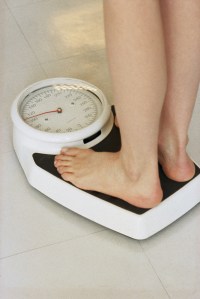
Down 4 pounds in 6 months. I'll take it!

In the U.S., our consumption of calories from sugar-sweetened beverages (SSBs) almost doubled between 1965 and 2002, now comprising 21% of our total calories.  (I’ve seen lower estimates, too, such as all added sugars accounting for 17% of total calories.)  Remember that our overweight and obesity rates started rising around 1970.  Any connection there?

Some have speculated that cutting back on SSB consumption would lead to loss of some excess weight.  But it’s never really been tested until now.

By the way, your typical sugary carbonated beverage has 145 calories of pure carbohydrate, most often high fructose corn syrup.  That’s equivalent to 10 tsp (50 ml) of table sugar.  Soft drinks are liquid candy.

Methodology

UNC investigators recruited  about 300 overweight and obese folks (average BMI 36, average weight 100 kg (220 lb), 84% female, 54% black) who drank at least 280 calories daily of caloric beverages (sugar-sweetened beverages, juice, juice drinks, sweetened coffee and tea, sweetened milk, sports drinks, and alcohol).  In other words, they all drank at least two soft drinks or the equivalent daily.  Participants agreed to make a dietary substitution for six months.

The participants were randomly assigned to one of three study groups with a hundred participants per group. For the next six months…

  • Group WA substituted at least two of their SSBs daily with water (WA), any type as long as it was calorie-free.  Bottled water was provided.  This reduced sugary drink calories by 230/day.
  • Group DB substituted at least two of their SSBs daily with calorie-free diet beverages (DB).  Beverages were provided.  This reduced sugary drink calories by 230/day.
  • Group AC (attention controls) made no changes in baseline beverage consumption.  Investigators made a point not to talk to them about beverages.

All three groups had monthly group meetings.  WA and DB group meetings were focused on adherence to the beverage substitution guidelines.
The AC group meetings will involved a weigh-in and general weight loss information (e.g., read food labels, increase vegetable consumption, portion control, and increase physical exercise).

“All … groups had access to a group-specific …website, where they recorded the beverages (water and DB only) they consumed, reported their weekly weight, received feedback on progress, viewed tips, and linked to group-specific resources.”

Results

All three groups lost statistically significant amounts of weight, but there was no difference in amount of weight lost among the groups.  In other words, the folks who substituted water or diet beverages for  sweet drinks didn’t do any better than the AC (attentive control) group.

Average amounts of weight lost were in the range of 1.8 to 2.5% of total body weight.  For example, if you weigh 200 lb (91 kg) and lose 2% of your weight, that’s a 4-lb loss (1.8 kg). 

Compared to the AC group, the WA group showed a statistically significant decrease in fasting blood sugar (down 3 mg/dl).  BTW, none of the participants were diabetic.

Sugar cane

Take-Home Points

Would the substituters have lost weight if they had simply cut out two sugary drinks a day, skipping the monthy meetings and website?  Don’t know.  But I bet that’s how the mainstream press will spin this. 

If I were obese and had a sugary drink habit, I’d start substituting water.  Yesterday.

Substituting water for a couple sugary drinks a day could reduce risk of developing diabetes.

I was hoping to see a significantly greater weight loss in the water and diet drink substituters compared to the AC (Attention Control) group.  Presumably all of these AC folks would have stayed at their baseline weights if they hadn’t done any of this.  The substitution groups apparently didn’t receive the general weight-loss information given to the AC group.

One caveat: All groups had monthly meetings for six months.  What were the substitution groups  talking about other than adherence to the protocol?  Your guess is as good as mine since the researchers don’t say.  Perhaps something about those meetings led to the weight loss, not the act of substituting water or diet drinks for sugar.

So they lost an average of 4–5 lb (2 kg).  Big deal, right?  But remember this was just a six-month study.  Could that 4 lb turn into 12 lb (5.5 kg) over 18 months?  Maybe, but we don’t know. 

Here’s the thing about averages.  Some of these people I’m sure lost closer to 5% of body weight, and some didn’t lose any, or gained.  Which group would you be in?  Only one way to find out. 

Remember that many medical conditions linked to overweight and obesity improve with loss of just 5% of body weight.

The substituters cut out 230 calories a day of sugary drinks.  All other things being equal, they should have lost 12 lb (5.5 kg).  Problem is, all other things aren’t equal.  Numerous other factors are at play, such as activity levels, replacement of sugary drink calories with other calories, measurement errors, reporting errors, etc.

This was a female-heavy study.  Would this strategy work for men?  Even better in men?  We don’t know.  Why not try it yourself?

Steve Parker, M.D.

PS: I did a sugar-free and wheat-free experiment on myself earlier this year.  Lost some weight, too.

Reference: Tate, Deborah, et al.  Replacing caloric beverages with water or diet beverages for weight loss in adults: main results of the Choose Healthy Options Conscioulsly Everday (CHOICE) randomized clinical trialAmerican Journal of Clinical Nutrition, February 1, 2012, Epub ahead of print.  doi: 10.3945/ajcn.111.026278