Tag Archives: low carb diet

Recipe: Naked Chicken Fajitas

paleobetic diet

It looks more appealing if you use green and red bell peppers

My earliest recollection of fajitas is from 1981 in Austin, Texas. I had just moved there from Oklahoma City to start my internship and residency in Internal Medicine at Brackenridge Hospital. Back then fajitas were made with skirt steak, the diaphragm of a cow or steer. It was considered a cheap low-quality cut of meat. You can also make fajitas with chicken. The contents of a fajita are wrapped in a tortilla usually made with flour. Are you trying to lose weight or prevent weight gain by cutting back on calories? You can do that but retain all the flavor by using lettuce as a wrapper.

Today’s recipe is very low-carb; after adding walnuts and a pear to comprise a whole meal, it’s still just 27 grams of digestible carbohydrate per serving.

I wonder if the El Azteca Restaurant in Austin is still in business. Best Mexican food I ever had. I think it was on 6th Street or so, about 3/4 mile east of I-35. Good times.

By the way, the j in fajita is pronounced “h.” Accent on second syllable. “Fuh-HEET-uh.”

Today we’re using chicken and making four servings.

paleobetic diet, paleo diet for diabetics

Pre-cut chicken breasts and sweet mini-peppers

Ingredients:

1 lb (454 kg) chicken breast, raw, boneless and skinless, cut in strips about 1/4-inch wide (you can often buy it this way)

7 oz onion, raw, cut in long crescent shapes about a 1/4-inch wide (0.6 cm)

6 oz (170 g) bell pepper, raw, cut in long strips roughly a 1/4-inch wide (these are also called sweet peppers; a combination of the red and green ones is eye-pleasing)

2 tbsp (30 ml) olive oil

5 or 6 oz (155 g) tomato, raw, cut in long strips

1 tsp (5 ml) salt

1/2 tsp (2.5 ml) pepper

1/2 tsp (2.5 ml) chili powder

1 tsp (5 ml) parsley flakes

1/2 tsp (2.5 ml) oregano leaves

1 pinch of cumin

1/2 tsp (2.5 ml) paprika

(Optional: You could replace all these spices with a 1-oz (28 g) pack of Lawry’s Chicken Fajitas Spices & Seasoning. The sodium and potassium values below would be different.)

1/3 cup (80 ml) water

16 oz (454 g) lettuce (e.g., iceberg, romaine, or bibb)

4 oz (113 g) walnuts

4 pears, small (about 1/3 lb or 150 g each))

Instructions:

Add the onions, peppers, and 1 tbsp (15 ml)  olive oil to a 12-inch (30 cm) skillet and cook at medium-high heat until tender, stirring occasionally. This’ll take about 10 minutes. Set the skillet contents aside.

paleobetic diet, paleo diet for diabetes

This is double the recipe amount since there are six humanoids in my household

paleobetic diet, paleo diet for diabetics

The vegetables reduce volume by half while cooking

In the same pan, add 1 tbsp (15 ml) olive oil and the chicken and cook at medium to medium-high heat, stirring frequently, until chicken is thoroughly cooked. For me, this cooked quicker than the vegetables. But don’t overcook or the chicken will get tough. Then add the water and all the spices. Bring to a boil while stirring occasionally, then simmer on low heat a few minutes. This is your fajita filling.

My original plan was to make “fajita wraps,” wrapping the cooked fajitas into a large leaf of iceberg lettuce. This was pretty messy, especially since I love the sauce in the bottom of the pan. I tried two leafs as a base: still messy. Finally I just made a bed of lettuce (4 oz) and loaded the fajita concoction right on top. Mess gone. Try a different lettuce? Skip the lettuce entirely and you can reduce digestible carb count in each serving by 2 grams.

Enjoy the walnuts and pear with your meal.

Leftovers taste just as good as fresh-cooked, perhaps even better.

I have another fajita recipe using skirt steak marinated in commercial Zesty Italian Dressing in the refrigerator overnight or for at least four hours. Grill it over coals outside. Yum! I don’t recall whether I added lemon juice to the marinade or squirted it on the meat just before serving. You would just cook the onions and peppers on a pan on the stove as above, with salt and pepper to taste. Garnish with a margarita and I’ll make you an honorary Texan.

Number of servings: 4

Serving size: A cup (240 ml) of the fajita mixture, 4 oz (113 g) lettuce, 1 oz (28 g) walnuts, 1 small pear. One cup makes two lettuce wraps.

Nutritional Analysis Per Serving:

48% fat

26% carbohydrate

26% protein

Calories: 514

37 g carbohydrate

10 g fiber grams

27 g digestible carbohydrate (25 g if you skip the lettuce)

928 mg sodium

904 mg potassium

Prominent features: Rich in protein, vitamin B6, vitamin B12, vitamin C,copper, iron, manganese, niacin, phosphorus, and selenium.

paleobetic diet

Another view, prior to rolling it up (wrapping)
Why Do So Many Dietitians Argue Against Low-Carb Diets?

Click for details from dietitian Franziska Spritzler. Briefly:

1. They think it’s dangerous. 
2.They believe the diet-heart hypothesis
3. They think the diet is unbalanced.  
4. They think no one will follow it long term.

Franziska ably debunks these ideas one by one.

Low-Carb Ketogenic Diet Appears Safe and Effective for Children and Adolescents

A ketogenic diet was safe and effective for weight loss in children and adolescents, according to a small study in the Journal of Pediatric Endocrinology and Metabolism.  Fifty-six children were placed on either a ketogenic diet or a calorie-restricted diet.  The investigators judged the low-carb ketogenic diet more effective.

I don’t treat children, so I don’t normally follow the pediatric scientific literature.  Thanks to Diet Doctor Andreas Eenfeldt for bringlng this to my attention.  I’ve not read the full research report.

In 2010 I reported on research showing a low-carb, high-protein diet was safe and effective for severely obese adolescents.

Study Finds Low-Carb Diet Reduces Heart Disease Risk Factors

Obesity Reviews just published details of a recent meta-analyis of low-carbohydrate diet effects on cardiovascular risk factors.

A systematic review and meta-analysis were carried out to study the effects of low-carbohydrate diet (LCD) on weight loss and cardiovascular risk factors (search performed on PubMed, Cochrane Central Register of Controlled Trials and Scopus databases). A total of 23 reports, corresponding to 17 clinical investigations, were identified as meeting the pre-specified criteria.

Over a thousand obese patients were involved.  By eating low-carb, blood pressure dropped by 3–4 mmHg, average body weight decreased by 7 kg (15 lb), body mass index dropped by 2, triglycerides decreased by 30 mg/dl, hemoglobin A1c dropped by 0.21% (absolute decrease), insulin levels fell by 2.23 micro IU/ml, while HDL cholesterol rose by 1.73 mg/dl.  LDL cholesterol didn’t change.

The authors conclusion:

Low-carboydrate diet was shown to have favourable effects on body weight and major cardiovascular risk factors; however the effects on long-term health are unknown.

I haven’t see the full text of the article yet, so I don’t know the carbohydrate level under review.  I bet it’s under 50 g of digestible carb daily.  My Low-Carb Mediterranean Diet starts at 20-30 grams a day.

Steve Parker, M.D.

Reference:  Santos, F.L., et al. Systematic review and meta-analysis of clinical trials of the effects of low carbohydrate diets on cardiovascular risk factors. Obesity Reviews. Article first published online: 20 AUG 2012. DOI: 10.1111/j.1467-789X.2012.01021.x

Which Diet Is Better for Weight Loss: Low-Carb or Low-Fat?

I’ve written about a 2009 New England Journal of Medicine article comparing weight-loss diets of various macronutrient (fat, protein, carbohydrate) composition. Its conclusion: Cut back on calories and you will lose weight, regardless of macrontrient percentages.

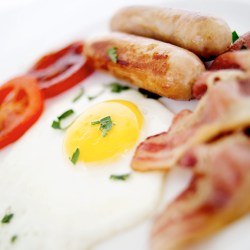
A blurry low-carb high-fat breakfast

A blog reader, Matt, brought up some interesting comments and questions. What follows will make little sense unless you read that prior post.

Matt writes:

Dr. Parker,

If the study folks didn’t do the real low carb diet because they “knew” that ketosis wouldn’t occur, couldn’t they at least have tried it, since what they were trying to prove was a calorie is a calorie?

Looking at the menus, the diet that they are purporting as low carb is really nothing close to a real low carb diet. It is a slightly lower carb diet, and not high enough in fat to prove anything. 35% carb is not Atkins phase anything. For a participant consuming 1600 calories, that’s 140g carb — too high for anyone attempting to restrict carbohydrates for health.

Please comment on the fact that the highest carb diet provided the worst lipid improvement.

Following up a little more, there really is no inference whatsoever that can be made with regard to a low carb diet with this study. Did you read the sample menu? No low carb diet phase would have any of the following as a typical meal. You can tell by looking at the menus that they had to be really PC about a “high fat” diet as well. I mean skim milk on a low carb / high fat diet? Note my level of surprise by the ? and ! in the parens with each “typical meal” option:

Breakfast:

1 poached egg

1/2 bagel (??)

4 oz apple juice (????!!!!)

skim (????) milk

Lunch:

1/2 cup spaghetti (??!!)

1/2 cup squash

1/2 cup peppers

1/2 cup mushrooms

1.5 T Olive Oil

1 small banana (????)

Dinner:

2 oz beef

1 small potato (????!!!!)

3/4 mixed veggies/legumes corn/carrots/lima/peas/green beans (???? since these are among the higher carb veggie choices)

1/2 cup cabbage

1 mini box raisins (??)

1 small apple (?????)

4 t Olive Oil

7 walnut halves

Snack

Skim (???) Milk

1 Graham cracker sheet (??????)

If you want a LC diet with what LC would consider a higher level of carbs (~60g) you need to do this:

Breakfast:

2-4 poached eggs

2 T olive oil

spinach

1 cup whole milk

Lunch:

1/2 cup squash

1/2 cup peppers

1/2 cup mushrooms

2 T Olive Oil

4-6 oz fish

Dinner:

4-6 oz beef

3/4 mixed lower carb (cruciferous/leafy) veggies such as broccoli, collards or other greens,

1/2 cup cabbage

2 T Olive Oil

20 walnut halves

1/2 cup low carb fruit such as cantaloupe

Snack

1/2 cup strawberries

1 cup whole milk yogurt ot cottage cheese

*******************************************

My response:

Thanks for your thoughtful comments/questions, Matt.

You’re right: The “low-carb” diet they studied indeed was not very low-carb, as succinctly illustrated by the sample menu you provided. (I didn’t read the supplementary appendix myself.)

You mention that the “highest carb diet provided the worst lipid improvement.” It’s not that clear-cut.

(Lipid changes are on pages 865-7 of the article, for anyone following along. Conventional wisdom is that better cardiovascular health is associated, generally, with lower total cholesterols, higher HDL chol, lower total LDL chol, and lower triglycerides.)

The study had two low-fat diets, with either 55 or 65% of total calories derived from carbohydrates. The two high fat diets had either 35 or 45% of total calories from carbohydrates.

Total cholesterol levels dropped by about 3 mg/dl in the low-fat diets compared to “no change” in the high-fat diets (2-year values). Measured at 6 months, total chol levels were down by about 5.5 mg/dl in the low-fat groups, and about 3 mg/dl in the high-fat groups. Baseline total chol levels for the whole group averaged 202 mg/dl.

The authors on page 865 write:

All the diets reduced risk factors for cardiovascular disease and diabetes at 6 months and 2 years. At 2 years, the two low-fat diets and the highest-carbohydrate diet decreased low-density lipoprotein [LDL] cholesterol levels more than did the high-fat diets or lowest-carbohydrate diet.

The lowest-carb diet increased HDL chol more than the highest carb diet, but we’re only talking about a 2 mg/dl difference measured at 2 years. HDL rose in all groups. Average baseline HDL level for the entire study group was 49 mg/dl.

All diets decreased triglycerides similarly, by 12-17%.

The magnitude of these changes is not great, and I question whether clinically important. The take-home point for me is that low-carb eating may not be (and probably isn’t) as atherogenic as warned by the medical community 15-20 years ago, judging purely from lipid changes. Other studies found similar numbers. But we’ve already agreed the this was not a serious trial of low-carb dieting.

The study authors write that HDL chol is a biomarker for carbohydrate intake: reducing dietary carbs tends to increase HDL chol levels, and vice versa.

If I understand “Nutrient Intake per Day” in Table 2 correctly, the participants who were told to increase their percentage of calories from fat really didn’t do it: they reduced it by 3.5% (!?). The low-fat cohorts had more success with compliance.

Clearly, it’s quite difficult to get free-living people to change their macronutrient intake and sustain the change for even six months, much less two years. Would compliance have been better if subjects had been allowed to choose a diet according to their natural inclinations? Maybe.

A recent study suggests that eating low-carb helps with prevention of weight regain because it burns an extra 300 calories a day compared to those eating low-fat.  Dr. Barbara Berkeley took a close look at this research on June 30.

Steve Parker, M.D.

Yet Another Epidemic: Fatty Liver In Teens

MedPage Today on May 25, 2012 has an article documenting the rise of fatty liver disease in U.S. teenagers.  Prevalence is now up to one in 10 teens.

An expert quoted in the article says it’s tied in with the rise of childhood obesity.

Youth obesity in the U.S. tripled from the early 1980s to 2000, ending with a 17% obesity rate. Overweight and obesity together describe 32% of U.S. children. Some experts believe this generation of kids will be the first in U.S. history to suffer a decline in life expectancy, related to obesity.

I wrote about a small research study that found a very-low-carb diet more effective against fatty liver, compared to a low-calorie diet.  But that involved adults.

University of Colorado researchers indicate that for weight loss, a low-carb, high-protein diet is safe and effective in adolescents.

Diet researchers found in 2008 that a modified low-carbohydrate Mediterranean diet had significant potential to reduce fatty liver.  My Low-Carb Mediterranean Diet (minus the wine option) would probably help overweight teens with fatty liver disease, but it’s never been tested in such a clinical trial.

Steve Parker, M.D.

Low-Carb Diets Killing People?

Animal-based low-carb diets are linked to higher death rates, according to a study in the Annals of Internal Medicine. On the other hand, a vegetable-based low-carb diet was associated with a lower mortality rate, especially from cardiovascular disease.

As always, “association is not causation.”

Since I created the Low-Carb Mediterranean Diet, it’s just a matter of time before someone asks me, “Haven’t you heard that low-carb diets cause premature death?” So I figured I’d better take a close look at the new research by Fung and associates.

It’s pretty weak and unconvincing. I have little to add to the cautious editorial by William Yancy, Matthew Maciejewski, and Kevin Schulman published in the same issue of Annals.

The study at hand was observational over many years, using data from the massive Nurses’ Health Study and Health Professionals’ Follow-up Study. To find the putative differences in mortality, the researchers had to compare the participants eating the most extreme diets. The 80% of study participants eating in between the extremes were neutral in terms of death rates.

They report that “…the overall low-carbohydrate diet score was only weakly associated with all-cause mortality.” Furthermore,

These results suggest that the health effects of a low-carbohydrate diet may depend on the type of protein and fat, and a diet that includes mostly vegetable sources of protein and fat is preferable to a diet with mostly animal sources of protein and fat.

In case you’re wondering, all these low-carb diets derived between 35 and 42% of energy (total calories) from carbohydrate, with an average of 37%. Anecdotally, many committed low-carbers chronically derive 20% of calories from carbohydrate (100 g of carb out of 2,000 calories/day). The average American eats 250 g of carb daily, 50-60% of total calories.

Yancy et al point out that “Fung and coworkers did not show a clear dose-response relationship in that there was not a clear progression of risk moving up or down the diet deciles.” If animal proteins and fats are lethal, you’d expect to see some dose-response relationship, with more deaths as animal consumption gradually increases over the deciles.

The Fung study is suggestive but certainly not definitive. Anyone predisposed to dietary caution who wants to eat lower-carb might benefit from eating fewer animal sources of protein and fat, and more vegetable sources. Fung leaves it entirely up to you to figure out how to do that. Compared to an animal-based low-carb diet, the healthier low-carb diet must subsitute more low-carb vegetables and higher-fat plants like nuts, seeds, seed oils and olive oil, and avocadoes, for example. What are higher-protein plants? Legumes?

You can see how much protein and fat are in your favorite vegetables at the USDA Nutrient Database.

The gist of Fung’s study dovetails with the health benefits linked to low-meat diets such as traditional Mediterranean and DASH. On the other hand, if an animal-based low-carb diet helps keep a bad excess weight problem under control, it too may by healthier than the standard American diet.

See the Yancy editorial for a much more detailed and cogent analysis. As is so often the case, “additional studies are needed.”

Steve Parker, M.D.

Reference: Fung, Teresa, et al. Low-carbohydrate diets and all-cause and cause specific mortality: Two cohort studies. Annals of Internal Medicine, 153 (2010): 289-298.

Low-Carb Diet Beats Low-Calorie for Treating Fatty Liver

Loss of excess weight is a mainstay of therapy for nonalcoholic fatty liver disease. A very-low-carb diet works better than a reduced-calorie diet, according to a study in the American Journal of Clinical Nutrition.

Nonalcoholic fatty liver disease (NAFLD) occurs in 20 to 40% of the general population, with most cases occuring between the ages of 40 and 60. It’s an accumulation of triglycerides in the liver. For every week I work in the hospital, I see five or 10 scans (either CT scans or sonograms) that incidentally show fat build-up in the liver.

Nonalcoholic steatohepatitis (NASH) is a subset of NAFLD, perhaps 30% of those with NAFLD. Steatohepatitis involves an inflammatory component, progressing to cirrhosis in 3 to 26% of cases.

Researchers at the University of Texas Southwestern Medical Center assigned 18 obese subjects (average BMI 35) to either a very-low-carb diet (under 20 grams a day) or a low-calorie diet (1200 to 1500 calories a day) for two weeks. Liver fat was measured by magnetic resonance technology. The low-carb groups’ liver fat decreased by 55% compared to 28% in the other group. Weight loss was about the same for both groups (4.6 vs 4 kg).

Bottom Line

This small study needs to be replicated, ideally with a larger group of subjects studied over a longer period. Nevertheless, it appears that a very-low-carb diet may be one of the best dietary approaches to nonalcoholic fatty liver disease. And I bet it’s more sustainable than severe calorie restriction. The Ketogenic Mediterranean Diet, by the way, provides 20-30 grams of carb daily.

Steve Parker, M.D.

Reference: Browning, Jeffrey, et al. Short-term weight loss and hepatic triglyceride reduction: evidence of a metabolic advantage with dietary carbohydrate restriction. Am J Clin Nutr, May 2011 vol. 93 no. 5 1048-1052. doi: 10.3945/ajcn.110.007674