Sugar Industry Research and Optimal Diet

From the Science-Based Medicine blog:

“Overweight and obesity are also diseases of modern civilization which is [sic] characterized by abundance and an increasingly sedentary lifestyle. Further, the food industry is driven by market forces which favor tasty foods, which often means being high in fat and/or sugar.

The public, understandably, simply wants to know what diet is optimal for reducing cardiovascular risk and maintaining a healthy weight. Ironically, we already have the answer, in my opinion, at least the “90% answer.”

I also think that most people know the answer – engage in regular exercise and eat a moderate varied diet with plenty of vegetables. If you do that you are most of the way to an optimal diet, and all the controversy is essentially over that last few percentage points of minimizing risk by optimizing diet.

The people who seem to have the highest stake in those last few percent are the self-help industry and the various food industries. The self-help industry want to sell you the optimal diet, and so they have a vested interest in coming up with some diet schtick and selling it – the Atkins diet, the Zone diet, the South Beach diet, etc.The one diet that seems to have the most science behind it is the Mediterranean diet. That is probably because it is a moderate diet, nothing extreme.”

Source: Sugar Industry Research « Science-Based Medicine

Osteoarthritis: Strength Training of Knee Extension Muscles Improves Pain and Preserves or Improves Functional Status

Osteoarthritis, aka degenerative joint disease, is quite common in folks over 45 and eventually may require knee replacement surgery. Recovery from that surgery is slow and painful; best to avoid it if you can.

Having good strength in the muscle that extends the knee helps to preserve the knee joint. That muscle is the quadriceps.

Click below for the evidence:

“Although limited, the reviewed studies suggest that participation in a resistance training program can potentially counteract the functional limitations seen in knee osteoarthritis; positive associations were found between increased muscle strength and walking self-efficacy, reduced pain, improved function, and total WOMAC score. Notably, improvements were greater in maximal versus submaximal effort testing, possibly due to a ceiling effect.”

Source: Strength training for treatment of osteoarthritis of the knee: A systematic review – Lange – 2008 – Arthritis Care & Research – Wiley Online Library

To get started on strengthening the quadriceps muscle, consider the following four-minute video that is two minutes too long:
Note her mention of ankle weights.

Steve Parker, M.D.

PS: If you’re overweight or obese, you lower limb joints will last longer if you lose the fat by following one of my books.

Is Soreness After a Workout Good or Bad?

exercise for weight loss and management, dumbbells

Lowering the dumbbell is the eccentric component

I think it was Jane Fonda who, decades ago, popularized the phrase, “No pain, no gain.”

Did you know that the muscle soreness that follows a weight training session is caused only by the eccentric component of the exercise you do? “Eccentric” in this context isn’t easy for me to explain.

But here’s a simple try. You lift a barbell over your head with your arms; gradually lowering the barbell to its starting position is the eccentric component.

Learn more about exercise-related muscle soreness from Mark Rippetoe:

“Productive training entails some soreness, and everybody that trains gets used to the idea that getting stronger over time is accompanied by soreness – not the debilitating, crippling kind that makes normal movement difficult, but the mild soreness that accompanies a PR squat. To the extent that PRs are enjoyable, this soreness is welcome. It is possible to train for months and double your squat without being terribly sore at any point in the process.

But doing stupid workouts that cannot make you stronger and have not made you anything but sore indicates that you either don’t know what you’re doing, or that your priorities are other than getting stronger. If I were you, I’d reevaluate my priorities.”

Source: Soreness | Mark Rippetoe

Exercise Cancels the Cancer-Causing Effect of Alcohol

Jamesons Irish Whiskey Photo copyright: Steve Parker MD

Jamesons Irish Whiskey
Photo copyright: Steve Parker MD

It was just a couple weeks ago we learned that you’ll die of cancer if you tipple. Well, a new study says you can counteract the carcinogenic alcohol with adequate physical activity.

A story at CNN tells us how much exercise it takes :

“Specifically, they looked at the impact of the recommended amount of weekly exercise for adults, which is 150 minutes of moderate aerobic activity. That includes brisk walking, swimming and mowing the lawn, according to the US Department of Health and Human Services. HHS also advises strength training for all major muscle groups at least twice a week.”

Source: Exercise can cancel out the booze, says study – CNN.com

The rule of thumb on how much alcohol is relatively safe to drink is 7 typical drinks a week for women, and 14 for men.

Also remember that even one or two drinks under the right circumstances can have devastating consequences.

Steve Parker, M.D.

PS: All of my books have extensive recommendations on getting started with exercise, even if you’re a 300-lb couch potato.

Everything You Ever Wanted to Know About Parmesan Cheese But Were Afraid to Ask

Click over to SeriousEats for all details (link below).

What we in the U.S. call Parmesan cheese is an imitation of Parmigiano Reggiano cheese from the Parma region of Italy. Production of the real Parmesan cheese is highly regulated in Europe. For instance, it may contain only three ingredients: milk that is pure and unadulterated, salt, and rennet.

From SeriousEats:

“Domestic [e.g., U.S.] rules allow for, among other things, the addition of calcium chloride and artificial coloring. The milk (which may be whole, skim, reconstituted from dry, cream, et cetera) can be bleached, in which case vitamin A can be added back “to compensate for the vitamin A or its precursors destroyed in the bleaching process.” And, though the FDA’s definition of Parmesan is a cheese “characterized by a granular texture and a hard and brittle rind,” many supermarket wedges of domestic “Parmesan” have no crystals whatsoever and look remarkably uniform, like a triangle of cheddar.

To make matters worse, a significant amount of our so-called Parmesan cheese is pre-grated, with cellulose added to keep it from clumping. The industry norm for achieving this goal would be to add cellulose equal to between 2 and 4% of the finished product, but widely publicized tests by Bloomberg and Inside Edition earlier this year (later dubbed ParmesanGate) showed that these percentages are routinely doubled or tripled. In one notable case, a product marketed as Parmesan was found to be more than 20% cellulose. While naturally occurring, the ingredient, a plant-based fiber, is neither milk-based nor naturally present in cheese at all, leading to Bloomberg’s memorable headline: “The Parmesan Cheese You Sprinkle on Your Penne Could Be Wood.”

Source: What You’re Really Getting When You Buy Parmesan Cheese in America | Serious Eats

New Anti-Obesity Drugs Allegedly Underused

The article linked below promotes anti-obesity drug prescribing. Like many physicians, I’m not a big fan of these drugs. The article mentions some reasons why.

Phentermine has been around for years, but is FDA-approved for only short-term treatment, like three months.

Some of the newer drugs are approved for longer term: lorcaserin (Belviq) and  the combination drugs topiramate+phentermine (Qsymia) and naltrexone+bupropion (Contrave).

Whether you like these drugs or not, you may find the article interesting:

“About two-thirds of adults in the United States are overweight, and 46% fit the indications for antiobesity pharmacotherapy (body mass index ≥30 kg/m2 or ≥27 kg/m2 with hypertension, type 2 diabetes, or dyslipidemia) as an adjunct to diet and exercise, but only 2% of those receive treatment. This is in sharp contrast to the 8.4% of adults in the U.S. diagnosed with diabetes, of whom 86% receive antidiabetes pharmacotherapy, the investigators noted.”

Source: New Antiobesity Drugs Underused | Medpage Today

Why Aren’t the French Fat?

Julianne Taylor has a fascinating blog post based on her recent trip to France and Great Britain. Julianne is a dietitian and lives in New Zealand.  Please read the entire article.

Her conclusions:

“What can we learn from the French way of eating?

Don’t snack. At all. Eat 3 balanced meals, and snack only if needed.

Planned snacks are fine, children always have an after school snack, or small meal in France. Treat the snack with the same respect as you would a meal.

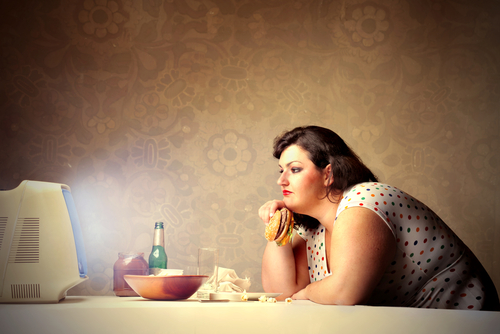
Don’t eat anywhere other than at a table. Don’t eat walking around, at your desk, in front of the TV, or snack out of the fridge. Prepare, then eat a meal at a table, preferably with company and actually experience the process of savoring your food. Eat slowly.

Choose food freshly prepared from whole ingredients like protein, fruit and vegetables.

Model eating like this to your children, and don’t push them into our bad habits. Enjoy family meals together at the table without any screens or phones.

Treat food is fine, savor a small portion as part of a meal if you wish.

Water should be the main drink, wine in moderation can be enjoyed with meals if desired,”

Source: Eating habits in France, what we should copy | Julianne’s Paleo & Zone Nutrition

Review of the Science: Mediterranean Diet Reduces Cardiovascular Disease and Helps Control Diabetes

From my pantry...

From my pantry…

Click the link below if you want to know how we think the diet works.

“The Mediterranean diet can be described as a dietary pattern characterized by the high consumption of plant-based foods, olive oil as the main source of fat, low-to-moderate consumption of fish, dairy products and poultry, low consumption of red and processed meat, and low-to-moderate consumption of wine with meals. The American Diabetes Association and the American Heart Association recommend Mediterranean diet for improving glycemic control and cardiovascular risk factors in type 2 diabetes. Prospective studies show that higher adherence to the Mediterranean diet is associated with a 20-23 % reduced risk of developing type 2 diabetes, while the results of randomized controlled trials show that Mediterranean diet reduces glycosylated hemoglobin levels by 0.30-0.47 %, and is also associated with a 28-30 % reduced risk for cardiovascular events.”

Source: Mediterranean diet for type 2 diabetes: cardiometabolic benefits. – PubMed – NCBI

FYI:  Glycosyated hemoglobin is a blood test that reflects average blood sugar levels over the preceding three months. A reduction of that value, also called hemoglobin A1c, translates to blood sugar levels lowered by 15-20 mg/dl (1 mmol/l).

Steve Parker, M.D.

Are Over-the-Counter Anti-Bacterial Soaps Any Good?

From the FDA:

“The U.S. Food and Drug Administration today issued a final rule establishing that over-the-counter (OTC) consumer antiseptic wash products containing certain active ingredients can no longer be marketed. Companies will no longer be able to market antibacterial washes with these ingredients because manufacturers did not demonstrate that the ingredients are both safe for long-term daily use and more effective than plain soap and water in preventing illness and the spread of certain infections. Some manufacturers have already started removing these ingredients from their products.

This final rule applies to consumer antiseptic wash products containing one or more of 19 specific active ingredients, including the most commonly used ingredients – triclosan and triclocarban. These products are intended for use with water, and are rinsed off after use.  This rule does not affect consumer hand “sanitizers” or wipes, or antibacterial products used in health care settings.

“Consumers may think antibacterial washes are more effective at preventing the spread of germs, but we have no scientific evidence that they are any better than plain soap and water,” said Janet Woodcock, M.D., director of the FDA’s Center for Drug Evaluation and Research (CDER). “In fact, some data suggests that antibacterial ingredients may do more harm than good over the long-term.”

Source: Press Announcements > FDA issues final rule on safety and effectiveness of antibacterial soaps

And the Winner Is: Louisiana 

The contest? Which U.S. state is the fattest.

“Louisiana had the most number of obese adults in the United States in 2015, according to a report released by Trust for America’s Health (TFAH) and the Robert Wood Johnson Foundation (RWJF).Based on The State of Obesity: Better Policies for a Healthier America, 36.2 percent of adults in Louisiana are obese, while Colorado was at the other end of the spectrum with 20.2 percent of its adult population obese.”

Source: Louisiana Has Highest Obesity Rate In Adults Across US : HEALTH : Tech Times

Honorable mention to West Virginia, Mississippi, and Alabama.