Your Level of Fitness May Be More Important Than the Number of Hours You Exercise

She can increase intensity by increasing the weight of those dumbbells

She can increase intensity by increasing the weight of those dumbbells

You’ve heard that “sitting is the new smoking,” right?

Regular physical activity prevents disease and prolongs life. But if you nevertheless still spend to much time sitting around either at work or home, the sitting tends to counteract the benefits of your exercise.

A new study says that your fitness level is more important for long-term health than the number of hours you exercise. Fitness level in this context was cardiorespiratory fitness, probably measured by a maximal-effort treadmill or bicycle test.

Some of your fitness level is inherited, but you can also improve your fitness with the proper intensity or duration of exercise. Rather than exercise longer, I prefer more intensity. Just strolling around the mall at 2 mph for two hours isn’t going to improve fitness in most folks.

From MNT:

“The team conducted a cross-sectional study of 495 women and 379 men from Norway aged between 70-77 years. Sedentary time and physical activity were assessed by accelerometers, while cardiorespiratory fitness was determined by peak oxygen uptake (VO2 peak) – the measurement of the volume of oxygen that the body can utilize during physical exertion.

Researchers compared different levels of activity with fitness levels and cardiovascular risk factor clusters. A cardiovascular risk factor cluster was defined as the presence of three to five risk factors for heart disease.

These risk factors included: elevated waist circumference, elevated blood triglycerides or reduced “good” cholesterol levels, high blood pressure or treatment for hypertension, and elevated fasting blood sugar levels – combined symptoms commonly referred to as metabolic syndrome.

High cardiorespiratory fitness reduced risk of heart diseaseFindings – published in Mayo Clinic Proceedings – showed that when compared with women and men who were the least sedentary, women and men from the most sedentary group were 83 percent and 63 percent more likely to have cardiovascular risk factors from extended time sitting, respectively.

However, when the team took participants’ level of fitness into consideration – measured by having high age-specific cardiorespiratory fitness – they found that the fittest 40 percent had a decreased likelihood of cardiovascular risk factors from prolonged sitting.This finding held true even though the fittest participants spent between 12-13 hours per day sedentary and did not meet current moderate to vigorous physical activity guidelines.”

Source: Fitness, not physical activity, mitigates negative effects of prolonged sitting – Medical News Today

PS: If you’re new to exercise, I teach you how to get started in my books.

Low-Carb, High-Fat Diet Cures GERD in European-American Women

Looks European-American to me

Looks European-American to me, but who knows?

European-American? I guess that’s American women who are of European descent rather than Asian, Eskimo, African, etc.

“Low-carb, high-fat” in my headline is often referred to as LCHF.

GERD is gastro-esophageal reflux disease, i.e., frequent or severe heartburn. GERD is the most common reason to use a proton pump inhibitor drug like Prilosec. It’s expensive. I often run across patients who have taken it every day for years.

Dr. Michael Eades has a great post about GERD and the potential drawbacks of proton pump inhibitors (PPIs):

The scientific literature has shown long-term PPI therapy to be related to the following conditions:

Anemia
Pneumonia
Vitamin B12 deficiency
Impaired calcium absorption
Impaired magnesium absorption
Increased rate fractures, especially hip, wrist and spine
Osteopenia [thin brittle bones]
Rebound effect of extra-heavy gastric acid secretion
Heart attacks

Moving on to the study at hand:

“GERD symptoms and medication usage was more prevalent in European-American women, for whom the relationships between dietary carbohydrate intake, insulin resistance and GERD were most significant. Nevertheless, high-fat/low-carbohydrate diet benefited all women with regard to reducing GERD symptoms and frequency of medication use.”

Source: Dietary carbohydrate intake, insulin resistance and gastro-oesophageal reflux disease: a pilot study in European- and African-American obese women. – PubMed – NCBI

Pay attention and follow all the links and you may be able to see the entire journal report. You just can’t wait, right?!!

Another study showed improvement in heartburn with a low-carb diet a few years ago.

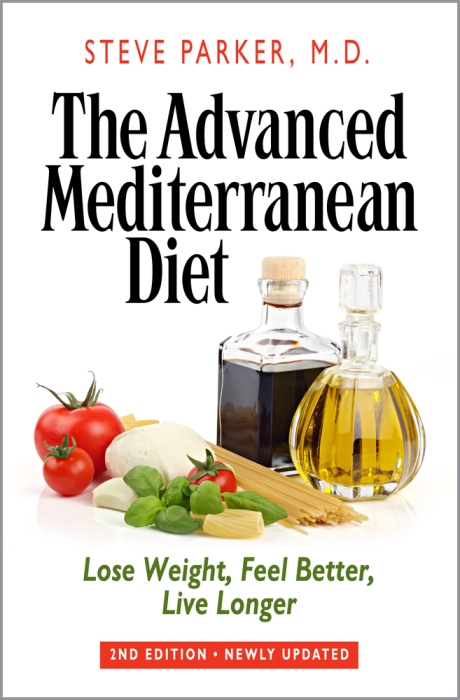
All of my diet books offer low-carb high-fat options except for the original first edition of Advanced Mediterranean Diet from 2007. In 2009, I learned that low-carb high-fat eating wasn’t dangerous.

Steve Parker, M.D.

DietDoctor’s Low-Carb Recipes: Now Much More User-Friendly

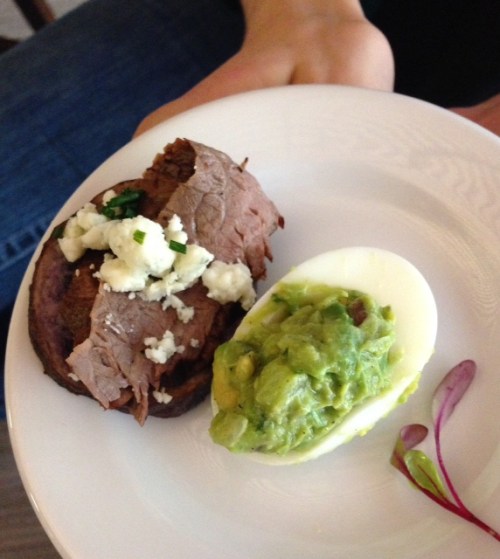
That's a guacamole deviled egg

That’s a guacamole deviled egg

They’ve always been good recipes—including the all-important nutrient analysis—but they’re even better now.

From DietDoctor:

“Our low-carb recipe site is probably already the most popular one in the world, with over 100,000 daily pageviews, several hundred recipes and gorgeous images. Now we’re adding even more great functions.You can now change the number of servings for recipes – the ingredient amount will correspond to the number of servings – and you can now also choose between the US or the metric measurement systems for ingredients. All to make it simpler to use our recipes.

We’ve also added a function for members so that it is now possible to save your personal favorite recipes. To activate the latter feature you need to be logged in, so that your selections can be saved for later.”

Source: The World’s Best Low-Carb Recipes Just Got Better – Diet Doctor

QOTD: Brianna Wiest on Passionate Work

Less active

Cubicle-based desk jockey could still be passionate

We’re doing people an incredible disservice by telling them they should seek, and pursue, what they love. People usually can’t differentiate what they really love and what they love the idea of.

But more importantly, you are not meant to do what you love. You are meant to do what you’re skilled at. Imagine an aspiring doctor with a low IQ but a lot of “passion.” They wouldn’t make it through medical school, and you wouldn’t want them to.

—Brianna Wiest

Chemical Exposures Prove Costly for U.S. & Europe

MPT has the story:

“Illness associated with exposure to endocrine-disrupting chemicals (EDCs) reportedly cost the U.S. economy over $340 billion annually, according to an analysis of data collected in the both the U.S. and the European Union.

Led by Leonardo Trasande, MD, of the NYU School of Medicine, the researchers identified the cost of fifteen diseases and dysfunctions linked with environmental EDC exposure, accounting for over 2% of the U.S.’s GDP, published The Lancet Diabetes & Endocrinology.

“Based on our analyses, stronger regulatory oversight of endocrine disrupting chemicals is needed, not just in Europe, but in the U.S.,” said Trasande in a press release. “This oversight should include not only safety tests on the chemicals’ use in the manufacture of commercial products before the chemicals receive government approval, but also studies of their health impact over time once they are used in consumer products.

“The U.S., according to this analysis, is also paying a much higher cost for these exposures: $340 billion versus $217 billion in the EU, a difference that the authors attribute to a laissez faire approach to regulating EDCs in the U.S.

In a 2015 study also led by Trasande, toxicological and epidemiological data was used to evaluate the strength of the relationships between exposure to various EDCs and a list of disorders. This assessment included various disorders such as loss of IQ points and consequent intellectual disability, ADHD, autism, adult and childhood obesity, adult diabetes, cryptorchidism, testicular cancer, male factor infertility, early cardiovascular mortality due to reduce testosterone, leiomyomas, endometriosis, fibroids, and birth defects.”

Source: Chemical Exposures Prove Costly for U.S. | Medpage Today

Click the link to find ways to reduce your exposure to EDCs.

I doubt my books are a significant source of EDC poisoning.

Calcium Supplementation Increased Risk of Dementia In Women With Cerebrovascular Disease

Calcium supplements are problematic. They may increase the risk of heart attacks. They may raise the odds of premature cardiac death in men. High calcium consumption increased the risk of death in Swedish women.

MedicalNewsToday has a brief report on dementia in women with cerebrovascular disease and calcium supplements:

“Calcium supplements may increase the risk of developing dementia in senior women with cerebrovascular disease, finds a study published in Neurology, the medical journal of the American Academy of Neurology.

Women who took calcium supplements were twice as likely to develop dementia.Cerebrovascular diseases are conditions caused by problems that affect the blood supply to the brain. The four most common types of cerebrovascular disease are stroke, transient ischemic attack (TIA), subarachnoid hemorrhage, and vascular dementia.”

Source: Dementia risk increased with calcium supplements in certain women – Medical News Today

Reduce your risk of dementia with the Mediterranean diet.

Steve Parker MD, Advanced Mediterranean Diet

Two diet books in one

Science-backed diet tips and habits to lose weight 

…according to an article at Business Insider:

“Go Mediterranean.

As if you needed more excuses to eat as if you live on the Mediterranean (olive oil, pasta, hummus, tomato, and cucumber salad — what’s not to love?), studies have shown that a so-called Mediterranean diet may help reduce the risk of heart disease and provide some potential memory-related benefits. And a recent study also found a link between the eating plan and a lower risk of breast cancer in older women.

According to Sasson, there may be an overlooked element of the Mediterranean diet: It may not be so much about what the people who live around the Mediterranean Sea are eating, but rather about what they’re not eating, such as oversize portions and heavily processed food.”

Source: Science-backed diet tips and habits to lose weight – Business Insider

What happens after you die?

Blogger Claire Wolfe posted an interesting story that may change your perspective on the worries of the day:

“As many know by now – I died on October 6 – a Thursday.

I suffered the whole flat-line CPR + defibrillation for four minutes. Only the incredibly professional Grafton VOLUNTEER Ambulance Service (and good neighbors and good luck ) saved my butt.

I was asked several questions after this experience – did I feel the shocks, what do I remember, etc.. One question was – “What was your last thought before losing consciousness?

”Well, actually, I remember the last TWO thoughts before dying –

“Oh shit, it’s Thursday.

”Followed by

“I should have a more uplifting last thought than THAT!”

Source: What happens after you die – Living Freedom

RTWT.

U.S. kids among the least fit in the world 


I've never played soccer but I bet it's great for aerobic fitness

I’ve never played soccer but I bet it’s great for aerobic fitness

You’re not surprised, are you?

See NY Daily News for the details:

“Cue the sad trombone. America’s kids ranked 47 out of 50 countries measuring aerobic fitness — a key factor for overall health — in a study published in the British Journal of Sports Medicine. By comparison, Tanzania, Iceland, Estonia, Norway and Japan raced away with the top five slots. The least fit country: Mexico.”

Source: Oh no! U.S. kids among least fit in the world – NY Daily News

Canadians were in the middle of the pack.

Eating Fish Is Still Good For You

Dead whole fish aren't very appealing to many folks

Dead whole fish aren’t very appealing to many folks

Heart disease is still the #1 killer in the U.S., followed by cancer and chronic lower respiratory tract disease. “Heart disease” is a broad category; the primary killer is heart attacks.

Eating fish regularly seems to reduce your risk of heart attack. I favor the cold-water fatty fish like salmon, trout, herring, and sardines.

I quote the NYT:

“Numerous studies have found that people who eat fish on a regular basis are less likely to die of a heart attack than those who don’t eat it or eat it less than once a month, and a 2006 Harvard review concluded that eating one to two servings of fish rich in omega-3s every week cut the risk of dying of a heart attack by one-third.”

Source: Why Is Fish Good for You? Because It Replaces Meat? – The New York Times

PS: Accidents are the #4 cause of death, and suicide is #10.

PPS: Click for ideas on reducing your risk of cancer.