Late-life high blood pressure may harm brain

What kind of blood pressures are we talking about here? 147 mmHg systolic versus 134.

“Autopsies on nearly 1,300 older people, including about 640 clergy members, found more signs of damage and one of the hallmarks of Alzheimer’s disease in the brains of those with higher blood pressure than among those with pressure closer to normal, researchers reported Wednesday.”

Source: Late-life high blood pressure may harm the brain, study says – ABC News

Which Supplements Work for Osteoarthritis?

Is this young player promoting premature osteoarthritis? Probably not.

Science Based Medicine has a new article on supplements for osteoarthritis pain. A snippet:

“Based on their review, the authors do not recommend omega-3 fatty acids, vitamins D and E, willow bark extract,collagen hydrolysate, glucosamine, chondroitin, combinations of glucosamine and chondroitin, and rose hip. Based on the review, Boswellia serrata extract and pycnogenol appear to demonstrate the most clinically important effects. They also note that while curcumin and MSM demonstrated clinically important effects, the quality of that evidence was low.”

Furthermore…

“The authors conclude that those with osteoarthritis those that are enthusiastic about using supplements, short-term trials of the pycnogenol, curcumin, Boswellia serrata extract, or MSM could be attempted, and should be discontinued after 4-6 weeks if no obvious benefits are noted. Importantly, drug-supplement interactions are not always well understood or well documented, and any supplement should be used with caution (and preferably, consultation with their pharmacist) if being combined with prescription or non-prescription drugs. There is also the very real concerns about supplement quality and batch-to-bath consistency, which complicates evaluations of risk, and determining whether or not they work.”

The SBM writer (Scott Gavura, a pharmacist) also points out the benefits of ongoing exercise, appropriate weight loss, and topical nonsteroidal anti-inflammatory drugs.

Source: Supplements for Osteoarthritis – Evaluating the Evidence – Science-Based Medicine

Need help with weigh loss?

Steve Parker MD, Advanced Mediterranean Diet

Two diet books in one

Mediterranean diet could reduce osteoporosis 

Little old ladies who fall and break their hips nearly always have a bone-thinning condition called osteoporosis. The Mediterranean diet seems to help fight it. From a press release:

“The study is the first long-term, pan-European clinical trial looking at the impact of a Mediterranean diet on bone health in older adults.

More than 1,000 people aged between 65 and 79 took part in the trial, and volunteers were randomised into two groups – one which followed a Mediterranean diet and a control group which did not.Bone density was measured at the start and after 12 months. The diet had no discernible impact on participants with normal bone density, but it did have an effect on those with osteoporosis.

People in the control group continued to see the usual age-related decrease in bone density, but those following the diet saw an equivalent increase in bone density in one part of the body – the femoral neck. This is the area which connects the shaft of the thigh bone to its rounded head, which fits in the hip joint.

UK study lead Prof Susan Fairweather-Tait, from UEA’s Norwich Medical School, said: “This is a particularly sensitive area for osteoporosis as loss of bone in the femoral neck is often the cause of hip fracture, which is common in elderly people with osteoporosis.”

Source: How a Mediterranean diet could reduce osteoporosis – Press Release – UEA

Mediterranean and Paleo Diets Linked to Lower Risk of Death

The Journal of Nutrition in 2017 published a study that looked at baseline diet characteristics of over 21,000 folks, then over the next six years noted who died, and why. Guess how many died?

Here’s a clue. These U.S. study participants were at least 45 years old at the start of the study.

2,513 died. Seems high to me, so I bet the average age was close to 65.

Hank’s not worried about death

I can’t tell for sure from the report’s abstract, but it looks like the researchers were interested in the Mediterranean and caveman diets from the get-go. Study subjects who ate Paleo- or Mediterranean-style were significantly less likely to die over six years. They were less likely to die from any cause or from cancer or from cardiovascular disease.

Why not adopt some Mediterranean diet features? Lose weight with the Advanced Mediterranean Diet.

Also consider the paleo diet (click for my 2012 definition).

Steve Parker, M.D.

Reference:

Paleolithic and Mediterranean Diet Pattern Scores Are Inversely Associated with All-Cause and Cause-Specific Mortality in Adults. First published February 8, 2017, doi: 10.3945/​jn.116.241919. Authors:

  1. Kristine A Whalen
  2. Suzanne Judd
  3. Marjorie L McCullough
  4. W Dana Flanders
  5. Terryl J Hartman
  6. Roberd M Bostick

Abstract

Background: Poor diet quality is associated with a higher risk of many chronic diseases that are among the leading causes of death in the United States. It has been hypothesized that evolutionary discordance may account for some of the higher incidence and mortality from these diseases.

Objective: We investigated associations of 2 diet pattern scores, the Paleolithic and the Mediterranean, with all-cause and cause-specific mortality in the REGARDS (REasons for Geographic and Racial Differences in Stroke) study, a longitudinal cohort of black and white men and women ≥45 y of age.

Methods: Participants completed questionnaires, including a Block food-frequency questionnaire (FFQ), at baseline and were contacted every 6 mo to determine their health status. Of the analytic cohort (n = 21,423), a total of 2513 participants died during a median follow-up of 6.25 y. We created diet scores from FFQ responses and assessed their associations with mortality using multivariable Cox proportional hazards regression models adjusting for major risk factors.

Results: For those in the highest relative to the lowest quintiles of the Paleolithic and Mediterranean diet scores, the multivariable adjusted HRs for all-cause mortality were, respectively, 0.77 (95% CI: 0.67, 0.89; P-trend < 0.01) and 0.63 (95% CI: 0.54, 0.73; P-trend < 0.01). The corresponding HRs for all-cancer mortality were 0.72 (95% CI: 0.55, 0.95; P-trend = 0.03) and 0.64 (95% CI: 0.48, 0.84; P-trend = 0.01), and for all-cardiovascular disease mortality they were 0.78 (95% CI: 0.61, 1.00; P-trend = 0.06) and HR: 0.68 (95% CI: 0.53, 0.88; P-trend = 0.01).

Conclusions: Findings from this biracial prospective study suggest that diets closer to Paleolithic or Mediterranean diet patterns may be inversely associated with all-cause and cause-specific mortality.


Remembering Oleo

Front cover of the cookbook. The “artist” was not given credit.

I ran across a 1973 cookbook put together by my senior year high school classmates, probably as a fundraiser. My mother had saved it for decades but unloaded it on me when she downsized her lifestyle a few years ago.

Food was different back then!

More often than not, recipes calling for vegetables specified frozen veggies like brocolli and cauliflower. Rice was popular, as it still is.

In the Salads category, four of the six recipes included gelatin or Jello. Those four also included whipped cream or whipped milnot. Many of you can’t imagine what I’m talking about. You had to be there. These “salads” were molded gelatin things, usually with added canned fruit. Nothing like what we call salad today in the U.S.

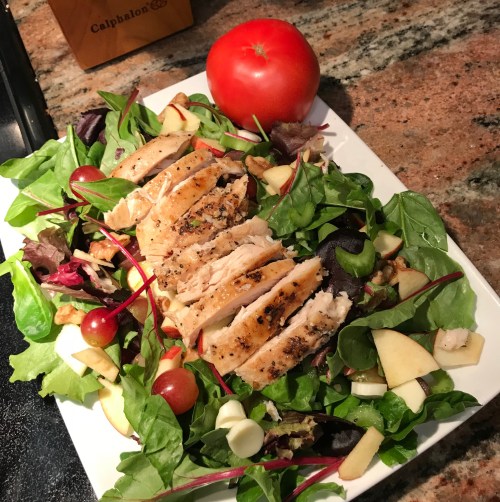
A modern gourmet salad

Casseroles were popular. Remember Green Bean Casserole? “Casserole” was also used to describe the type of pan required.

Karo syrup and Velveeta cheese got a few mentions.

Many of the pie and cakes required oleo or shortening, often with butter in the same recipe. I saw only two reference to liquid vegetable oil (Wesson). I bet Crisco was the leading shortening back then.

Cookies and sweets typically needed butter, margarine, oleo, or shortening. (If you clicked the earlier oleo link, you learned that oleo and margarine are usually the same thing.) We weren’t afraid of butter back then. Butter was probably more expensive than the other fats.

One sweet treat that definitely takes me back to my childhood, and I’ver rarely seen it since then, is…

Chocolate No-Bake Cookies (aka Boiled Cookies)

Ingredients:

  1. 2 cups sugar
  2. 1/2 cup milk
  3. 1/2 cup butter (one stick) (or margarine back in the day)
  4. 1/4 cup (or 4 Tbsp?) cocoa
  5. 1/2 cup peanut butter
  6. 1/2 tsp salt (optional)
  7. 1 tsp vanilla
  8. 2.5 or 3 cups of quick cook oatmeal (aka minute oats)
  9. Optional: 1/2 cup grated coconut or nuts

Mix the sugar, cocoa and salt in a one and half saucepan. Add butter and milk then bring to a boil. Boil for 60-90 seconds, stirring continuously with a wooden spoon (or similar). Remove from heat and add remaining ingredients; if you use the grated coconut or nuts, reduce the oatmeal from three to 2.3 cups. Mix for about a minute. Drop by the spoonful onto wax paper covering a baking sheet. Chill until firm. Yield is 36 cookies. (Thank you Debbie Drake, class of “73! I slightly modified her Rx based on another I’ve had on my desk for seven years.)

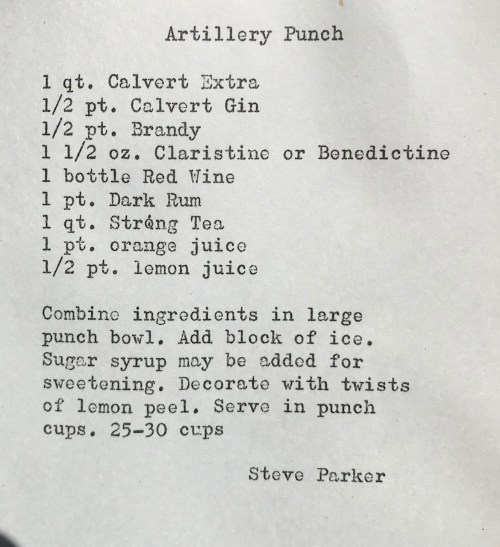
Artillery Punch

The funniest thing about this trip down the memory hole was the recipe I submitted for Artillery Punch. Remember, we were 17 or 18 years old, but there must have been faculty supervising the cookbook committee. A few teachers contributed their own recipes. Mine was the only one of 50 or 60 recipes that included any alcohol. The legal drinking age back then was 18. A recipe like Artillery Punch would never fly in today’s PC world! I don’t remember, but I probably got the recipe from my parents. Did I submit it just for laughs or shock value? Who knows? One of the other kids submitted a recipe for Barbecued Bear, which I think was a joke (fess up, Kip Martin). The Dove Casserole recipe was fer reel.

What the kids these days call Jungle Juice

One classmate provided a recipe for Jew Chicken. Whaaaa….?

Steve Parker, M.D.

PS: It was fun to run across old buddies’ names, like Charles Enos, Howard Sheets, and Jeff Johnson.

Who Says Diets Don’t Work: Effect of intermittent versus continuous energy restriction on weight loss, maintenance and cardiometabolic risk: A randomized 1-year trial 

This research report would probably be interesting to dissect, if you have an extra $36 dollars laying around. Note that calories count, after all. Quotes:

Highlights

•Intermittent and continuous energy restriction resulted in similar weight loss after one year in men and women with obesity.

•Both diets improved cardiovascular risk factors.

•Feeling of hunger may limit long-term adherence to intermittent energy restriction.

Abstract

Background & aims

Long-term adherence to conventional weight-loss diets is limited while intermittent fasting has risen in popularity. We compared the effects of intermittent versus continuous energy restriction on weight loss, maintenance and cardiometabolic risk factors in adults with abdominal obesity and ≥1 additional component of metabolic syndrome.

Methods & results

In total 112 participants (men [50%] and women [50%]) aged 21–70 years with BMI 30–45 kg/m2 (mean 35.2 [SD 3.7]) were randomized to intermittent or continuous energy restriction. A 6-month weight-loss phase including 10 visits with dieticians was followed by a 6-month maintenance phase without additional face-to-face counselling. The intermittent energy restriction group was advised to consume 400/600 kcal (female/male) on two non-consecutive days [per week, presumably]. Based on dietary records both groups reduced energy intake by ∼26–28%. Weight loss was similar among participants in the intermittent and continuous energy restriction groups (8.0 kg [SD 6.5] versus 9.0 kg [SD 7.1]; p = 0.6). There were favorable improvements in waist circumference, blood pressure, triglycerides and HDL-cholesterol with no difference between groups. Weight regain was minimal and similar between the intermittent and continuous energy restriction groups (1.1 kg [SD 3.8] versus 0.4 kg [SD 4.0]; p = 0.6). Intermittent restriction participants reported higher hunger scores than continuous restriction participants on a subjective numeric rating scale (4.7 [SD 2.2] vs 3.6 [SD 2.2]; p = 0.002).

Source: Effect of intermittent versus continuous energy restriction on weight loss, maintenance and cardiometabolic risk: A randomized 1-year trial – Nutrition, Metabolism and Cardiovascular Diseases

Olive oil and prevention of chronic diseases: Summary of an International conference – Nutrition, Metabolism and Cardiovascular Diseases

Olive oil figures prominently in my recipes and diets. A recent conference summarizes why.

Highlights

•Olive oil is the main source of visible fat in the Mediterranean area.

•Research is showing interesting salubrious activities of olive oil.

•Olive oil and its minor components are being actively investigated in several areas.

•Consumption of olive oil has relevant healthy activities.

Abstract

Olive oil is the foremost source of fat in the Mediterranean area and, among other features, sets the Mediterranean diet apart from other dietary regimens. In January 2018, the International Olive Council convened several worldwide experts at the Robert Mondavi Institute (Davis, CA), to discuss and summarize the available data on the effects of olive oil consumption on human health. In this paper, we critically provide a synthesis of the main reported findings, which underscore how and why consuming this oil as part of a balanced diet and healthful lifestyle improves prognosis and extends life- and health-spans.

Source: Olive oil and prevention of chronic diseases: Summary of an International conference – Nutrition, Metabolism and Cardiovascular Diseases

Weight Training May Help to Ease or Prevent Depression 

exercise for weight loss and management, dumbbells

At least he’s trying…

Yet another good article from Gretchen Reynolds at NYT:

“Lifting weights might also lift moods, according to an important new review of dozens of studies about strength training and depression. It finds that resistance exercise often substantially reduces people’s gloom, no matter how melancholy they feel at first, or how often — or seldom — they actually get to the gym and lift.

There already is considerable evidence that exercise, in general, can help to both stave off and treat depression. A large-scale 2016 review that involved more than a million people, for instance, concluded that being physically fit substantially reduces the risk that someone will develop clinical depression. Other studies and reviews have found that exercise also can reduce symptoms of depression in people who have been given diagnoses of the condition.

But most of these past studies and reviews have focused on aerobic exercise, such as walking or jogging. Far less has been known about the possible benefits, if any, of strength training for mental health. One 2017 analysis of past research had found that strength training can help people feel less anxious and nervous.”

Southern European Kids No Longer Eating  Mediterranean Diet, And It Shows

“Countries in Southern Europe, famed for the Mediterranean diet that is held up around the world as an example of healthy eating, now have the highest rates of childhood overweight and obesity, a major survey indicates. The high rate is largely due to the almost complete of loss traditional eating habits in the young.”

Source: Southern European Kids Show Loss of Mediterranean Diet

Nuttin’ But Salads N=1 Experiment: Week 17 Summary and Wrap-Up

Not a salad, but a sunrise from my hospital in the Sonoran desert

It’s over. Four months of mostly nothing but salads.

I wanted to lose some weight. I started at 175.5 lb (79.8 kg) and have ended at 162 lb (73.6 kg). So call it down 13 pounds. Not quite a stone (14 lb), as they say in England.

No regrets. It’s been fun, an adventure, especially since my wife was involved. My suit pants fit again. My family bought me an expensive sturdy belt that will support my holster, and it fits for the first time.

As a reminder: I’ve just been eating twice daily, without snacking in-betweeen meals. Compared to thrice daily meals plus snacking, twice daily meals makes more sense to me from an evolutionary and physiological viewpoint. Eating just twice daily may increase autophagy.

What’s Next?

Avoiding weight regain! And trying to maintain or improve my health as I age. I feel like I’ve really been “eating healthy.” My plan is to continue eating just two meals a day, one of which will be a gourmet salad. The other will include animal proteins, cooked vegetables, legumes, and fruit. I tend to prefer low-carb types of fruits and vegetables.

High Blood Pressure

I don’t remember if I’ve shared with you the effect of this diet on my blood pressure. Starting in January 2017, my blood pressures were hitting 160/110, 150/100 more commonly. Sometimes 170 systolic. For a few years before that, pressures were borderline high. I’m old school, so tend to define hypertension as 140/90 or higher on multiple occasions. In 2017, the American Heart Association re-defined hypertension as pressures over 130/80.  Those numbers make half of the U.S. adult population hypertensive and candidates for drug therapy! And it runs in my family.

That’s more like it…

I started an antihypertensive drug, amlodipine, in late December  2017. Before that, I tried magnesium supplements and hibiscus tea: no help. I reduced alcohol consumption: no help. My amlodipine dose initially was 5 mg/day, then 10 mg/day. The higher dose caused some minor but definite swelling in my feet. To decrease the swelling (edema), I reduced the dose to 5 mg/day. On Feb 6, 2018, I started this Nuttin’ But Salads experiment. That dose reduction indeed reduced my edema. On Feb 12, my records show the lower dose still controlling my pressure.

After nine weeks of the Nuttin’ But Salads experiment, I noticed my pressures were 120/85 or lower. I stopped amlodipine April 9. By April 21, pressures were rising a little but no higher than 130/90. Edema gone almost immediately.

My Omron unit

As I write this, my BP after a 12-hr shift at the hospital is 124/91. The recent average is about 130/92. Not great, but I’m happy with it and not inclined to go back on drug therapy.

Screenshot of the free Health app on my iPhone

Why is my BP lower now? It may well be the salad diet. But also consider my weight loss or much lower alcohol consumption. I’m still drinking hibiscus tea and taking a magnesium supplement, but I was doing that before the salad experiment. I’ll also admit my stress levels may be lower, too.

One of these days I’ll do a nutrient analysis of my salad diet and probably share it with you. I’d love to know if others would see reduced blood pressure with this way of eating, whether or not weight loss was involved or needed.

Steve Parker, M.D.

P.S. I wouldn’t be surprised if my diet has been “deficient” in calcium and vitamin D. Whether or not that matters is another issue.