Use It or Lose It: Fitness Deteriorates With Just Two Weeks of Laziness

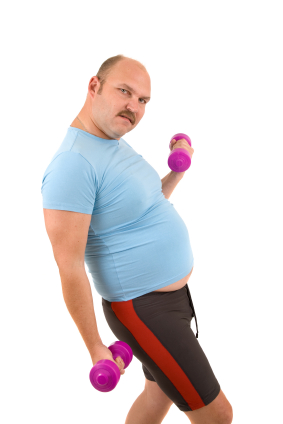
exercise for weight loss and management, dumbbells

At least he’s trying…

From UPI:

A new study proves that the old adage “use it or lose it” is definitely true when it comes to fitness.After just two weeks of sedentary behavior, formerly fit people had:

—A decline in heart and lung health

—Increased waist circumference

—Greater body fat and liver fat

—Higher levels of insulin resistance

Source: Study: Two weeks of no exercise enough to damage fit people’s bodies – UPI.com

It’s a small study, just 28 subjects, so may not be reproducible. But I bet it’s reliable.

Steve Parker, M.D.

Steve Parker MD, Advanced Mediterranean Diet

This life-changing book has an entire chapter on exercise. Click the pic to purchase at Amazon.com


Nuts May Prevent Age-Related Weight Gain

Remember…peanuts aren’t nuts, they’re legumes

From NPR:

Eating a handful of almonds, walnuts, peanuts or any type of nut on a regular basis may help prevent excessive weight gain and even lower the risk of obesity, new research suggests.

It may be that substituting healthy nuts for unhealthy snacks is a simple strategy to ward off the gradual weight gain that often accompanies aging, according to the researchers. Nuts also help us feel full longer, which might offset cravings for junk food.Researchers looked at the diet and weight of more than 280,000 adults taking part in three long-term research studies. Over more than 20 years of monitoring, participants were asked every four years about their weight and, among other things, how often, over the preceding year, they had eaten a serving (about one ounce) of nuts.

Source: Just A Handful Of Nuts May Help Keep Us From Packing On The Pounds As We Age : The Salt : NPR

Steve Parker, M.D.

PS: Both of my Mediterranean Diets include nuts.

Steve Parker MD, Advanced Mediterranean Diet

Is Rapamycin the Holy Grail of Anti-Aging Medicine?

MRI of brain

Rapamycin may prevent chronic age-related diseases like Alzheimer’s Disease. From P.D. Mangan who interviewed Alan S. Greeen, M.D., prescriber and user of the drug himself:

For many informed observers of anti-aging science and practice, rapamycin appears to be one of the most promising anti-aging treatments currently available. Originally (and still) used as an immunosuppressant for transplant patients, it’s been found to increase lifespan in lab animals.

Side effects of rapamycin are a problem, but it’s since been found that a transient (3-month) treatment with rapamycin can extend life expectancy up to 60%. More studies are needed to determine the dosing regimen with maximal efficacy and minimal side effects. Intermittent dosing at once every 5 days also extends lifespan in mice, and this “demonstrates that the anti-aging potential of rapamycin is separable from many of its negative side effects and suggests that carefully designed dosing regimens may permit the safer use of rapamycin and its analogs for the treatment of age-related diseases in humans. ” Note also that this dosing regimen wasn’t started until the mice were quite old, at 20 months, and it still extended lifespan.

The principal mechanism of action of rapamycin is the inhibition of the cellular nutrient sensor and growth regulator mTOR. In elderly humans, weekly dosing of an mTOR inhibitor (not rapamycin) increased immune function as measured by response to a flu vaccine.

Given all of this, rapamycin as it relates to the slowing or reversal of aging, is still an experimental drug. However, we will be waiting a long time, perhaps forever, for the FDA to approve rapamycin for anti-aging, and since it’s a generic drug, there’s little incentive for drug companies to pursue clinical trials. Meanwhile, many people have begun to realize that they could be dead before this treatment becomes recognized – again, if ever.

Source: Rapamycin Anti-Aging Medicine: An Update with Alan S. Green, M.D. – Rogue Health and Fitness

Mangan’s site is a trove of anti-aging strategies.

Steve Parker, MD.

Steve Parker MD, Advanced Mediterranean Diet

Click the pic to purchase at Amazon.com

Transcranial Electromagnetic Treatment in Alzheimer’s Disease: Cognitive Enhancement and Associated Changes in Cerebrospinal Fluid, Blood, and Brain Imaging 

A) A MemorEMTM head device being worn by a subject. B) Position of the eight electromagnetic emitters embedded between the device’s two-layered head cap. Emitters collectively provide global forebrain TEMT via rapid sequential emitter activation.

This is from the cited journal article. I hope this is considered fair use rather than copyright infringement.

This is the most creative therapeutic approach to Alzheimer’s Disease I’ve seen in a while. It may even be preventative. I have no idea whether it will pan out in the long run. I’m always skeptical.

Click for a Scientific American article that discusses a different experimental protocol and probably different device.

Abstract

Background: Small aggregates (oligomers) of the toxic proteins amyloid-β (Aβ) and phospho-tau (p-tau) are essential contributors to Alzheimer’s disease (AD). In mouse models for AD or human AD brain extracts, Transcranial Electromagnetic Treatment (TEMT) disaggregates both Aβ and p-tau oligomers, and induces brain mitochondrial enhancement. These apparent “disease-modifying” actions of TEMT both prevent and reverse memory impairment in AD transgenic mice.

Objective: To evaluate the safety and initial clinical efficacy of TEMT against AD, a comprehensive open-label clinical trial was performed.

Methods: Eight mild/moderate AD patients were treated with TEMT in-home by their caregivers for 2 months utilizing a unique head device. TEMT was given for two 1-hour periods each day, with subjects primarily evaluated at baseline, end-of-treatment, and 2 weeks following treatment completion.

Results: No deleterious behavioral effects, discomfort, or physiologic changes resulted from 2 months of TEMT, as well as no evidence of tumor or microhemorrhage induction. TEMT induced clinically important and statistically significant improvements in ADAS-cog, as well as in the Rey AVLT. TEMT also produced increases in cerebrospinal fluid (CSF) levels of soluble Aβ1-40 and Aβ1-42, cognition-related changes in CSF oligomeric Aβ, a decreased CSF p-tau/Aβ1-42 ratio, and reduced levels of oligomeric Aβ in plasma. Pre- versus post-treatment FDG-PET brain scans revealed stable cerebral glucose utilization, with several subjects exhibiting enhanced glucose utilization. Evaluation of diffusion tensor imaging (fractional anisotropy) scans in individual subjects provided support for TEMT-induced increases in functional connectivity within the cognitively-important cingulate cortex/cingulum.

Conclusion: TEMT administration to AD subjects appears to be safe, while providing cognitive enhancement, changes to CSF/blood AD markers, and evidence of stable/enhanced brain connectivity.

Source: A Clinical Trial of Transcranial Electromagnetic Treatment in Alzheimer’s Disease: Cognitive Enhancement and Associated Changes in Cerebrospinal Fluid, Blood, and Brain Imaging – IOS Press

Steve Parker, M.D.

PS: I notice that several of the study authors are based in my area of operations, south-central Arizona.

PPS: The Mediterranean diet for years has been linked to lower risk of dementia.

Steve Parker MD, Advanced Mediterranean Diet

Click the pic to purchase at Amazon.com

High-Dose Vitamin D Supplementation May Be Worse or No Better Than Low-Dose

Lately I’m seeing more patients taking high-dose vitamin D supplements (usually D3, aka cholecalciferol) rather than traditional 400–800 IU/day.

From a recent study:

This randomized trial compares the effects of 400 vs 4000 vs 10 000 IU of vitamin D on total volumetric bone mineral density and bone strength of the radius and tibia.

Conclusion:

Among healthy adults, treatment with vitamin D for 3 years at a dose of 4000 IU per day or 10 000 IU per day, compared with 400 IU per day, resulted in statistically significant lower radial BMD; tibial BMD was significantly lower only with the 10 000 IU per day dose. There were no significant differences in bone strength at either the radius or tibia. These findings do not support a benefit of high-dose vitamin D supplementation for bone health; further research would be needed to determine whether it is harmful.

Source: Effect of High-Dose Vitamin D Supplementation on Volumetric Bone Density and Bone Strength: A Randomized Clinical Trial | Osteoporosis | JAMA | JAMA Network

Steve Parker, M.D.

Steve Parker MD, Advanced Mediterranean Diet

Click the pic to purchase at Amazon.com

Animal Versus Plant Protein: Which Is Healthier?

Filet mignon and sautéed asparagus

“In this large prospective study, higher plant protein intake was associated with lower total and CVD-related mortality. Although animal protein intake was not associated with mortality outcomes, replacement of red meat protein or processed meat protein with plant protein was associated with lower total, cancer-related, and CVD-related mortality.”

Source: Association of Animal and Plant Protein Intake With All-Cause and Cause-Specific Mortality | Cardiology | JAMA Internal Medicine | JAMA Network

Steve Parker, M.D.

Steve Parker MD, Advanced Mediterranean Diet

Click the pic to purchase at Amazon.com

Soft Drinks Kill

Green tea is not linked to premature death

The study at hand involved Europeans. It’s the first time I’ve seen artificially-sweetened soft drinks linked to premature death.

From JAMA Network:

This study found that consumption of total, sugar-sweetened, and artificially sweetened soft drinks was positively associated with all-cause deaths in this large European cohort; the results are supportive of public health campaigns aimed at limiting the consumption of soft drinks.

Source: Association Between Soft Drink Consumption and Mortality in 10 European Countries | Cardiology | JAMA Internal Medicine | JAMA Network

Steve Parker, M.D.

Steve Parker MD, Advanced Mediterranean Diet

Click the pic to purchase at Amazon.com

Does Calcium  Intake Affect Postmenopausal Osteoporosis or Osteopenia?

Waste of money and effort?

Many physicians worry that inadequate calcium consumption causes or contributes to thin, brittle, easily breakable bones in postmenopausal women. A recent study suggests that calcium intake doesn’t matter.

Abstract

CONTEXT:

Calcium intakes are commonly lower than the recommended levels, and increasing calcium intake is often recommended for bone health.

OBJECTIVE:To determine the relationship between dietary calcium intake and rate of bone loss in older postmenopausal women.

PARTICIPANTS:

Analysis of observational data collected from a randomized controlled trial. Participants were osteopenic (hip T-scores between -1.0 and -2.5) women, aged >65 years, not receiving therapy for osteoporosis nor taking calcium supplements. Women from the total cohort (n = 1994) contributed data to the analysis of calcium intake and bone mineral density (BMD) at baseline, and women from the placebo group (n = 698) contributed data to the analysis of calcium intake and change in BMD. BMD and bone mineral content (BMC) of the spine, total hip, femoral neck, and total body were measured three times over 6 years.

RESULTS:

Mean calcium intake was 886 mg/day. Baseline BMDs were not related to quintile of calcium intake at any site, before or after adjustment for baseline age, height, weight, physical activity, alcohol intake, smoking status, and past hormone replacement use. There was no relationship between bone loss and quintile of calcium intake at any site, with or without adjustment for covariables. Total body bone balance (i.e., change in BMC) was unrelated to an individuals’ calcium intake (P = 0.99).

CONCLUSIONS:

Postmenopausal bone loss is unrelated to dietary calcium intake. This suggests that strategies to increase calcium intake are unlikely to impact the prevalence of and morbidity from postmenopausal osteoporosis.

Source: Dietary Calcium Intake and Bone Loss Over 6 Years in Osteopenic Postmenopausal Women. – PubMed – NCBI

Steve Parker, M.D.

PS: Elderly men get osteoporosis, too. But when the Emergency Department calls me to admit an older patient with a hip fracture, it’s a woman 9 out of 10 times.

Steve Parker MD, Advanced Mediterranean Diet

Click the pic to purchase at Amazon.com

QOTD: H.L. Mencken on Practical Politics

The whole aim of practical politics is to keep the populace alarmed (and hence clamorous to be led to safety) by menacing it with an endless series of hobgoblins, all of them imaginary.

—H.L. Mencken (born in 1880)

Substitution of Tea or Coffee for Sugar-Sweetened Beverages Linked to Lower Type 2 Diabetes Incidence in Europe

Green tea

Sugar-sweetened beverages (SSBs) increase the risk of developing type 2 diabetes. If you want to avoid T2 diabetes, what should you substitute? The study at hand looked at milk, juice, coffee, and tea. Why not water?

From The Journal of Nutrition:

These findings indicate a potential benefit of substituting coffee or tea for SSBs for the primary prevention of T2D and may help formulate public health recommendations on beverage consumption in different populations.

Source: Estimated Substitution of Tea or Coffee for Sugar-Sweetened Beverages Was Associated with Lower Type 2 Diabetes Incidence in Case–Cohort Analysis across 8 European Countries in the EPIC-InterAct Study | The Journal of Nutrition | Oxford Academic

Steve Parker, M.D.

Steve Parker MD, Advanced Mediterranean Diet

Two diets in one book, including the Ketogenic Mediterranean Diet