The Last American Vagabond posted an interview with what appears to be a well-qualified Canadian pathologist who is very wary of the mRNA vaccines against COVID-19. Essentially he says that we don’t know if they’re adequately safe, especially for women of child-bearing age, pregnant women, and young folks. Dr Hodkinson reminds us that the survival rate for COVID-19 is generally very high, so why take chances with a vaccine of dubious safety.
Look, I don’t know for sure whether hydroxychloroquine is effective for prevention, early treatment, or late treatment of COVID-19. If you’re interested in the clinical studies regarding this issue, here’s a list of pertinent articles. I have no idea if the articles are comprehensive or cherry-picked. The authors of the list wish to remain anonymous, citing concern about death threats and loss of jobs.
I considered the few clinical studies available in Spring 2020 and was not impressed with the efficacy of hydroxychloroquine. The hospital where I work may not let me prescribe hydroxychloroquine even if I wanted to. I recently admitted a patient who needed the drug for a non-COVID diagnosis and the ordering software would not cooperate, which is very unusual. I had to go through the hospital pharmacist; the patient got the drug.
I do think it’s highly suspicious for politicians and others to second-guess and supersede the judgment of physicians. This, plus censorship and deplatforming by social media companies of folks who don’t toe the line of the authorities, adds fuel to the fire of conspiracy theorists. In my decades of medical pracitce, I’ve never seen anything like it.
We’ve seen enough government screw-ups and lies recently and over the years that you should always question the official narrative.
From the same authors of the first list, here’s their list of ivermectin articles. The also consider zinc, vitamin C, remdesivir, and several other therapies for COVID-19.
Here’s an assignment for an energetic investigative journalist. Find out who’s making money, and how much, on the development and distribution of the coronavirus vaccines.
Posted onJune 13, 2021|Comments Off on Semaglutide Now Available to Help With Weight Loss
Potential customers
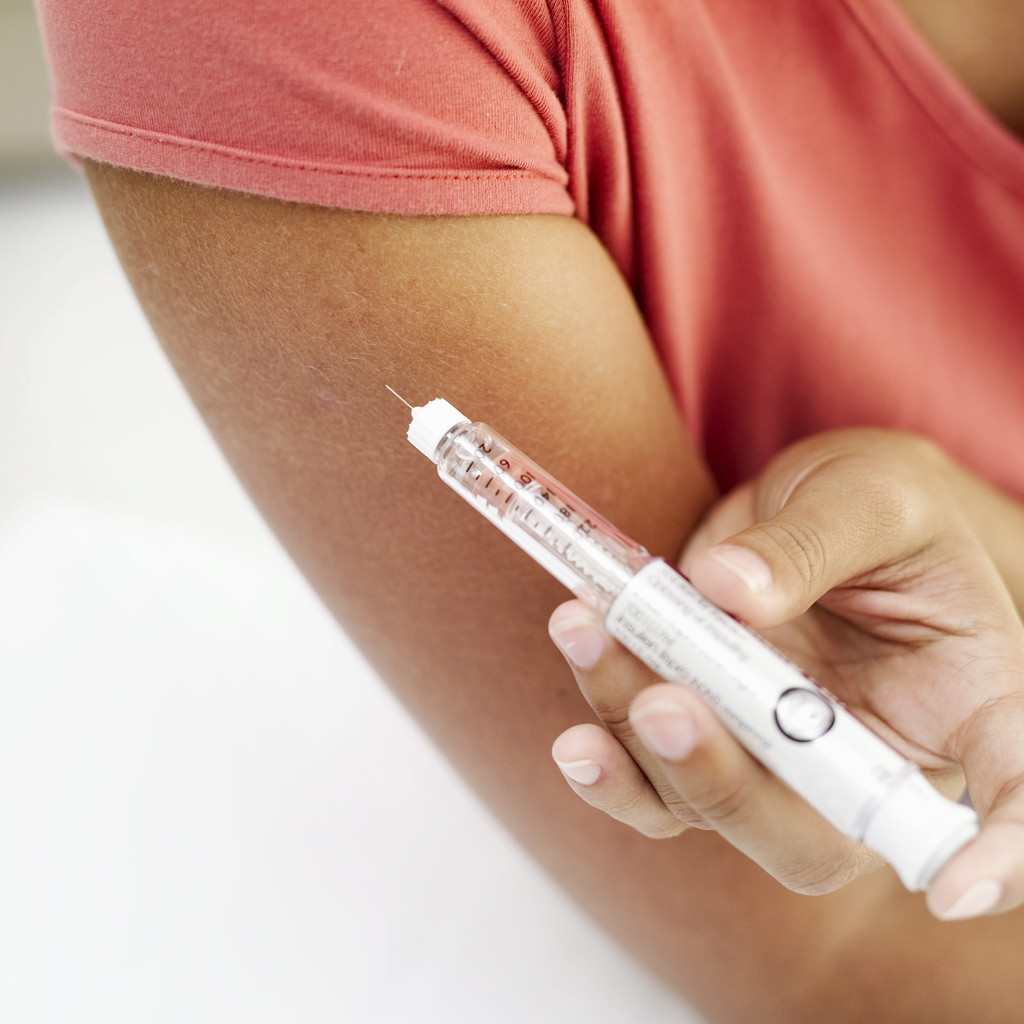
Semaglutide was originally FDA-approved as a treatment for type 2 diabetes. The drug mimics a natural hormone called glucagon-like peptide-1 (GLP-1). It will be sold under the trade name Wegovy. The dose of this injectable medication must be increased gradually over 16 to 20 weeks to 2.4 mg once weekly to reduce gastrointestinal side effects. I have no idea how much it will cost. From the FDA:
Today, the U.S. Food and Drug Administration approved Wegovy (semaglutide) injection (2.4 mg once weekly) for chronic weight management in adults with obesity or overweight with at least one weight-related condition (such as high blood pressure, type 2 diabetes, or high cholesterol), for use in addition to a reduced calorie diet and increased physical activity. This under-the-skin injection is the first approved drug for chronic weight management in adults with general obesity or overweight since 2014. The drug is indicated for chronic weight management in patients with a body mass index (BMI) of 27 kg/m2 or greater who have at least one weight-related ailment or in patients with a BMI of 30 kg/m2 or greater.
The most common side effects of semaglutide include nausea, diarrhea, vomiting, constipation, abdominal (stomach) pain, headache, fatigue, dyspepsia (indigestion), dizziness, abdominal distension, eructation (belching), hypoglycemia (low blood sugar) in patients with type 2 diabetes, flatulence (gas buildup), gastroenteritis (an intestinal infection) and gastroesophageal reflux disease (a type of digestive disorder).
Posted onJune 3, 2021|Comments Off on Mediterranean Diet Decreased Hospital Length of Stay, Reduced Mortality, and Cut Medical Costs of Elderly Patients
Somewhere on on the Mediterranean Sea
The study at hand involved 183 patients in Greece.
In multivariate analyses, hospital LOS [length of stay] decreased by 0.3 d for each unit increase of MedDiet score (P < 0.0001), 2.1 d for each 1 g/dL increase of albumin (P = 0.001) and increased 0.1 d for each day of previous admissions (P < 0.0001). Extended hospitalization (P < 0.0001) and its interaction with MedDiet score (P = 0.01) remained the significantly associated variables for financial cost. Mortality risk increased 3% per each year increase of age (hazard ratio [HR], 1.03; P = 0.02) and 6% for each previous admission (HR, 1.06; P = 0.04); whereas it decreased 13% per each unit increase of MedDiet score (HR, 0.87; P < 0.0001).
Conclusion
Adoption of the MedDiet decreases duration of admission and long-term mortality in hospitalized patients >65 y of age, with parallel reduction of relevant financial costs.
Posted onMay 11, 2021|Comments Off on Lack of Related Coronavirus Antibodies Linked to Severe Illness from COVID-19
Antibodies against human coronavirus OC43 help suppress COVID-19
My colleagues and I often wonder why we see otherwise healthy 35- to 50-year-olds come into the hospital pretty sick with COVID-19. After all, isn’t it the 65 and older crowd with multiple chronic illnesses the ones that develop critical COVID-19? A recent study provides at least a partial explanation why some folks get much sicker than others.
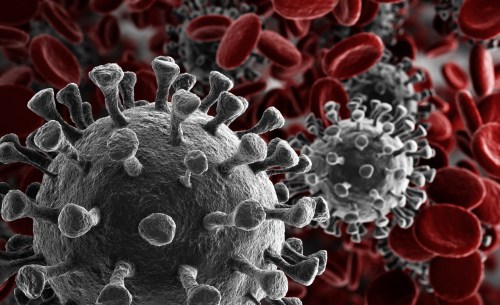
First off, note that 30-40% of head colds are caused by coronaviruses. Most of us get one or two colds a year. SARS-CoV-2 is the particular coronavirus that causes COVID-19. Another human coronavirus, called OC43, commonly causes infection, which leads to antibody production. It turns out that these antibodies help protect us from severe disease caused by the COVID-19 coronavirus. Some of these otherwise healthy but now critically ill middle-aged COVID-19 patients just don’t have antibodies to OC 43. So SARS-CoV-2 spreads through them more virulently.
After COVID-19 emerged on U.S shores, providers began reviewing the emerging basic science, translational, and clinical data to identify potentially effective treatment options. In addition, a multitude of both novel and repurposed therapeutic agents were used empirically and studied within clinical trials.
Areas of Uncertainty:
The majority of trialed agents have failed to provide reproducible, definitive proof of efficacy in reducing the mortality of COVID-19 with the exception of corticosteroids in moderate to severe disease. Recently, evidence has emerged that the oral antiparasitic agent ivermectin exhibits numerous antiviral and anti-inflammatory mechanisms with trial results reporting significant outcome benefits. Given some have not passed peer review, several expert groups including Unitaid/World Health Organization have undertaken a systematic global effort to contact all active trial investigators to rapidly gather the data needed to grade and perform meta-analyses.
Data Sources:
Data were sourced from published peer-reviewed studies, manuscripts posted to preprint servers, expert meta-analyses, and numerous epidemiological analyses of regions with ivermectin distribution campaigns.
Therapeutic Advances:
A large majority of randomized and observational controlled trials of ivermectin are reporting repeated, large magnitude improvements in clinical outcomes. Numerous prophylaxis trials demonstrate that regular ivermectin use leads to large reductions in transmission. Multiple, large “natural experiments” occurred in regions that initiated “ivermectin distribution” campaigns followed by tight, reproducible, temporally associated decreases in case counts and case fatality rates compared with nearby regions without such campaigns.
Conclusions:
Meta-analyses based on 18 randomized controlled treatment trials of ivermectin in COVID-19 have found large, statistically significant reductions in mortality, time to clinical recovery, and time to viral clearance. Furthermore, results from numerous controlled prophylaxis trials report significantly reduced risks of contracting COVID-19 with the regular use of ivermectin. Finally, the many examples of ivermectin distribution campaigns leading to rapid population-wide decreases in morbidity and mortality indicate that an oral agent effective in all phases of COVID-19 has been identified.
Parker here again. My understanding of Emergency Use Authorization, which applies to all COVID vaccines used in the U.S. today, is that they are authorized only if there are no other proven effective treatments available. In which case, the Big Pharma vaccine manufacturers may want to suppress the study at hand.
Steve Parker, M.D.
PS: There is no consensus on the dose of ivermectin for the patients I see, i.e, those sick enough to be in the hospital. Single dose of 0.4 to 0.15 mg/kg? Subsequent dose seven days later “if needed”? I see multiple different dosing regimens in the article.
Posted onApril 28, 2021|Comments Off on Resistance Training Improves Insulin Resistance in Overweight Men
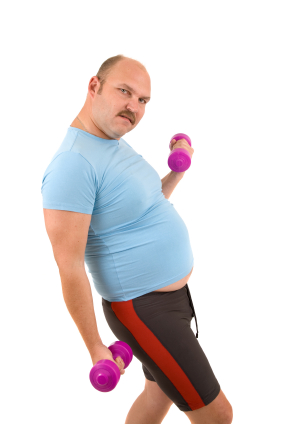
At least he’s trying…
Testosterone is one reason men are better than women at push-ups
You go, girl!
Didn’t we already know this?
Insulin is a blood-borne hormone that the pancreas gland secretes in order to keep blood sugar levels from getting too high. (Insulin does many other things, but table that for now.) Insulin triggers certain body cells to absorb glucose from the bloodstream. “Insulin resistance” means that these cells don’t respond to insulin as well as they should, so either the pancreas secretes even more insulin (hyperinsulinemia) or blood sugar levels rise. Insulin resistance is a harbinger of type 2 diabetes mellitus. Most overweight or obese type 2 diabetics have insulin resistance. Many experts think hyperinsulinemia causes disease by itself, regardless of blood sugar levels. So it may be best to avoid insulin resistance and hyperinsulinemia.
The aim of the study was to investigate the effects of 6 weeks of resistance exercise training, composed of one set of each exercise to voluntary failure, on insulin sensitivity and the time course of adaptations in muscle strength/mass. Ten overweight men (age 36 ± 8 years; height 175 ± 9 cm; weight 89 ± 14 kg; body mass index 29 ± 3 kg m−2) were recruited to the study. Resistance exercise training involved three sessions per week for 6 weeks. Each session involved one set of nine exercises, performed at 80% of one‐repetition maximum to volitional failure. Sessions lasted 15–20 min. Oral glucose tolerance tests were performed at baseline and post‐intervention. Vastus lateralis muscle thickness, knee‐extensor maximal isometric torque and rate of torque development (measured between 0 and 50, 0 and 100, 0 and 200, and 0 and 300 ms) were measured at baseline, each week of the intervention, and after the intervention. Resistance training resulted in a 16.3 ± 18.7% (P < 0.05) increase in insulin sensitivity (Cederholm index). Muscle thickness, maximal isometric torque and one‐repetition maximum increased with training, and at the end of the intervention were 10.3 ± 2.5, 26.9 ± 8.3, 18.3 ± 4.5% higher (P < 0.05 for both) than baseline, respectively. The rate of torque development at 50 and 100 ms, but not at 200 and 300 ms, increased (P < 0.05) over the intervention period. Six weeks of single‐set resistance exercise to failure results in improvements in insulin sensitivity and increases in muscle size and strength in young overweight men.
She’s at little risk of serious illness if she’s generally healthy
The problem is that the virus mutates over time, perhaps to the point that the vaccinated immune system doesn’t recognize the new mutant. Learn the word endemic; you’ll be hearing it more often.
From The Guardian in March, 2021:
The planet could have a year or less before first-generation Covid-19 vaccines are ineffective and modified formulations are needed, according to a survey of epidemiologists, virologists and infectious disease specialists.
* * *
The grim forecast of a year or less comes from two-thirds of respondents, according to the People’s Vaccine Alliance, a coalition of organisations including Amnesty International, Oxfam, and UNAIDS, who carried out the survey of 77 scientists from 28 countries. Nearly one-third of the respondents indicated that the time-frame was likely nine months or less.
Another issue is that we don’t know how long the vaccine’s effectiveness lasts. Pfizer’s CEO recently suggested a booster by be needed as soon as six months after the last shot.







 Advanced Mediterranean Diet