Posted onSeptember 4, 2021|Comments Off on 1976 Swine Flu Debacle: Any Parallels to the Current Pandemic?
It’s probably just a matter of time before YouTube disappears this video since it is subversive to the MSM and political narrative. Don’t focus too much on Guillain-Barre Syndrome. The important points are misleading propaganda, the hasty roll-out of the swine flu vaccine, government malfeasance, and apparent lying by a former head of the CDC. Enjoy!
I thank WordPress for not censoring me. I hope it’s not because my readership is so minuscule that I’m not on their radar screen!
The five authors conclude that ivermectin (IVM) is effective in both treatment and prevention of COVID-19. They write that it cuts mortality of the disease by somewhere between 20 and 67%. “Six of seven meta-analyses of IVM treatment RCTs reporting in 2021 found notable reductions in COVID-19 fatalities, with a mean 31% relative risk of mortality vs. controls.” The authors are not saying it’s a miracle cure for everyone.
Preventative doses reduce the incidence of symptomatic COVID-19 between 20% (150 microgram/kg weekly) and 50% (12 mg dose (~150 microgram/kg) given once for 42 days of coverage).
We have plenty FDA-approved drugs with similar efficacy numbers.
How does IVM work? “A likely biological mechanism has been indicated to be competitive binding with SARS-CoV-2 spike protein sites….”
A few excerpts:
Recently, Dr Satoshi Omura, the Nobel co-laureate for the discovery of IVM, and colleagues conducted a comprehensive review of IVM clinical activity against COVID-19, concluding that the preponderance of the evidence demonstrated major reductions in mortality and morbidity. Our review of that evidence, updated with consideration of several new studies, supports the same conclusion.
IVM has been used safely in 3.7 billion doses worldwide since 1987 and is well tolerated even at much greater doses than the standard single dose of 200 μg/kg. It has been used in randomized controlled trials for COVID-19 treatment at cumulative doses of 1500 μg/kg, 1600 μg/kg and 3000 μg/kg over 4 or 5 days with only small percentages of mild or transient adverse effects.
Why not RTWT? Note the Peruvian experience. Also see the post-post-postscript (PPPS) and post-post-post-postscripts (PPPPS) below if you want to be totally and uncomfortably mystified.
Steve Parker, M.D.
PS: One of the five authors (TJB) “is a principal in Topelia Therapeutics (Ventura, California), which seeks to commercialize cost-effective treatments for COVID-19, including IVM. All other authors report no conflicts of interest.” Some of you will also discount the reliability of this article because P.A. McCullough is one of the authors.
PPS: One thing I noticed while reading some of the references for the main article is that some investigators define COVID-19 infection as a positive PCR or a new positive antibody test, regardless of symptoms. Do you care much if you feel fine but one of those tests are positive? Most folks don’t. (I’ll admit those tests may have some clinical and public health research applications. Remember that if the cycle threshold on the PCR test is set too high (over 25-30?), the test is wildly inaccurate. Next time you get a COVID-19 PCR test, ask for the cycle threshold. You won’t get an answer.
“Based on the current very low- to low-certainty evidence, we are uncertain about the efficacy and safety of ivermectin used to treat or prevent COVID-19. The completed studies are small and few are considered high quality. Several studies are underway that may produce clearer answers in review updates. Overall, the reliable evidence available does not support the use of ivermectin for treatment or prevention of COVID-19 outside of well-designed randomized trials.”
A new study published in the journal Nature estimates that 103 million Americans, or 31 percent of the U.S. population, had been infected with SARS-CoV-2 by the end of 2020. Columbia University Mailman School of Public Health researchers modeled the spread of the coronavirus, finding that fewer than one-quarter of infections (22%) were accounted for in cases confirmed through public health reports based on testing.
Posted onSeptember 2, 2021|Comments Off on Cincinnati Facing a Nursing Shortage Due to Vaccine Mandate
Photo by Cedric Fauntleroy on Pexels.com. A healthcare hero putting her life on the line, whether or not vaccinated
A hospital bed is worthless unless there are support staff to service that bed’s occupant. Hospitalized COVID-19 patients need nurses, PCTs (patient care technicians), respiratory therapists, physicians, pharmacists, and housekeeping. In this circumstance, nurses and respiratory therapists are more important than physicians.
From Cinncinati.com:
Pushback against area hospital systems’ mandates for employees to be vaccinated against COVID-19 continues with the latest coming from more than 100 nurses who say they’d quit before complying.
A number of UC Medical Center nurses, responding to a union survey, indicated they would leave their jobs if the hospital system’s vaccine mandate is finalized.
The Ohio Nurses Association survey was conducted immediately after UC Health and other area hospital systems announced they would mandate the COVID-19 vaccine for their employees. The survey, done Aug. 5-12, was made public Wednesday. Results show that 136 of 456 nurses who responded – balked at the mandate. The medical center has more than 1,500 nurses.
PS: To avoid the hospital, you need to stay as healthy as possible, which includes regular exercise and weight management. At least change your weight category from obese to overweight. I can help.
Posted onSeptember 1, 2021|Comments Off on Prediabetes May Not Be a Meaningful Diagnosis for those over 70
Hmmm…
When physicians identify a patient as having prediabetes, we usually tell them they are at increased risk for actual diabetes in the next few years, and recommend steps that should reduce the risk of progression. A recent study of older folks (average age 76) suggests the risk of progression isn’t very high. In fact the odds are greater for a return to normal blood sugars, or death. The report is a little confusing because the authors used two definitions of prediabetes.
Question: What is the risk of progression to diabetes among older adults with prediabetes (based on glycated hemoglobin level of 5.7%-6.4%, fasting glucose levels of 100-125 mg/dL, either, or both) in a community-based population?
Findings: In this cohort study of 3412 older adults, the prevalence of prediabetes (mean [SD] age, 75.6 [5.2] years) was high and differed substantially depending on the definition used, with estimates ranging from 29% for glycated hemoglobin levels of 5.7% to 6.4% and fasting glucose levels of 100 to 125 mg/dL to 73% for either glycated hemoglobin levels of 5.7% to 6.4% or fasting glucose levels of 100 to 125 mg/dL. During the 6 years of follow-up, death or regression to normoglycemia from prediabetes was more frequent than progression to diabetes.
Meaning: Prediabetes may not be a robust diagnostic entity in older age.
Posted onAugust 31, 2021|Comments Off on High Glycemic Index Eating Associated With Premature Death and Cardiovascular Disease
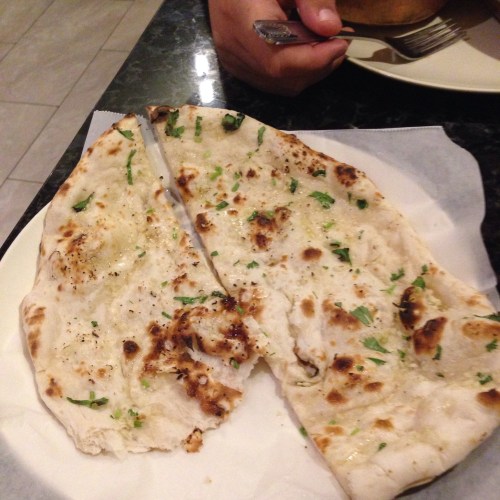
Naan, a type of flat bread with a high glycemic index
Haven’t we know this for years? From New England Journal of Medicine:
Most data regarding the association between the glycemic index and cardiovascular disease come from high-income Western populations, with little information from non-Western countries with low or middle incomes. To fill this gap, data are needed from a large, geographically diverse population.
METHODS
This analysis includes 137,851 participants between the ages of 35 and 70 years living on five continents, with a median follow-up of 9.5 years. We used country-specific food-frequency questionnaires to determine dietary intake and estimated the glycemic index and glycemic load on the basis of the consumption of seven categories of carbohydrate foods. We calculated hazard ratios using multivariable Cox frailty models. The primary outcome was a composite of a major cardiovascular event (cardiovascular death, nonfatal myocardial infarction, stroke, and heart failure) or death from any cause.
RESULTS
In the study population, 8780 deaths and 8252 major cardiovascular events occurred during the follow-up period. After performing extensive adjustments comparing the lowest and highest glycemic-index quintiles, we found that a diet with a high glycemic index was associated with an increased risk of a major cardiovascular event or death, both among participants with preexisting cardiovascular disease (hazard ratio, 1.51; 95% confidence interval [CI], 1.25 to 1.82) and among those without such disease (hazard ratio, 1.21; 95% CI, 1.11 to 1.34). Among the components of the primary outcome, a high glycemic index was also associated with an increased risk of death from cardiovascular causes. The results with respect to glycemic load were similar to the findings regarding the glycemic index among the participants with cardiovascular disease at baseline, but the association was not significant among those without preexisting cardiovascular disease.
CONCLUSIONS
In this study, a diet with a high glycemic index was associated with an increased risk of cardiovascular disease and death.
Boo hoo waah. They “restricted” my account and wouldn’t even take the time to tell me why. LinkedIn wants a photo of a government-issued ID before they’ll communicate with me. Ef that.
Steve Parker, M.D.
Update Sept 18, 2021:
From Yahoo!News: “Rep. Jim Banks, chairman of the conservative Republican Study Committee in Congress, sent a letter Friday to Microsoft-owned LinkedIn, criticizing them for bowing down to the Chinese government by blocking the profiles of Americans who refer to the Asian superpower in a critical fashion.”
Surely my little blog isn’t on China’s rardar screen. I don’t recall posting or saying anything critical of the CCP. But if I want to, I will.
Update Oct 22, 2021:
I scanned LinkedIn’s terms-of-service “Do’s and Don’t’s.” Under Don’t:
Violate the intellectual property rights of others, including copyrights, patents, trademarks, trade secrets or other proprietary rights. For example, do not copy or distribute (except through the available sharing functionality) the posts or other content of others without their permission, which they may give by posting under a Creative Commons license;
I do often comment on what others have written or said, always (as far as I know) with attribution. To be fair to the other party, I copy and paste the pertinent passage. This is “fair use” and doesn’t require specific permission. Maybe LinkedIn disagrees.
Posted onAugust 23, 2021|Comments Off on Maintain Vigor as You Age With the Mediterranean Diet
Winning against gravity, for now…
The opposite of vigor is frailty. Aging is a life-long fight with gravity. If you’re frail, you’ll lose the battle sooner. In the study at hand, frailty was measured by exhaustion, weakness, physical activity, walking speed, and weight loss. The Mediterranean diet was linked to decreased frailty. From the Journal of the American Medical Medical Directors Association way back in 2014:
Abstract
Background and objective: Low intake of certain micronutrients and protein has been associated with higher risk of frailty. However, very few studies have assessed the effect of global dietary patterns on frailty. This study examined the association between adherence to the Mediterranean diet (MD) and the risk of frailty in older adults.
Design, setting, and participants: Prospective cohort study with 1815 community-dwelling individuals aged ≥60 years recruited in 2008-2010 in Spain.
Measurements: At baseline, the degree of MD [Mediterranean Diet] adherence was measured with the Mediterranean Diet Adherence Screener (MEDAS) score and the Mediterranean Diet Score, also known as the Trichopoulou index. In 2012, individuals were reassessed to detect incident frailty, defined as having at least 3 of the following criteria: exhaustion, muscle weakness, low physical activity, slow walking speed, and weight loss. The study associations were summarized with odds ratios (OR) and their 95% confidence interval (CI) obtained from logistic regression, with adjustment for the main confounders.
Results: Over a mean follow-up of 3.5 years, 137 persons with incident frailty were identified. Compared with individuals in the lowest tertile of the MEDAS score (lowest MD adherence), the OR (95% CI) of frailty was 0.85 (0.54-1.36) in those in the second tertile, and 0.65 (0.40-1.04; P for trend = .07) in the third tertile. Corresponding figures for the Mediterranean Diet Score were 0.59 (0.37-0.95) and 0.48 (0.30-0.77; P for trend = .002). Being in the highest tertile of MEDAS was associated with reduced risk of slow walking (OR 0.53; 95% CI 0.35-0.79) and of weight loss (OR 0.53; 95% CI 0.36-0.80). Lastly, the risk of frailty was inversely associated with consumption of fish (OR 0.66; 95% CI 0.45-0.97) and fruit (OR 0.59; 95% CI 0.39-0.91).
Conclusions: Among community-dwelling older adults, an increasing adherence to the MD was associated with decreasing risk of frailty.
Did you notice another good reason to eat fish?
I wonder why the research was published in the Journal of the American Medical Medical Directors Association?
Posted onAugust 22, 2021|Comments Off on COVID-19: Say Goodbye to Vaccine-Induced Herd Immunity
The various available vaccines likely have different breakthrough infection rates
In Israel, 78% of the population over age 12 is fully vaccinated against COVID-19, with the Pfizer/BioNTech product. Nevertheless, the country his seeing a major surge in cases, particularly the delta variant. This variant is also the dominant one in the U.S. this summer.
Viruses cannot replicate without a living host to provide the cellular hardware for reproduction. With “herd immunity,” the virus can’t find enough hosts within which to replicate. Dr Fauci and other “authorities” are still telling us that once 70-75% of the population is vaccinated, we’ll have herd immunity and the virus will peter out.
Wrong….once again.
Plenty of vaccinated folks in Israel are getting infected (aka breakthrough cases) and spreading the virus to others.
What is clear is that “breakthrough” cases are not the rare events the term implies. As of 15 August, 514 Israelis were hospitalized with severe or critical COVID-19, a 31% increase from just 4 days earlier. Of the 514, 59% were fully vaccinated. Of the vaccinated, 87% were 60 or older. “There are so many breakthrough infections that they dominate and most of the hospitalized patients are actually vaccinated,” says Uri Shalit, a bioinformatician at the Israel Institute of Technology (Technion) who has consulted on COVID-19 for the government. “One of the big stories from Israel [is]: ‘Vaccines work, but not well enough.’”
A problem with the Pfizer vaccine is that its protection against severe disease wanes over time. What about vaccine protection against death? Time will tell.
Israel politicians cut a supply deal with Pfizer early-on, and the population jumped on the vaccination bandwagon enthusiastically. At this point many of the vaccinees are over six months out from their original jabs. Pfizer admits that protection drops over time, hence the recommendation for booster shots periodically
Recent data from Israel’s health ministry suggests Pfizer’s Covid-19 vaccine is far less effective at preventing infection and symptomatic illness with the Delta variant than with previous strains of coronavirus, a finding that conflicts with other research indicating high levels of protection against the contagious variant as countries around the world struggle to contain new waves of infection.
A full course of the Pfizer-BioNTech vaccine was just 39% effective at preventing infections and 41% effective at preventing symptomatic infections caused by the Delta Covid-19 variant, according to Israel’s health ministry, down from early estimates of 64% two weeks ago.
The figures, based on data from an unspecified number of people between June 20 and July 17, are significantly lower than previous estimates of the vaccine’s efficacy against other variants, which initial clinical trials found to be 95%.
I haven’t read much yet about the breakthrough infection rate in those who took the non-Pfizer vaccines, such as Moderna, J&J, and AstraZeneca. I think the latter is not available in the U.S. In Arizona where I live, Pfizer and Moderna dominate the market.
Does natural immunity from infection provide better protection than the vaccines? I’m not sure, but I bet it does. For what it’s worth, I don’t recall seeing a patient with a second COVID-19 infection after having it once. But I’ve treated several patients who failed to be protected by the vaccines.
Head colds rarely lead to intubation
It’s time to face the possibility that we’ll never have great vaccines against COVID-19, just like we don’t have great vaccines against the common cold and the flu. At least the flu vaccines seem to be much safer than the COVID-19 vaccines. COVID-19 may become endemic rather than pandemic, with luck mutating to less virulent variants.
It looks like we’re never getting to herd immunity via the current vaccines. I hope I’m wrong.
Steve Parker, M.D.
PS: Can we skip our flu vaccines this Fall since flu has disappeared?







 Advanced Mediterranean Diet