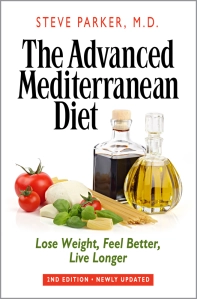
Mediterranean Diet May Protect Against Chronic Kidney Disease

…according to an article at MedPageToday. If you’re white, this may not pertain to you. The study mostly involved Hispanics.

Stretch If You Want, But It Won’t Prevent Sports Injuries

This is a U.S. Army-style sit-up. I do sit-ups with my arms folded across my chest, hands on my shoulders

This is a U.S. Army-style sit-up. I do sit-ups with my arms folded across my chest, hands on my shoulders

I’ve thought that for awhile. Now I’ve got a scientific reference to back it up. Also from the abstract:

Strength training reduced sports injuries to less than 1/3 and overuse injuries could be almost halved.

h/t James Steele II

NYT Reports High Rate of “Mislabelling” in the Herbal Supplement Industry

Around one-third of the popular supplements aren’t what they claim to be.

What's really in that herbal supplement bottle?

What’s really in that herbal supplement bottle?

I doubt the prescription pharmaceutical industry is anywhere near this bad. A quote of a quote:

“This suggests that the problems are widespread and that quality control for many companies, whether through ignorance, incompetence or dishonesty, is unacceptable,” said David Schardt, a senior nutritionist at the Center for Science in the Public Interest, an advocacy group. “Given these results, it’s hard to recommend any herbal supplements to consumers.”

If you know me, you know I don’t quote CSPI very often.

Taking Care of Your Gums May Help Your Heart

…according to an article at University Herald.

The idea is that nasty bacteria around your gums somehow cause arterial inflammation in your heart arteries, which could lead to heart attacks. I’ve written about this before.

A quote from the article:

The researchers followed 420 adults as part of the Oral Infections and Vascular Disease Epidemiology Study (INVEST), a randomly sampled prospective cohort of Northern Manhattan residents. Participants were examined for periodontal infection. Overall, 5,008 plaque samples were taken from several teeth, beneath the gum, and analyzed for 11 bacterial strains linked to periodontal disease and seven control bacteria. Fluid around the gums was sampled to assess levels of Interleukin-1β, a marker of inflammation. Atherosclerosis in both carotid arteries was measured using high-resolution ultrasound.

Over a median follow-up period of three years, the researchers found that improvement in periodontal health-health of the gums-and a reduction in the proportion of specific bacteria linked to periodontal disease correlated to a slower intima-medial thickness (IMT) progression, and worsening periodontal infections paralleled the progression of IMT. Results were adjusted for potential confounders such as body mass index, cholesterol levels, diabetes, and smoking status.

Thickening of the arterial lining is linked to higher rates of heart attack and stroke.

It remains to be seen whether alteration of gum bacteria and periodontal disease via oral self-care and dental care will reduce cardiovascular risk going forward. Stay tuned.

Read more at http://www.universityherald.com/articles/5322/20131101/brushing-your-teeth-could-prevent-heart-disease.htm#rvx294vC7VKJ6Qu3.99

Does Turning Your Heater Down Help You Lose Weight?

Dr. Stephan Guyenet thinks it might. (I’m skeptical.) It’s not so much central heat as it is failing to expose our bodies adequately to temperatures around 60° F (15.6° C) or lower on a regular basis. Here’s a human experiment Dr. G wrote about:

The second study went further, using a longer cold exposure protocol to investigate changes in fat mass among people with low brown fat activity at baseline (4).  Researchers exposed volunteers to 63 F (17 C) air for two hours a day over a six-week period; again I assume they were lightly clothed.  As in the previous study, they observed an increase in brown fat activity with cold training, and they found that calorie expenditure was higher when subjects were in the ‘cold’ air.  After six weeks of training, body fat mass had declined by about 5 percent.  This is despite the fact that all subjects were lean to begin with!

Read the rest.

Mount Humphries on the horizon is highest point in Arizona, 12,633 ft above sea level. High and cold.

Mount Humphries on the horizon is highest point in Arizona, 12,633 ft above sea level. High and cold.

I thought this study tied in with that one showing an inverse relationship between altitude and obesity. Environmental temperatures rise roughly 3° F with every 1,000 feet (305 meters). But the altitude study controlled for (accounted for) temperature, meaning that the temperature had nothing to do with the association.

Somebody’s probably already tried to link environmental temperatures—whether inside the house or out—to obesity rates. Let me know if you find it.

—Steve

Update:

A few minutes at Pubmed.gov revealed this 2013 abstract:

Objective: Raised ambient temperatures may result in a negative energy balance characterized by decreased food intake and raised energy expenditure. This study tested whether indoor temperatures above the thermoneutral zone for clothed humans (approx. 23 o C) were associated with a reduced body mass index (BMI). Design and Methods: Participants were 100,152 adults (≥ 16 years) drawn from 13 consecutive annual waves of the nationally representative Health Survey for England (1995 – 2007). Results: BMI levels of those residing in air temperatures above 23 o C were lower than those living in an ambient temperature of under 19 o C (b = -.233, SE =.053, p <.001), in analyses that adjusted for participant age, gender, social class, health and the month/year of assessment. Robustness tests showed that high indoor temperatures were associated with reduced BMI levels in winter and non-winter months and early (1995 – 2000) and later (2001 – 2007) survey waves. Including additional demographic, environmental, and health behavior variables did not diminish the link between high indoor temperatures and reduced BMI. Conclusions: Elevated ambient indoor temperatures are associated with low BMI levels. Further research is needed to establish the potential causal nature of this relationship.

And there’s this abstract, probably from the altitude study I mentioned:

http://www.ncbi.nlm.nih.gov/pubmed/23357956

“There was an approximately parabolic relationship between mean annual temperature and obesity, with maximum prevalence in counties with average temperatures near 18 °C [64.4° F].”

I don’t have the full article, but parabolic, to me in this context, probably means the obesity incidence was highest at 64.4° F, with lower obesity incidence both above and below 64.4°.

Of course, living in a particular environment doesn’t equate to exposing yourself to outdoor temperatures. But it makes sense that someone living in a cold environment will have more cold exposure than someone in a hot climate.

Perhaps 64.4° F is a sweet spot for efficient body temp regulation and energy partitioning. Living at temps significantly above or below that may cost you energy-wise: you expend extra calories maintaining a normal body temperature, tending to result in lower obesity incidence.

Exercise Cuts Fall Risk by a Third

…in the elderly, according to an article at MedPageToday. (I thought we already knew that.) Add this to your list of reasons to exercise. Successful aging is a war against gravity.

Tai Chi was the exercise in two of the trials, but the rest consisted of gait, balance, and functional training for activities performed in daily life. Most trials also included strength/resistance training exercises.

***

All the exercises that proved to be effective for fall prevention emphasized balance training, which the researchers said is “ample evidence that this type of program improves balance ability.”

Exercise reduces the risk of fractures by about 40%.

Click for the original research report, a meta-analysis.

QOTD On Obamacare: How Do You Tell If a Politician Is Lying?

“President Obama repeatedly assured Americans that after the Affordable Care Act became law, people who liked their health insurance would be able to keep it. But millions of Americans are getting or are about to get cancellation letters for their health insurance under Obamacare, say experts, and the Obama administration has known that for at least three years.”

Lisa Myers and Hannah Rappleye at NBC News

Does Gastric Bypass Cure Type 2 Diabetes?

It does,…according to Seattle researchers.

Steve Parker MD, bariatric surgery

Band Gastric Bypass Surgery

They looked at over 4,000 type 2 diabetics who had gastric bypass surgery for weight loss, following their cases thereafter over many years. Almost seven in 10 had a “complete diabetes remission” within five years of surgery. (Remission was defined as non-diabetic lab values on blood tests and absence of diabetic drug use.) Of those going into remission, 35% redeveloped diabetes within five years of surgery. Those with the more severe or longstanding cases of diabetes before surgery were  more likely to have a recurrence of diabetes.

So it looks to me like, on average, gastric bypass surgery “cures” half of the cases of type 2 diabetes, as measured five years after surgery. As the years pass, even more failures will arise. Nevertheless, that’s an impressive improvement. Given the potential complications of bypass surgery, I’d try a very-low-carb diet before going under the knife. Examples are Dr. Bernstein’s Diabetes Solution and Conquer Diabetes and Prediabetes.

Steve Parker, M.D.

PS: Cure or remission of type 2 diabetes could be defined in other ways. For instance, a more reliable definition of cure might include return of normal pancreas/insulin function as judged by insulin levels and insulin sensitivity. If you have normal blood sugar levels and hemoglobin A1c, yet have ongoing insulin resistance, you’re more likely to develop overt diabetes going forward.

Macular Degeneration Not As Scary As Before

…thanks to science-based research. Science-Based Medicine blog has the poop. A quote:

In my world of treating patients with retinal disease, a revolution has taken place over the past few years. The most aggressive form of macular degeneration has been transformed from a relentlessly progressive, disabling disease to one which can be tamed with medication. Now, patients diagnosed with exudative macular degeneration can expect stablization and even improvement in vision.

It is a story worthy of a Hollywood movie. Start with a reluctant hero; add controversy, Wall Street, politics, and most important of all, a happy ending.

The article is mostly about game-changing VEGF-binding drugs. VEGF = vascular endothelial growth factor. The one I’ve heard most about is Avastin.

Well worth a read if someone you know has age-related macular degeneration (ARMD).

Get Fit With Body Weight Exercises

James Fell features a guest post by Al Kavadlo on fitness via body weight exercises. No gym access? No free weights? No machines?

No problem!