Or so suggests an article at Obesity Reviews. Women who gained excessive weight while pregnant had children prone to obesity both early and later in life. The opposite applies to women who didn’t gain enough weight during pregnancy.

Or so suggests an article at Obesity Reviews. Women who gained excessive weight while pregnant had children prone to obesity both early and later in life. The opposite applies to women who didn’t gain enough weight during pregnancy.
Comments Off on It’s Your Mother’s Fault You’re Fat
Posted in Overweight & Obesity
Tagged cause of obesity, gestational weigh gain, maternal weight gain

Her response to depends on genes, training program, nutrition, discipline, adequate sleep, adequate rest, etc.
Here’s an excerpt from an interview with author David Epstein in Outside online. Epstein wrote The Sports Gene: Inside the Science Of Extraordinary Athletic Performance:
Interviewer: That’s one of the most fascinating and unexpected parts of the book, where you discuss the Heritage study’s findings on trainability. Explain its implications.
Epstein: That’s the most famous exercise-genetics study ever done. It’s the collaboration of five colleges in the U.S. and Canada. They took sedentary, two-generation families, which didn’t have a training history, and put them through stationary-bike exercise plans that were totally controlled. Families had to go into the lab and exercise over five months. The goal was to see how people would improve, and they were split into four different university centers to do the training and every center saw the exact same pattern. About 15% of people improved their aerobic capacity very little or not at all. And 15% improved 50% or more doing identical training. Families tended to stick together in the improvement curve, so about half of any person’s improvement was determined by their parents. I remember the editorial that ran in the journal of applied physiology “some people’s alphabet soup—meaning their DNA—didn’t spell ‘runner.’” One person training the exact same as another person can have completely different outcomes.
The exercise in this study was aerobic training. If I recall correctly, I’ve read similar reports regarding response to weight training, aka resistance training. Am I right?
Many folks don’t like to admit this genetic limitation, assuming it’s true. “Set your mind to it, work hard—10,000 hours—and you can do or be anything you want.” Have you ever been tortured by unrealistic expectations? The truth will set you free.
Comments Off on Your Genes Determine Your Personal Response to Physical Training
Posted in Exercise
Tagged aerobic exercise, David Epstein, exercise, genes, genetic limitations, The Sports Gene, training response
Something strange is happening in the United States. A Canadian friend recently said, “I can remember when Americans weren’t afraid of everything.” Just so. Don’t run on the playground because you might fall. Don’t roughhouse because you might get a bruise. Don’t go outside at high noon because you might get skin cancer. Don’t swim after eating because you might get a cramp. If a child draws a soldier, call a SWAT team because he is a murderous psychopath. Don’t ride a bicycle without a helmet. Fill in the deep end of the pool because someone might drown. Supervise everything. Control everything. Fear everything.
If these are not the neurotic fears of women and capons, please tell me what they are. Such run the schools. They make policy.

I’ll eat my hat if this dude doesn’t have metabolic syndrome
Some studies suggest you can be healthy and long-lived while obese as long as you are “metabolically healthy.” That is, if you have normal blood pressure, LDL cholesterol, triglycerides, blood sugar, and waist circumference. A new meta-analysis finds that ain’t so: you’re still at higher risk for death or cardiovascular events if you’re obese and free of metabolic syndrome features.
“Our results do not support this concept of ‘benign obesity’ and demonstrate that there is no ‘healthy’ pattern of obesity,” Kramer and colleagues wrote. “Even within the same category of metabolic status (healthy or unhealthy) we show that certain cardiovascular risk factors (blood pressure, waist circumference, low high-density lipoprotein cholesterol level, insulin resistance) progressively increase from normal weight to overweight to obese.”
Click for the scientific journal abstract.
This report does not directly address the “fat but fit” concept, whereby you can counteract some of the adverse health effects of obesity by being fit. By fit, I mean regularly exercising and achieving a decent level of capacity and tolerance for physical activity. Fat but fit still holds.
Comments Off on You’re Still at Risk Healthwise Even If You’re “Metabolically Healthy”
Posted in Heart Disease, Longevity, Overweight & Obesity
Tagged cardiovascular health, fat but fit, longevity, metabolic health, metabolic syndrome, obesity, overweight
Click for details from dietitian Franziska Spritzler. Briefly:
1. They think it’s dangerous.
2.They believe the diet-heart hypothesis.
3. They think the diet is unbalanced.
4. They think no one will follow it long term.
Franziska ably debunks these ideas one by one.
Comments Off on Why Do So Many Dietitians Argue Against Low-Carb Diets?
Posted in Low-Carb Eating
Tagged diet-heart hypothesis, low carb diet
23andMe is a genetic testing company that will analyze your personal collection of genes and suggest related health—and disease—implications. If you know you’re prone to developing a certain disease or condition, perhaps you can take steps beforehand to mitigate the risk.
The company was recently directed by the U.S. Food and Drug Administration to stop selling their service. Click for the FDA’s warning letter to 23andMe’s CEO.
Some have questioned 23andMe’s motives. Charles Seife, writing at Scientific American, has some ideas:
But as the FDA frets about the accuracy of 23andMe’s tests, it is missing their true function, and consequently the agency has no clue about the real dangers they pose. The Personal Genome Service isn’t primarily intended to be a medical device. It is a mechanism meant to be a front end for a massive information-gathering operation against an unwitting public.
***
What does 23andMe want to do with all that data? Right now the talk is all about medical research—and, in fact, the company is doing some interesting work. It has been sifting through its genomic database, which is combined with information that volunteers submit about themselves, to find possible genetic links to people’s traits. (The bright-light/sneeze genetic tag is a 23andMe discovery.) More promising are 23andMe’s attempts to recruit people who suffer from certain diseases, such as Parkinson’s and a few types of cancer. Simply through brute-force pattern matching, the company has a chance of finding genetic causes of these ailments, which could lead to a way to combat them. (And perhaps a blockbuster patent or three.)
That’s just the beginning, though.
Comments Off on What is 23andMe Really Up To?
Posted in Uncategorized
Tagged 23andMe, FDA, Food and Drug Administration, genetic testing, genome testing
Most emphatically, yes! But you have to be careful and able to withstand temptation. Laura Dolson tells you how over at About.com. For example:
Occasionally, you’ll see salads with other protein, but chicken is the mainstay of fast-food meal salads. Tips: 1. Skip the croutons, tortilla strips, and similar additions. 2. Be very careful about sugars in the dressing. 3) For best nutrition, look for salads with a mixture of greens, and a variety of vegetables. 4) Make sure the chicken is grilled, not “crispy fried”, or other chicken with breading.
On the Advanced Mediterranean Diet, you have the option of:
Comments Off on Can You Eat Low-Carb at Fast-Food Restaurants?
Posted in Low-Carb Eating
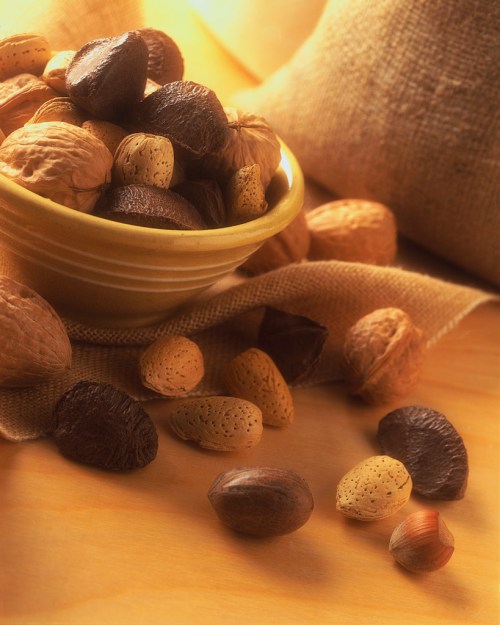
Nuts with the lowest omega-6/omega-3 fatty acid ratios may be the healthiest. In other words, increase your omega-3s and decrease omega-6s.
Conner Middelmann-Whitney explains in her recent post at Psychology Today. In a nutshell, they are linked to longer life and better health. For example:
In the largest study of its kind, Harvard scientists found that people who ate a handful of nuts every day were 20% less likely to die from any cause over a 30-year period than those who didn’t consume nuts. The study also found that regular nut-eaters were leaner than those who didn’t eat nuts, a finding that should calm any fears that eating nuts will make you gain weight.
The report also looked at the protective effect on specific causes of death. “The most obvious benefit was a reduction of 29% in deaths from heart disease—the major killer of people in America,” according to Charles S. Fuchs, director of the Gastrointestinal Cancer Treatment Center at Dana-Farber, the senior author of the report and a professor of medicine at Harvard Medical School. “But we also saw a significant reduction—11% —in the risk of dying from cancer,” added Fuchs.
Nuts are integral to my Advanced Mediterranean Diet, Low-Carb Mediterranean Diet, Paleobetic Diet, and Ketogenic Mediterranean Diet.
Walnuts seem to have the lowest omega-6/omega-3 fatty acid ratio of all the common nuts. That may make them the healthiest nut. The jury is still out. Paleo dieters focus on cutting out omega-6s and increasing omega-3s. Julianne Taylor has a great post on how to do that with a variety of foods, not just nuts.
Comments Off on Why Are Nuts So Prominent in My Diet Plans?
Posted in Cancer, Heart Disease, Longevity, Nuts
Tagged cancer, Conner Middelmann-Whitney, heart disease, Julianne Taylor, longevity, nuts
Travis Saunders has put a lot of thought into it:
“…there are 4 factors that we can say (or at least I say) have contributed to the childhood obesity epidemic with relative certainty. These are:
People might be surprised that diet and physical activity aren’t on that list. But really, it comes down to measurement issues. It is certainly plausible that diet and physical activity contribute to increased childhood obesity rates. The problem is that the historical data for both of these variables is really weak, and often contradictory. The data for sugar sweetened beverages and screen time isn’t of much better quality, but the findings for both of those outcomes is much more consistent than for physical activity or diet more generally.
Note the absence of environmental pollutants.
Comments Off on What Caused the Explosion in Childhood Obesity?
Posted in Overweight & Obesity
Tagged childhood obesity
I recently finished an ebook, The Heart Healthy Lifestyle: The Prevention and Treatment of Type 2 Diabetes by Sean Preuss, published in 2013. Per Amazon.com’s rating system, I give it five stars (I love it).
♦ ♦ ♦
This is an invaluable resource for 1) anyone recently diagnosed with type 2 diabetes or prediabetes, 2) those who aren’t responding well to their current therapeutic regimen, and 3) type 2 diabetics who want to reduce their drug use.

Strength Training Helps Get Excess Blood Sugar Out of Circulation
Mr. Preuss is a fitness trainer who has worked with many type 2 diabetics. He demonstrates great familiarity with the issues diabetics face on a daily basis. His science-based recommendations are familiar to me since I reviewed many of his references at on of my other blogs, Diabetic Mediterranean Diet.
Like me, Mr. Preuss recognizes the primacy of lifestyle modification over drug therapy for type 2 diabetes, as long as drugs can safely be avoided or postponed. The main lifestyle factors are diet and exercise. Too many physicians don’t spend enough time on these, preferring instead to whip out the prescription pad and say, “Here ya go. I’ll see you in three months.”
I have gradually come to realize that most of my sedentary type 2 diabetes patients need to start a work-out program in a gym where they can get some personal attention. That’s Mr. Preuss’s opinion, too. The clearly explained strength training program he recommends utilizes machines most commonly found in a gym, although some home gyms will have them also. His regimen is easily done in 15-20 minute sessions two or three times a week.
He also recommends aerobic activity, such as walking at least several days a week. He recommends a minimum of 113 minutes a week of low intensity aerobic work, citing evidence that it’s more effective than higher intensity effort for improving insulin sensitivity.
I don’t recall specific mention of High Intensity Interval Training. HIIT holds great promise for delivering the benefits of aerobic exercise in only a quarter of the time devoted to lower intensity aerobics. It may be that it just hasn’t been studied in type 2 diabetics yet.
I was glad to see all of Mr. Preuss’s scientific references involved humans, particularly those with type 2 diabetes. No mouse studies here!
Another strength of the book is that Sean tells you how to use psychological tricks to make the necessary lifestyle changes.
The author notes that vinegar can help control blood sugars. He suggests, if you can tolerate it, drinking straight (undiluted) red wine vinegar or apple cider vinegar – 2 tbsp at bedtime or before carbohydrate consumption. I’ve heard rumors that this could be harmful to teeth, so I’d do some research or ask my dentist before drinking straight vinegar regularly. For all I know, it could be perfectly harmless. If you have a definitive answer, please share in the comments section below.
I read a pertinent vinegar study out of the University of Arizona from 2010 and reviewed it at one of my blogs. The most effective dose of vinegar was 10 g (about two teaspoons or 10 ml) of 5% acetic acid vinegar (either Heinz apple cider vinegar or Star Fine Foods raspberry vinegar). This equates to two tablespoons of vinaigrette dressing (two parts oil/1 part vinegar) as might be used on a salad. The study authors also say that “…two teaspoons of vinegar could be consumed palatably in hot tea with lemon at mealtime.”
The diet advice herein focuses on replacement of a portion of carbohydrates with proteins, healthy oils, and vegetables.
I highly recommend this book. And sign up for Mr. Preuss’s related tweets at @HeartHealthyTw.
Disclosure: Mr. Preuss gave me a free copy of the book, otherwise I have received no monetary compensation for this review. I met him once, about two years ago.
Comments Off on Book Review: The Heart Healthy Lifestyle – The Prevention and Treatment of Type 2 Diabetes, by Sean Preuss
Tagged book review, exercise, physical activity, Sean Preuss, The Heart Healthy Lifestyle, type 2 diabetes
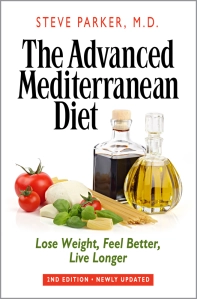
Click the pic to purchase at Amazon.com. E-book versions also available at Smashwords.com.

 Advanced Mediterranean Diet