If so, it may well be because of your genes according to an article at SBS.com. Particular genes determine whether you can detect a bitter chemical (called PTC) in broccoli and other brassicas like cauliflower and brussels sprouts.
“On average, about 70% of us can taste something bitter in broccoli or PTC, but those with two copies of the bitter sensitivity gene are closer to 20%, and they are much more likely to hate it.”
U.S. President George H.W. Bush said in March 1990, “I do not like broccoli. And I haven’t liked it since I was a little kid and my mother made me eat it. And I’m President of the United States and I’m not going to eat any more broccoli!” He banned it on Air Force One.
Most of us at the Parker Compound like broccoli. My wife usually sautes it in olive oil and seasons with garlic, other herbs, and salt.
This is the first time in many years that I have put pen to paper for a lengthy letter, so please forgive my misspellings, poor handwriting or any other errors. I will probably do this in one go and be finished with it. I won’t need much of this new notebook. It’s a nice room, desk and chair, but really, no computer? I just wish they would stop the hammering outside. I need to focus in order to write well.
No one person could possibly expect to know the full truth about such a complex history, so near to its time. But I know what I know, saw what I saw, and heard what I heard. And now it’s time to set the record straight, at least about what transpired between some of the key players in the lead up to the recent events.
What I have heard called “the plan” began as idle office chat, nothing more. (Of course, not much chat is ever truly idle at the very highest levels of power, between senior presidential advisors.) The first time I heard it mentioned was over lunch with Dennis in the White House Mess, down in the basement next to the situation room. We were at a quiet corner table of the wood-paneled dining room, tossing ideas for the next talking points back and forth. Routine.
One of right-wing hate radio’s loudest and most poisonous voices was conducting an embarrassing public feud with our press secretary. The President had trapped himself in a seeming contradiction. The viral videos were both damning, and, one must admit, very funny—if one’s goal was to make the President look and sound like a liar and a fool. The YouTube videos were getting millions of hits; the TV comics were not letting it go. We had been knocked completely off message, the optics were horrible, and our favorability ratings were collapsing at a crucial moment. (It seems like an ice age ago when such trivialities actually mattered to me.)
I said something offhandedly to Dennis. “I just wish we could get rid of those bastards, once and for all.”
He stared at me for a long time, chewing on his second BLT sandwich until the Navy steward retreated from range, and then he said, “Actually, Jacinda, there is sort of a plan for that.”
“What do you mean, ‘a plan for that’?”
He explained that it was nothing formal, and there was nothing in writing. Nor would there ever be. It was just a concept he had come up with, along with a few other trusted colleagues and advisors. An idea. They had gamed out various scenarios. We could solve our problems with molding public opinion if we removed just a few dozen key right-wing opinion makers. That was the exact word he used, “removed.” That was last spring, and I put it off as a harmless thought experiment. I didn’t hear anything more about it for several months.
Then one day after another media-talking-points session in the White House Mess, Dennis said, “Remember the plan we were talking about? You know, we really could do it.”
“Are you serious?”
“The timing would have to be just right. Mainly, it would depend on external events.”
Remembering the numbers from our earlier conversation, I told him that removing a few dozen of the worst reactionaries wouldn’t change anything. Other fast-talking right wingers would just take their places. Except they would be angrier than ever.
“Not dozens.” He paused. “Around two thousand, actually.”
The new number shocked me. “That’s not possible.”
“No, it’s very possible. We’ve studied it from every angle.”
Clearly, he knew more about a plan than he was letting on. Nobody was closer to the President than the two of us and his wife, and I had heard nothing from the boss, not even a hint. “You’re making this up. You’re not serious. Is it a joke, or a test? I wasn’t born yesterday.” I had to be careful. This was dangerous territory, when any spoken word could be recorded almost anywhere. Trust in a man like Dennis was a very slender reed upon which to cling.
“No, I’m very serious,” he said. “Here’s how we came up with two thousand. I was given a copy of a new law enforcement software program, one that Justice had for testing and evaluation. A refinement of the social networking analysis stuff. Data-mining, all of that. We put it on a clean computer, adjusted it for our own parameters, and made the list. We tried it at different levels from ten up to ten thousand. The optimal number for the greatest effect with the least initial disruption came in at about two thousand.”
I shook my head and said, “Dennis, Dennis…it’s crazy to even talk about it.”
He continued with what, I saw later, was a canned pitch. “Do you want everything we’ve worked for to be lost? What if it came to striking boldly, or losing all of the progress we’ve made over the last fifty or a hundred years?”
I sidestepped. “You know as well as I do that boldness isn’t the President’s forte.”
“Well, you could help stiffen his backbone.”
“We could both be facing prison time just for talking like this.”
“Not as long as we’re in power. You know how I know? It was Operation Fast and Furious. At least four hundred dead and there was no blow-back that we couldn’t handle. Our media stuck right with us all the way through. For me, that was the final test. We can do almost anything, if we get the timing right, and most of the media stays with us.”
I replied, “But those were Mexicans. And not two thousand.”
“It doesn’t matter. I have the majority leader on a leash. I could drag him around the White House on all-fours if I wanted to. We have nothing to fear coming out of the House. Without the majority leader, Congress can’t do anything but hold hearings that the media won’t cover.”
“But he hammers us every day in the press…”
“Of course he does, he has to maintain credibility with his base. But it’s pure bluster. Trust me—I own him when it counts.”
In the right company (particularly mine, since we go back so far), Dennis liked to brag about the political enemies he held under the control of blackmail. It was a measure of his power, and whom else could he tell? You could count the people he trusted on one hand, perhaps two. One way or the other, all the dirtiest secrets wound up in his hands. Some said it was a mafia thing. Or the unions. Or the red net that had helped us at critical junctures most of our lives. There were advantages to growing up in the second or third generation of the movement. Certain doors opened before us at critical junctures.
Dennis’s knack for finding the hidden scandals almost seemed occult-like. After the big national health care decision, he showed me compromising “men’s health club” photos of the younger chief justice and his pals. Dennis just couldn’t resist the irony and had to share it with me, but that was a rare case of candor about his methods.
So I wondered what he had on the majority leader, that holier-than-thou redneck prick. Was he kinky, greedy, or both? Had Dennis’s minions discovered ancient history long buried, or had they lured him into some new honey trap? It didn’t matter, and I didn’t really care. But it did explain why the Congress could never seem to move past first base on Fast and Furious, even with so many dead.
But I still wasn’t ready to believe he was serious. I said, “Four hundred dead Mexicans are not the same as two thousand dead Americans.”
“It depends on what’s going on at the time. We would need a thick smokescreen, that’s for sure. Lots of background noise. The right emergency.” He lowered his voice and said, “And anyway, they wouldn’t necessarily be ‘dead.’ They’d just be ‘missing’.”
We held long eye contact across the table. He needed to clean his eyeglasses, but didn’t seem to mind the smudges. I said, “The Iran thing could blow sky-high any day. And Egypt, and Syria…”
“Exactly. And that kind of an emergency might lead to all sorts of opportunities.” He smiled, and gazed at me.
After another long silence I asked, “Does this plan have a name?”
“There’s no name.”
I asked him, “How many people know about this … idea?”
“Just a few, but that doesn’t matter. It’s all designed to be self-reinforcing, once it gets kicked off. A positive feedback loop. Completely unstoppable.”
“The President?”
The smile again. A cocked eyebrow. Dennis was as slippery as an eel. A charming eel, when he wanted to be. “He knows that bold action might be called for. We’ve spoken about it for years, in a hypothetical sense, using historical precedents. But I know from those discussions that he’ll back the plan, once the parts fall into place.”
I said, “The military wouldn’t stand for it, not two thousand.”
“The military won’t be in the loop—this will all be handled at the federal agency level. The AG is fully aboard, and so are his directors. They’re facing federal prison time if the majority leader is replaced. Once he’s gone, we’ll be totally exposed on that end. So it’ll happen soon, or never. Let’s just say that forces are in motion and leave it at that.”
“So … what do you want from me?”
“I just want you to influence the President and his wife favorably when the time comes. You know what to say to them. ‘Sometimes in the life of a revolution, hard decisions must be taken. We must cross the Rubicon and cement the gains of history, or get washed out to sea and be forgotten.’ You know what to tell them. But what about you? Jacinda, when the time comes, can we count on you?”
My mind was in turmoil. I was being asked to engage in a conspiracy. Perhaps this was a setup, and my answers were being recorded for another piece of Dennis’s trademark blackmail. Yet to refuse Dennis could also be dangerous. I decided to sound favorable yet remain noncommittal. “I understand history as well as you do. Sometimes dreadful actions are called for during a revolution, I know that. But I won’t support a fool’s crusade that goes off half-cocked and damns us all as traitors.”
He nodded, and smiled again. “That’s good enough.”
The war broke out a few weeks later.
I am referring to the cruel and insane but necessary war with Iran.
As necessary for them, as for us. The Iranian missile strikes were followed by the Israeli bombing raids. Or perhaps it was the other way around, the timeline depending on which news network you believe. When is a preemptive strike self defense, and when is it aggression? I will leave it for future historians. The simple fact is that within a few days cities were burning from Cairo to Islamabad, while at home we were struggling against Iranian terror cells and cyber sabotage, and an anthrax attack that had crippled our mail and package services. The dirty bombs in Houston and Long Beach were overrated initially, but they stopped port operations around the country for weeks. It all added up to a lot of hurt on the home front.
Basic electrical service, phone service, the internet, and our entire digitally managed infrastructure went haywire while the stuxnet-like viruses were continuously fed into our own digital bloodstream. Trains derailed and all of the planes had to be grounded; everybody knows what happened. Many thought the Russians and Chinese were using the opportunity to add to our misery. In any event, Dennis was right: there was plenty of smoke and noise available to conceal the arrests of two thousand reactionary opinion makers. Men, most of them, men who spent nearly every waking moment busily stamping out every little spark of popular democracy, social justice, or true human progress.
The internet was shut down for a week, and was erratic and unreliable after that. Most of the arrests happened during that early period of maximum confusion and fear. Those on the secret arrest list were isolated from communication by the total sabotage of their digital lives. They could not make cell phone calls or send texts, or use the internet in any fashion. They could not find one effective portal to untangle their wrecked virtual lives. Pay phones and land lines were all they had left, when they were working. In the total confusion and disorder of that week, it was understandable that many people might have suffered complete digital blackouts. We were all on uncharted ground, so almost anything was possible. Like the genuine beginning of the Iran war, it could never exactly be sorted out until long after it mattered. Dennis was a genius about that part of the plan.
Down in the secret federal law enforcement fusion centers, our thousands of social network warriors swung into action as the internet was brought back on line—but this time on our own timing, and on our own terms. Questions about missing right-wingers were deflected by our internet imposters with rumors about embezzled funds, foreign girlfriends, car accidents, distant vacations, nonexistent medical emergencies and other stalling tactics. It would take a long while for a true count of the missing to be made, and by then it wouldn’t matter.
Like I said, Dennis was a genius. At first he gave me a daily update, in private. Later, more of us met in the situation room. If Dennis wasn’t the leader, I wouldn’t know who was. I never met a new member of the circle unless Dennis was there to make the connection. What I mean is that I already knew them; I just didn’t know that they were in on the plan, until Dennis brought us together. And I never spoke to any of them about it when Dennis wasn’t there with us. Naturally, not a word about the plan was ever written down.
Most of the original two thousand on the arrest list were picked up in the first week. In fact, in their desperation to reconnect, they sent out their precise locations with every attempted cell phone call, text, tweet, email or credit card use, making them easy to find. The FBI and other federal agencies were already on a war-footing tracking down the Iranian and other foreign terror cells, and they didn’t question the odd Americans arrested among the rest.
Anyway, ninety-five percent of the people on the list were basically nobodies, and they were rarely missed. It’s funny how social network analysis works—it’s not the famous people, it’s the important people. People behind the famous names. The critical nodes. Bloggers in the basement that nobody had heard of. SNA found them all, and plucked them from obscurity.
Only proven-loyal teams of agents were used to arrest the handful of well-known people on the list. The warrants were prepared by tried-and-true federal attorneys, and signed off by trusted judges. Dennis did not only make a secret list of enemies to arrest—he also prepared a list of key personnel we could depend on to run the dodgy paperwork through the federal law enforcement system with no hassles. In most cases they used “National Security Letters” instead of regular warrants, because then no questions were asked. Dennis and his little circle had mastered the architecture. It was seamless, and for the most part it went like clockwork, especially at the beginning.
Once each of the arrested was “tagged and bagged,” the normal federal prison bureaucracy handled them like so many UPS or Fed-Ex packages. After the domestic terrorism label was slapped onto their files, special prisoner handling rules applied, mandating their seclusion. Gagged and hooded, if need be. Unlawful enemy combatants, foreign or domestic, could be held incommunicado. It was already in the law. The legal machinery existed; it just needed to be switched on. I must give Dennis all the credit for grasping the enormous potential.
In the confusion during the Middle East war and the domestic terror attacks, including the cyber attacks, it took several weeks for reports about the missing Americans to grow into rumors of a possible purge of political enemies. Our own thousands of internet cyber warriors tamped down the rumors with continuing obfuscations. Many of these keyboard commandos had been burrowing into the virtual world for years under multiple false screen names, building trust and credibility to expend during just such an emergency.
The most effective of the right-wing muckrakers chatting about purges and political arrests were digitally sabotaged and lined up for the next wave of arrests. Once they were isolated they could get in a car and drive, but only as far as the cash in their wallets would carry them. None of their credit cards, phones or other wireless devices worked. This kept them close to home, and made them easy to arrest.
For the first few weeks, the internal war conducted by our security services was going as well for us as the external war was going badly for our armed forces. The President had to struggle to keep his facial expressions under control in his rare on-camera appearances: I knew that secretly, he was as pleased as any of us that so many American warships, fighter planes and bombers would no longer be available to menace the globe. So in truth, at about one month into it, we were actually winning on both fronts, from our own special point of view.
For the most part, our friendly media outlets continued to use our talking points, staying on board with all aspects of the gloriously jingoistic war effort—including the war against all forms of domestic terrorism. Even the right-wing talk radio hosts were cautious about making wild accusations against the government while our heroic armed forces were busy being decimated thousands of miles away.
Crazy black-helicopter talk about a secret political purge was kept beyond the acceptable fringe of polite news network mention during the first month of patriotic fervor that surrounded the war. Our army of social network warriors did a masterful job of remessaging any mention of a “purge” as delusional. No respectable news network or reputable website would touch such rumors. (Some of the most rabid of the purportedly right-wing bloggers promoting the purge rumors were, in fact, our own cyber warriors, working to discredit truthful reports through their bizarre and outrageous exaggerations.)
After a month, though, the missiles and planes had seemingly run out on all sides, and a new stalemate was reached across the Middle East. The fog of war began to lift, and a new, clearer picture began to emerge that we could no longer keep completely hidden from sight. It was not plausible that so many right-wing opinion makers were suddenly unavailable for comment. They could not have all had heart attacks, or fled to Panama, or gone on vacation in New Zealand, or into hiding.
Some of the hate radio hosts began to fan the flames with crazy rumors that really weren’t so crazy, not to us. When they were taken off the air through a variety of means (but mainly for violating the “fomenting domestic terrorism” laws), the right wing nut jobs went absolutely mad with fury. The accusations about a secret purge continued. The plan was being laid out for all to see, even while it was being officially denied at every level, and was never reported on at all by our cooperating media networks and other friendly outlets.
And then the shooting started.
At a month and a half or so, it sometimes seemed that the plan was in danger of falling apart. I asked Dennis about it in private, but he appeared unworried. “It’s all part of the action-reaction calculus. It was all taken into account. We needed them to react. We’re in the second phase. We smoked them out into the open with phase one, and now we can go get them. Why do you think we bought billions of bullets for the DHS? Why do you think we paid for SWAT teams and armored cars in every Podunk town in America? We’ve been getting ready for this moment for years.”
“You knew that this would happen? A civil war?”
He said, “It’s not a civil war—it’s just a police action against criminals and domestic terrorists. But don’t worry: we’re ready. Now that they’re shooting at us, we can take the gloves off. The first two thousand arrests were just priming the pump. This phase will let us finish the job once and for all. Think about it: even now, nobody knows what happened to the first two thousand, or even that there were two thousand. In a month, nobody will remember if they were arrested before the shooting started, or after.”
“So, what did happen to the first two thousand? Can you at least tell me that?”
He shook his head, slowly. “Jacinda, you don’t need to know. But they won’t be coming back. They won’t be seen again. At least that much, I know for sure.”
So they were dead. That didn’t upset me. Hundreds of thousands had died since the missiles had flown, most of them in the Middle East. For some reason I was thinking of the Polish officers in the Katyn Forest. Twenty-thousand military officers and many other members of the Polish intelligentsia had been killed in 1940 after the Red Army invaded Eastern Poland. The Soviets had blamed the mass-killings on the Nazis for decades, until the fall of the USSR in 1990 when the truth was finally admitted. So, naturally, I had a question. “Will they ever be found?”
“No, this time it’s sealed airtight. They’ll never be found.”
I heard later, from Larry, that the first two thousand were taken in unmarked vans to a brand-new “bureau of prisons transfer site” in Kansas or Oklahoma, or somewhere else out in flyover country. The site consisted of some fenced-in buildings near an old airstrip. Vans and small airplanes arrived one at a time. As each van or plane arrived, the prisoners were signed over by the US Marshals or other federal agents to a small waiting detachment that, on paper, was from the TSA.
It was an ad hoc special unit made up of men preselected for their violent proclivities. One of the benefits of SNA is that it permits you to find and bring together any personality types that you need for special missions—even unquestioning executioners. According to Larry it was staffed entirely by criminal street gang members with a promise of parole, pardons, and citizenship—but he has been known to embellish a story with his own lurid details.
After the U.S. Marshals departed, instead of being transferred elsewhere, the manacled arrestees were marched around a corner, stood against a wall, and shot. Their bodies were then burned in an on-site incinerator. According to Larry, one van load at a time is how you get rid of two thousand diehard reactionaries. The “transfer facility” was then bulldozed, and each person with knowledge of the site was himself transferred to distant and remote federal installations, where their single voices in the wilderness would never be heard, or believed. Then a rapid process of attrition would begin, with the individuals comprising the former group of executioners suffering a statistically improbable number of heart attacks, fast-acting cancer, accidents and other plausible reasons for their rapid demise.
I have heard other rumors about the final disposition of the two thousand, and I’m not sure which one is true, but that was the version told to me by Larry. I was never really a part of his circle with Dennis. I only sat in on a few meetings. If there is any truth to his story, it will probably come out eventually. But if I know Dennis, unlike the Katyn Forest, not even the bones of the missing two thousand will ever be found.
Toward the end of the second month, against all odds, it seemed like his plan was working. Our federal agents were making record numbers of arrests for new acts of bona-fide domestic terrorism, and of course, for “fomenting domestic terrorism” in the media and on the internet. We still had most of the friendly media on our side lamenting the outbreak of right-wing terror against the government. As long as most of the media continued reporting our version of reality, we could keep pushing the right-wing extremists to exhaustion and eventual submission.
Ah, silence. The hammering and sawing outside has stopped. I flex and shake my hands, limbering up my sore wrist and fingers. Flipping back through this spiral notebook, I count a dozen freshly-filled pages. I have not done so much handwriting in one go since taking blue-book exams at the university, and that was decades ago.
Back to my story. The first real jolt indicating a serious problem with the plan came when television reporter Cathy Carlsen was killed in Norfolk, shot dead while covering the commissioning of the Harvey Milk, the Navy’s newest destroyer. That she was killed was bad enough. That it happened on a “secure” naval base—a federal installation—made it much worse. Her blood splattered across the white uniforms of the gathered admirals made quite a picture.
We were two women born in the same year, with similar academic backgrounds. We had known each other for decades, and her untimely death hit me hard. Cathy Carlsen had been a reliable voice on the progressive side of a supposedly impartial television news network. That a respected member of the media would be assassinated was big surprise, at least to me. Up to that point, only a few federal officials and high-ranking agents had been targeted.
Then a new photo was released on the internet. I had always thought the NSA could trace those things back to their origins, but evidently not. The photo was taken through the Norfolk sniper’s rifle scope just a few moments before the murder. It showed thin black crosshairs and other reference marks across Cathy’s smiling face. And it showed some text added just above her head:
If the media lies, the media dies.
You take a side, you’re along for the ride.
A traitor in front of a camera is still just a traitor.
This single act of domestic terrorism immediately dampened the enthusiasm of most of our formerly reliable reporters to continue carrying our water. More such photographs of other media figures appeared on the internet with cross-hairs over their faces. Most of the pictures were bogus, just photoshop pranks, but they had a similar effect: our dependably cooperative reporters suddenly lost their nerve. The comments following the photos on the remaining right-wing web forums were perhaps the most frightening aspect. It was obvious that plenty of Americans were willing to voice their support for the assassinations of their political enemies in both the media and the government. It became a game for them to walk right up to the “fomenting domestic terrorism” line with carefully parsed and coded words, and this choked our fusion centers with background noise.
For another week or two it seemed that we were playing catch-up with new bloggers who appeared each morning like overnight mushrooms. In spite of all of the new restrictions and tracking tools, every day anonymously sourced articles concerning the purge were posted on what remained of the internet. It was obvious that some of the stories were coming from federal law enforcement whistle-blowers. Dennis said that if the internet rumor-mongers and the last of the hate radio hosts could be silenced, the plan could still be fought to a win. But the leaks were not plugged. Instead, they worsened.
The final outcome hinged on a simple equation that was based on the availability or nonavailability of enough federal agents to make fresh rounds of arrests each day, crushing domestic terrorists and their internet supporters faster than they could proliferate. New arrests were being made, but still the assassinations of government officials and media figures continued to escalate. One a day. Five a day. Ten. Twenty. Some officials were killed by their very own bodyguards or aides, who then disappeared. The words “civil war” were being tossed around on both sides.
Even though the total number of murdered government officials was insignificant as a percentage of their total numbers, far too many of them reacted hysterically out of personal fear. Practically the entire Senior Executive Service demanded protection teams of federal agents to bodyguard them twenty-four hours a day. Soon there were no agents available to stamp out the internet insurrection with new arrests, much less somehow interdict a single domestic terrorist on a private sniper mission. Instead, all of the armed federal agents were kept occupied guarding terrified government leaders.
And that was the downfall of the plan: it just plain came down to numbers, manpower, and, perhaps, agent morale. I’ve seen reports that at least a third of our federal agents went on sick leave vacation, after word of the original two thousand political arrests began to spread within their ranks.
The ferocity of the counterattack took us all by surprise.
Even Dennis. His original arrest list, derived from cutting-edge social network analysis, was a great success as far as it went, especially in spurring the rest of his “action-reaction calculations.” It sure provoked a fierce reaction, anyway. But at a level that none of us ever anticipated or even dreamed possible.
Dennis had always assumed that the combined might of our armed federal agents and their SWAT Teams, reinforced with local police and, if necessary, the National Guard or even the Army, could crush any conceivable right-wing reaction to his plan. But social network analysis couldn’t find snipers who were not part of any network. That’s when we began to hear of “The Militia of One.” In the end there were too many rifles, and too many willing shooters. A number that was constantly heard was twenty million. That was the number of Americans who supposedly went deer hunting every year, against less than 200,000 armed federal agents.
Local police evaporated from the equation once the going got tough. The most common sentiment heard expressed was, “You feds made your bed, so now sleep on it.” The National Guard, those units not already deployed overseas, proved hopelessly slow and cumbersome. That is, the few who reported for duty when called up.
While top federal officials hid inside buildings, a new and unanticipated escalation of the sniper war emerged. When no one of high rank was available to shoot, their outermost rings of security were targeted, even down to GS-5s standing perimeter duty. Suddenly, competent and trustworthy guards were very hard to find.
On the remaining internet the threats multiplied as pictures and videos were shared and commented upon by millions. “Remember your oath” was a common theme. That whole tired shtick about “defending the Constitution from all enemies foreign and domestic,” with a heavy emphasis on domestic. All of that reactionary claptrap. Who knew that so many of them took that oath so damned seriously? Who knew? Mere words on paper, and yet, so many Americans were willing to kill and to die for them. Who knew?
The snipers grew ever more brazen and their numbers multiplied daily. They were emboldened by accounts of the murders of federal officials that were splashed across what was left of the internet, no matter how we tried to control and contain it. They posted comments such as, “You can take away our rights, but we still get to vote under Rule 308,” (which I have since learned refers to a popular rifle caliber). The shooters understood the critical manpower equation as well as we did. We were outgunned a hundred to one by snipers we could neither see nor find, and they knew it.
Right-wing media dutifully passed along all of the latest terrorist manifestos.
“Anonymous sources within the so-called ‘liberty movement’ are now demanding that highway checkpoints searching for weapons be disbanded immediately. These sources state that any federal agents, military or police stopping vehicles and searching them for firearms will be considered traitors and could be shot.”
Our jaws dropped down in the situation room when we heard that demand relayed on FOX. There was talk in the room of arresting the entire management and all of the remaining on-air personalities and so-called reporters at that rogue news network. Actually, it became a screaming match. The final decision was up to the President. He needed time to think it over, and went upstairs.
Thereafter, FOX led each fresh report with a graphic announcing the discovery of a “Communist putsch against the Constitution.” Oh, how I hate that ugly German word. Not revolution, not even coup d’etat, but putsch! What an unfair description of a sincere attempt to solidify the forward march of history, right in the heart of capitalist imperialism. In time, “the putsch” became the name that stuck to Dennis’s original plan. Even on MSNBC, where they at least called it “the so-called Communist putsch.”
I knew it was finished when I was driving up I-95 from Virginia into the city at dawn. From a long way off I saw two bodies hanging from the overpass. Northbound rush-hour traffic was crawling, so I had a long time to look. I was driving my mother’s Acura, wearing a blond wig and big sunglasses. There was no security in recognizable security anymore. A convoy of black full-size SUVs was liable to become a bullet magnet on any highway around DC. I was safer in the white Acura, but feeling very, very alone.
Their ropes were tied to the guard rail above their heads. They were clothed, thankfully, and hooded. Black military-style fatigue uniforms, and bare feet. Their swollen hands were bound behind their backs. The two bodies were slowly twisting without any visible actions being taken to recover them. This told me the bridge might be under a sniper’s observation, holding the police at bay while keeping the corpses in view of thousands of Washington’s morning commuters, half of them federal employees. I had a chill feeling, being in range of a right-wing sniper. A white bed sheet hanging between the two bodies was marked with black spray-painted lettering.
Every fed must decide:
Liberty, or Tyranny?
Death to all traitors!
I got off at the Quantico exit, looped back and went home. Never returned to my office in the West Wing, never saw the White House again. I was picked up three weeks later by a team from the FBI, while I was staying at my mother’s place outside of Charlottesville. Since then I’ve been under house arrest, and lately held in a series of rooms and cells. The rules seem to change daily, but at least I have not been physically brutalized. Instead, my guards seem to revel in reactionary notions of chivalry, pointedly calling me “ma’am,” and asking about my comfort. Pen and paper and a better pillow they are happy to provide. I hate them all the more for their sexist bourgeois manners.
As would be fully expected following such calamitous events, the political world has turned quite upside-down. When it reconvened in emergency session, Congress was a different animal, and in a mood for bloody revenge. Somehow, the greater war deaths and the deaths from the secret purge and the counter-revolution were blended together, and we were blamed for all of them.
The backlash to our efforts saw many of our progressive friends in the Congress retire immediately, and their replacements, mostly appointed by governors, were uniformly reactionaries. The opposition party majority leader that Dennis had formerly dangled on a string was one of the many who swiftly departed the scene. More than half of the Supreme Court disappeared for reasons of age or health. Two had died suddenly, some said of “Breitbart’s Syndrome.” Our old protections were swept away.
And now America has slid back into worshiping the dusty old parchment. In their reading of the Holy Constitution, the Senate and Supreme Court made the rules and conducted the trials, and swift trials they were. Guilty of high treason, conspiracy to commit genocide, and a dozen other charges. Guilty on all counts. What else could we expect? We took the bold action, grabbed for the brass ring of history, and we missed it. Where no mercy is given, none should be expected.
I’ve seen Dennis but have not been able to speak to him in private. Once we were left alone in a small conference room, but both of us were convinced the room was bugged and under video observation, so we just talked about the food and our involuntary accommodations and such.
While being escorted in the hallway I have heard Larry talking in his cell to somebody, a priest or a lawyer perhaps. He always seems to speak in a snivel. But he’s not the worst of them. Many of my former colleagues have clearly been eager to spill their pitiful guts and minimize their participation in the plan, hoping that Dennis will take the brunt of the lynch mob’s fury. But I knew that was a foolish hope: there was fury enough for all of us. So I kept my silence, until now, when it can no longer affect my own outcome.
Now I write for posterity alone.
I rise from the table and stretch. To see out through the high window in my room, I must climb up on the desk. If anybody is watching me on hidden cameras, they don’t seem to care that I am sneaking looks out through the narrow window. I am on the second floor of whatever building I am in, so I must look down a bit to get a view of the source of the hammering and sawing in the paved courtyard where they used to take me for exercise.
The gallows structure seems to be complete. There are four square holes under a single beam. Workers are screwing down some hardware for traps not yet installed. The grim work of execution will be done in two shifts, on consecutive mornings. I shall outlive Dennis by twenty-four hours. At times like this, I almost wish I believed in an afterlife, like those fools deluded by the opiate of religion. The only afterlife I shall achieve is what I am writing on the pages of this spiral notebook, and they will be cold comfort in the ground. To come so far, to get so close, and then to be consigned to oblivion—it just seems so damned unfair after three generations of dedicated struggle.
(To be tried, convicted, hanged and buried as a traitor concerns me not at all, considering the illegitimate, even farcical nature of the kangaroo court that condemned us.)
I was scarcely involved in the plan, and then only passively. I gave no orders; I conducted no illegal arrests or executions. In truth, I did little or nothing to influence the President one way or the other before the fact. But I knew of the plan, and for that, I will be hanged in two days time as one of the secondary conspirators. There will be no clemency coming from the “Acting President,” or the new “Provisional Supreme Court.”
A few days ago Dennis smiled at me when we passed in a corridor in our matching gray jumpsuits. He was wearing leg and waist shackles, in addition to handcuffs like mine. He must have been giving them hell to merit the chains, and I felt a little ashamed of my meekness in captivity. Despite all that has happened, I am proud of him for that smile and his thrown-back shoulders, a warrior for the cause to the very last. He was, in the end, the single man who was bold enough to initiate decisive action. The failure was not his.
No, it was the President, the man in whom we invested our very lives, the ultimate standard-bearer of the global forces of progress; it was he alone who let us down at the crucial moment. He vetoed the last plan to arrest the remaining right-wing media voices and shut down their vile hate networks. He failed us when we needed him the most.
Air Force One landed in South America while I was being arrested. As the world has seen, the blue and white 747 now sits empty on a tarmac at a remote Argentinean air base near the Andes, disabled and unflyable. The President has gone with the wind, and he is still a relatively young man, nearly a decade younger than me.
I have no doubt that he will eventually turn up somewhere in the developing world, someplace tropical and near the ocean, a land where the call of the muezzin is heard at sunset. A place where he will be admired for striking many hard blows at the Great Satan.
Coming home, the almost-conquering hero, while we face the hangman. It’s just so unfair that the fascist reactionaries will inherit America, and undo the work of generations to advance the human condition.
Other than the final outcome, I would not change a single thing that we have done.
Hasta la victoria siempre!
Up the revolution, forever!
Jacinda Hamden
Former Presidential advisor
Thanks to the author, Matt Bracken, for permission to reproduce this here.
Old frogman, sailor, boat builder, novelist and essayist. Matthew Bracken was born in Baltimore, Maryland in 1957, and attended the University of Virginia, where he received a BA in Russian Studies and was commissioned as a naval officer in 1979. Later in that year he graduated from Basic Underwater Demolition/SEAL training, and in 1983 he led a Naval Special Warfare detachment to Beirut, Lebanon. Since then he’s been a welder, boat builder, charter captain, ocean sailor, essayist and novelist. He lives in North Florida. Links to many of Matt’s short stories and essays may be found at EnemiesForeignAndDomestic.com, along with excerpts from his five novels: the Enemies Foreign and Domestic series, Castigo Cay and The Cliffs of Zerhoun. His essays and short stories can be found in “The Bracken Collection: Essays and Short Fiction 2010 to 2019”. All of his short stories and essays may be reproduced on the internet, in part or in whole, as long as proper attribution is given, and they are not sold for profit without the permission of the author.
This is a taco salad. You can’t see much of the spicy hamburger meat under the quacamole.
I found a review article at Animal Frontiers that makes the argument in favor of meat consumption. The authors admit little focus on the downsides of eating meat. I’ve been cutting back on my meat consumption out of sympathy for the animals. Here are some of the key points verbatim:
Aspects of human anatomy, digestion, and metabolism diverged from other primates, indicating evolutionary reliance on, and compatibility with, substantial meat intake. Implications of a disconnect from evolutionary dietary patterns may contribute to today’s burden of disease, increasing the risk for both nutrient deficiencies and chronic diseases.
Meat supplies high-quality protein and various nutrients, some of which are not always easily obtained with meat-free diets and are often already suboptimal or deficient in global populations. Removal of meat comes with implications for a broad spectrum of nutrients that need to be accounted for, whereas compensatory dietary strategies must factor in physiological and practical constraints.
Although meat makes up a small part (<10%) of global food mass and energy, it delivers most of the global vitamin B12 intake and plays a substantial role in the supply of other B vitamins, retinol, long-chain omega-3 fatty acids, several minerals in bioavailable forms (e.g., iron and zinc), and a variety of bioactive compounds with health-improving potential (e.g., taurine, creatine, and carnosine).
As a food matrix, meat is more than the sum of its individual nutrients. Moreover, within the diet matrix, it can serve as a keystone food in food-based dietary interventions to improve nutritional status, especially in regions that rely heavily on cereal staples.
Efforts to lower global meat intake for environmental or other reasons beyond a critical threshold may hinder progress towards reducing undernutrition and the effects this has on both physical and cognitive outcomes, and thereby stifle economic development. This is particularly a concern for populations with increased needs and in regions where current meat intake levels are low, which is not only pertinent for the Global South but also of relevance in high-income countries.
A Lancet review of 325 autopsies after Covid vaccination found that 74% of the deaths were caused by the vaccine – but the study was removed within 24 hours.
The paper, a pre-print that was awaiting peer-review, is written by leading cardiologist Dr. Peter McCullough, Yale epidemiologist Dr. Harvey Risch and their colleagues at the Wellness Company and was published online on Wednesday on the pre-print site of the prestigious medical journal.
The original study abstract:
Background: The rapid development and widespread deployment of COVID-19 vaccines, combined with a high number of adverse event reports, have led to concerns over possible mechanisms of injury including systemic lipid nanoparticle (LNP) and mRNA distribution, spike protein-associated tissue damage, thrombogenicity, immune system dysfunction and carcinogenicity. The aim of this systematic review is to investigate possible causal links between COVID-19 vaccine administration and death using autopsies and post-mortem analysis.
Methods: We searched for all published autopsy and necropsy reports relating to COVID-19 vaccination up until May 18th, 2023. We initially identified 678 studies and, after screening for our inclusion criteria, included 44 papers that contained 325 autopsy cases and one necropsy case. Three physicians independently reviewed all deaths and determined whether COVID-19 vaccination was the direct cause or contributed significantly to death.
Findings: The most implicated organ system in COVID-19 vaccine-associated death was the cardiovascular system (53%), followed by the hematological system (17%), the respiratory system (8%) and multiple organ systems (7%). Three or more organ systems were affected in 21 cases. The mean time from vaccination to death was 14.3 days. Most deaths occurred within a week from last vaccine administration. A total of 240 deaths (73.9%) were independently adjudicated as directly due to or significantly contributed to by COVID-19 vaccination.
Interpretation: The consistency seen among cases in this review with known COVID-19 vaccine adverse events, their mechanisms and related excess death, coupled with autopsy confirmation and physician-led death adjudication, suggests there is a high likelihood of a causal link between COVID-19 vaccines and death in most cases. Further urgent investigation is required for the purpose of clarifying our findings.
If ye love wealth better than liberty, the tranquility of servitude better than the animating contest of freedom, go home from us in peace. We ask not your counsels or your arms. Crouch down and lick the hands which feed you. May your chains set lightly upon you, and may posterity forget that you were our countrymen.
You can only control your own behavior. No one else’s. If your wife is unhappy about the choice she made, if her children and friends and family and fun are her priorities and she wants out, then by all means, let her walk! Show her to the door with a smile!
There is a saying: if you love someone, set them free. You can’t control her actions, much less her desires. You can’t control the legal system. You can’t control your feelings. You can’t control anything except your own actions.
Remember, most men come out of the divorces that their wives sought [are] happier and better off than they were before. Being around a miserable person who despises you and blames you for their various disappointments in life isn’t a desirable state of being.
Posted onJune 12, 2023|Comments Off on Is Alzheimer Dementia Caused by Excessive Fructose Consumption?
Colorado researchers theorize that fructose metabolism may be the driving force behind Alzheimer Disease pathology. Diets high in sugar and high glycemic index carbohydrates would exacerbate the problem. Salt may also play a role. Fructose is a simple sugar (a monosaccharide) typically found in fruit, honey, and some vegetables. Table sugar is sucrose, a combination of fructose with a glucose molecule. High-fructose corn syrup (HFCS) is added to many processed foods as a bulk-sweetener. From the article at linked above:
An ancient human foraging instinct, fueled by fructose production in the brain, may hold clues to the development and possible treatment of Alzheimer’s disease (AD), according to researchers at the University of Colorado Anschutz Medical Campus.
“We make the case that Alzheimer’s disease is driven by diet,” said the study’s lead author Richard Johnson, MD, professor at the University of Colorado School of Medicine specializing in renal disease and hypertension. The study co-authors include Maria Nagel, MD, research professor of neurology at the CU School of Medicine.
Steve Parker, M.D.
PS: The Mediterranean diet decreases risk of dementia.
Posted onJune 10, 2023|Comments Off on Tips for Safe Hiking in the Southern Arizona Low Desert
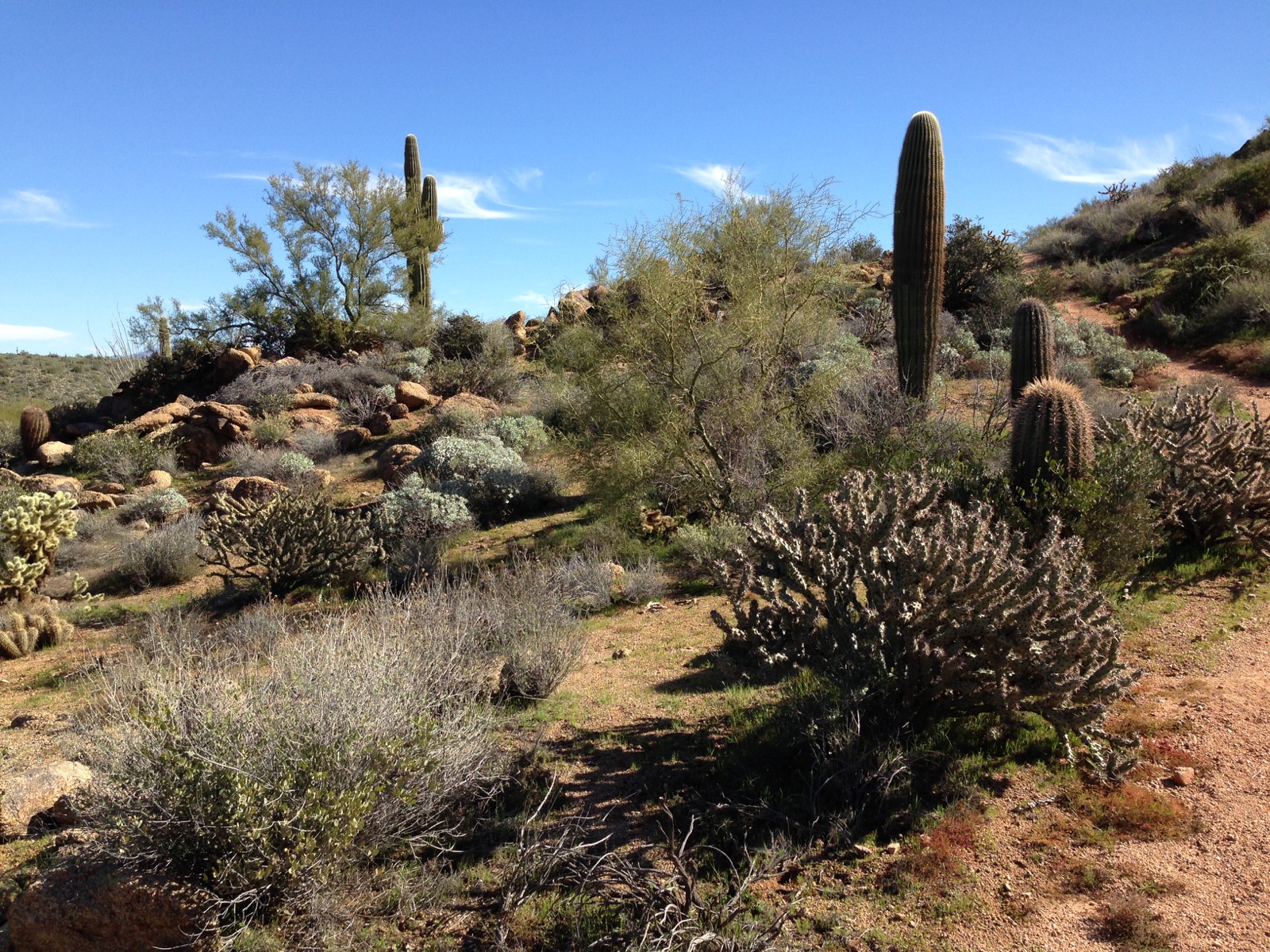
Typical Sonoran Desert flora on the gently rolling terrain
Topics
Introduction
Weather
Water
Clothing and Gear
First Aid Kit
Navigation Aids
Animal Hazards
Plant Hazards
How to Request Emergency Help
Prepare for the Worst?
Introduction
Arizona is blessed with thousands of miles of beautiful trails. Most hikers complete their treks without injuries or other adverse events. However, you can get into serious trouble—even life-threatening—if you don’t know what you’re doing. The most common hazards are related to weather, water, and falls. Our goal with this guide is to help you thrive and survive on southern AZ’s low desert trails. It’s only a start; learn more on your own from authoritative sources.
“Low desert” refers to elevations of roughly 1,000-2,500 feet above sea level, although many low desert trails may take you up mountains to 3,500-4,500 feet. For instance, Scottsdale’s elevation is 1,200 feet and Tucson’s is 2,400 feet. In contrast, the Mogollon Rim (e.g., Payson, AZ) is around 6,000 feet and Flagstaff is 7,000. At these higher elevations the climate, flora, and fauna are often radically different from the low desert.
Before your trek, it’s critically important be honest about your physical coordination and fitness level. If you haven’t walked more than two miles non-stop during the last year, don’t try a four-mile hike. Learn all you can about your proposed trail before you start. Trail descriptions will often note whether it is easy, moderate, difficult, strenuous, or “expert level.” A “primitive trail” will be easier to get lost on and usually have worse footing. Also pay attention to “elevation gain”; a 500 foot or more gain in elevation increases the difficulty. Scottsdale’s famous Camelback Mountain peak is at 2,700 feet, but the Cholla trail starts 1,300 vertical feet below that. That’s not a stroll in the park.
The farther away you get from civilization, the potential adverse outcomes of hiking increase. For any but the easiest and crowded urban trails, tell someone which exact trail you will be on and when to expect a call from you after you finish. That way they know where to send the search party when you don’t check in. On remote or uncrowded trails, hike with a buddy who can help if you become injured or disabled.
Numerous rescues and several deaths occur yearly on AZ’s trails. Are you scared yet? Let’s alleviate that fear and minimize risks! What follows pertains mostly to day hikes on established trails, not bushwhacking or overnight backpacking.
Weather
Heat kills. From mid-May through late September, high temperatures in the low desert often hit 105 to 110° F or even higher. Low temps in summer may not drop below 95! Most Arizonans will NOT be on the trail in the sun when it’s above 95 degrees. We’ll hit the trail at sunrise and be off it by 10 AM. Memorize and avoid these signs of Heat Illness: muscle cramps, feeling faint (dizzy), goosebumps, unusually high pulse, extreme fatigue, nausea, headache, rapid breathing. If ignored, these can lead to heat stroke, which can be fatal. Adequate hydration and perhaps salty snacks or electrolyte packets help prevent Heat Illness.
Some trails will have almost no shade, so you should avoid them in summer after 10 AM unless high temps under 95° are predicted.
High temps are not much of a problem in late fall, winter, and early spring. Low temps are easily manageable with the right clothing. But always check the forecast for temps, rain, snow, and thunderstorms before heading out. The higher the elevation, the cooler it tends to be.
AZ has a season called “monsoon” from June 15 to Sept 30 when overall humidity is higher than usual. It’s characterized by occasional violent storms with rain, high winds, lightning, and flash flooding. Don’t get caught outside in a monsoon storm. Be very careful to avoid creeks and dry creek beds (washes or arroyos) when rain is in the area or even miles away, or you could die in a flash flood. From the Centers for Disease Control : “Lightning often strikes outside of heavy rain and can strike as far as 10 miles away from any rainfall. Many lightning deaths occur ahead of storms or after storms seemingly have passed. Remember, if you can hear thunder, you might be in danger of a lightning strike.”
Water
Dehydration kills. Especially in the hot months. Adequate hydration will help prevent Heat Illness. How much water you carry with you depends on body weight, length of hike, humidity level, temperature, personal preference, etc. Everybody should start out well-hydrated and take more water than you think you’ll need. One rule-of-thumb is that, when a third of your water is gone, it’s time to turn around unless you’re half-way to your destination. For hot summer hikes, Arizona Hiking Shack (phone 800-964-1673) advises adults to take one liter of water for every hour you’ll be out, plus and an extra bottle “for whatever.” There’s a fair chance you’ll run across someone on the trail who needs water. You may need water to cleanse abrasions or wet your neck’s cooling towel. Another rule-of-thumb from the Shack is: “When your water’s half done [gone?], your hike is half done.”
Clothing and Gear
Footwear:
If a trail is labelled as “easy,” you’ll probably be fine wearing sneakers. “Easy” usually means fairly flat and smooth. Avoid sandals because they don’t provide much protection against cactus needles, scorpions, rocks, etc. For a “moderate” level trail, you might get by with sneakers but specific hiking shoes or boots are better, which is what you’ll want for “difficult” trails. Moderate, difficult, and primitive trails usually have more rocks, and your feet need protection from them with a thicker or stiffer shoe sole.
Clothing:
Use your judgment and dress for the weather. You may fall or rub against bushes, cacti, and rocks, so sturdier clothes beat flimsy. White or light-colored clothing will keep you cooler in the summer. A broad-brimmed hat protects against the sun.
Sun Protection Options:
Sunscreen, long pants, long-sleeve shirts, gloves, sunglasses, hat.
Backpack:
Size depends on individual needs and preferences. A comfortable one is worth the money. A pack with a hip belt will make heavy loads (water!) more comfortable by shifting some weight onto the hips. Built-in water-carrying bladders are popular.
Trekking poles (optional): Helpful for maintaining balance on uneven, unstable, or slanted surfaces. They take pressure off arthritic or weak knees when moving downhill.
Miscellaneous: First aid kit, communication devices, maps, navigation aids, multi-tool, cooling towel for neck (requires water).
First Aid Kit
Commercial kit or DIY (do it yourself). You need tweezers to remove cactus needles and splinters, an assortment of band-aids, antibiotic ointment, 1% hydrocortisone cream, antiseptic towelettes, steri-strips, 2-inch gauze wrap, “2nd Skin” or other blister remedy, medical tape, 4×4” gauze pads, 2×2” gauze pads, small scissors or paramedic shears, latex or nitrile gloves. Barebones kit: tweezers, band-aids, 4×4” gauze pads, 2-inch gauze wrap. Optional: acetaminophen, NSAID such as ibuprofen, Benadryl (for itching). [sterile needle or other device for help removing splinters?]
Navigation Aids
A few trails are so obvious and/or crowded that you won’t need any navigation aids. Unless you’re sure about that, be prepared to prevent getting lost. Use a trail map and keep track of your location on that map. If you are in a remote area, strongly consider a handheld GPS navigation device (Garmin brand is the market leader), topographic map, and a compass. Learn how to use the compass and map before you need it. Hiking with someone familiar with the area could be life-saving.
Animal Hazards
Lions and tigers and bears, Oh My! AZ has no wild tigers but there are a few jaguars. Here are some problematic critters you may run across:
Snakes. The commonest dangerous snake here is the rattlesnake. Most of them are not aggressive if left alone but give them a wide berth. A coiled rattler can strike a distance 2/3 of its length. If you hear the rattle, it’s a clear warning. Always keep your eyes open for snakes, except you can let your guard down a bit between roughly Dec 1 and mid-March.
Gila monsters. Much less commonly seen than rattlesnakes. They tend to move slowly and are not aggressive unless threatened. The venomous bite is very painful but rarely serious. Stay away.
Scorpions. Stings can be painful but usually not serious in healthy adults. Young children and the elderly are at higher risk of serious effects.
Mountain lions (aka cougar or puma). Attacks on humans are uncommon but do occur. Many avid hikers have never seen a lion. Sabino Canyon near Tucson seems to be a relative hot spot.
Coyotes. Common. Unless rabid, they tend to ignore or run from adult humans. Keep small dogs and children near you.
Bobcats. Uncommon. Unless rabid, they tend to ignore or run from adult humans.
Black Bears. Uncommon to rare. Do not get between a momma bear and cubs. In bear country, avoid encounters by hiking with others and make noise (e.g., talking, whistling, singing) periodically. If a bear sees you, walk slowly away, keeping eyes on the bear. If it starts walking toward you, talk to it calmly in a low tone. Alternatively, a powerful blow on your emergency whistle may scare it away. If it comes at you aggressively, do not run or play dead; stand your ground, yell, wave your arms to make yourself look larger. If attack is imminent, fight with all you’ve got: throw rocks or wood, use bear spray, hands, firearms. Aim for the face. (The approach to grizzlies is different.)
Javelinas. Common. Usually not aggressive toward humans unless startled, threatened, or javelina babies are nearby. Stay away. Bites can be severe.
Bees. A few bee stings are not dangerous unless you are seriously allergic to them. Our Africanized bees can team up and kill humans with hundreds of stings. May and June are the highest risk months. Bees attack when the nest is threatened. When you see or hear an unusual number of bees in an area, move away quickly yet calmly. One sting may alert the colony that a predator—you!—is nearby. An attack may start with one or a few bees “head bumping” you as a warning; move away quickly. Resist the urge to swat, flail arms, or kill one of these or other bees. You can cover your head with clothing but don’t obstruct your vision. Once the entire colony or swarm attacks, run as fast as you can to shelter such as a car or building. If none is available, run for at least a quarter mile (400 meters), preferably in a straight line. You may be able to outrun them.
From the list above, if you have a scary animal encounter it’s most likely to involve a rattlesnake, scorpion, or bees. Odds are, you won’t have any problem at all. Search for information at trailheads about which dangerous animals are in the area and advice on avoidance and defense.
Plant Hazards
The desert is home to many spikey and prickly plants that are not always obvious upon inspection. Be vigilant. Watch young children closely.
How to Request Emergency Help
A cell phone is the usual first option. But remote areas often lack cell phone service. If service is marginal, try moving to a higher location and/or send a text message. If you’re disabled by injury, someone in your party can hike back to civilization for help, if time allows.
Another option is an emergency whistle. The idea is to get the attention of someone in the area. The whistle is louder and will transmit farther than shouting, up to a mile or so, and takes less energy. A common distress signal from a whistle is three blasts (2-3 seconds each) in succession, rest for a bit then repeat. Or use the old Morse code for SOS: three short blasts, three long blasts, then three short blasts.
After cell phones, a satellite phone is the next most reliable and quick-response option although financially out of reach for most of us. Less expensive options are PLBs (personal locator beacons) and satellite messengers. PLBs solely send an SOS with your location to rescue agencies via satellite and do not have a subscription fee. Alternatively, satellite messengers allow you to send SOS signals, plus text messages to friends or loved ones and have additional features like navigation. A subscription fee is required. Examples are Garmin inReach, SPOT, and Bivy Stick.
Prepare for the Worst?
Imagine planning on a four-hour afternoon hike alone on a remote trail, but you trip and fall into a ravine, fracturing your leg, losing your ability to walk. And you have no way to call for help. Assuming a search party is planned, they may not find you until 12-48 hours later. You’ll have to spend the night in the wild and it’s getting cold. Are you prepared? Items to consider packing: tarp for making a shelter, 550 paracord, flashlight, space blanket for warmth, knife, method for purifying water, method for making fire (matches, lighter), firearm for protection, warm clothes, and food. Before heading out on the trail, take a full-body photo of yourself in your hiking clothes and send it to a loved one; this will help rescuers quickly identify you.
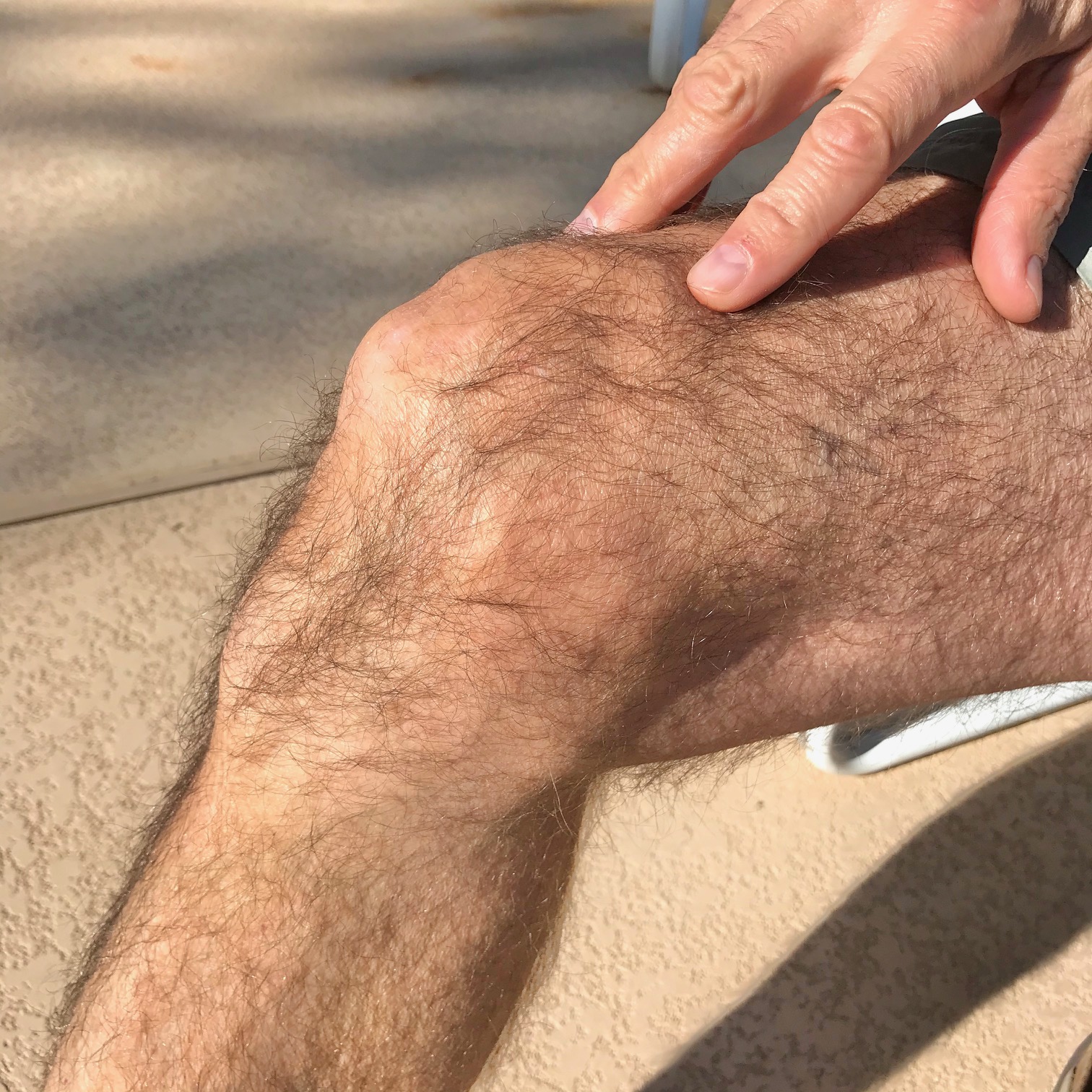
Posted onJune 9, 2023|Comments Off on Knee Osteoarthritis: When Is It Time for Knee Replacement?
Photo credit: Steven Paul Parker II
Dr. Howard J. Luks is an orthopedist who published a reasonable and fairly comprehensive article on knee osteoarthritis management. Thankfully, knee replacement surgery is a last resort for this surgeon. He discusses exercise, tai chi, diet, yoga, knee injections, NSAIDs, ice, heat, etc.
Osteoarthritis of the knee is a prevalent health issue. Despite a diagnosis of arthritis of the knee, the majority of you can live an active, happy life. But you’ve heard awful phrases used to describe your Xrays– phrases like Bone on Bone, bone spurs, degeneration, wearing away, etc. Those phrases scare you. I get that!
Life does not stop after a diagnosis of arthritis. Exercise is perhaps the best medicine for your arthritis. Exercising a joint that you’ve been told is wearing out may seem counterintuitive. Exercise is essential if your goal is to avoid surgery for as long as possible. Being active will not cause your arthritis to worsen. Not all pain implies harm










 Advanced Mediterranean Diet