
John 3:16:
For God so loved the world that he gave his one and only Son, that whoever believes in him shall not perish but have eternal life.

John 3:16:
For God so loved the world that he gave his one and only Son, that whoever believes in him shall not perish but have eternal life.
Comments Off on Easter’s Not About Eggs and Bunnies: Christ Is King!
Posted in Uncategorized

Red meat consumption — whether processed or not — was linked to onset of type 2 diabetes in the U.S. according to a 2023 article in American Journal of Clinical Nutrition. The research was a long-term observational study by mostly Harvard-based scientists. Among the authors that might be familiar to you are Walter Willett, Frank Hu, and Frank Sacks. Click the link for the deets.
This doesn’t prove that red meat consumption causes diabetes. But if you enjoy a fair or high amount of red meat, you might benefit by cutting back, especially if diabetes runs in your family. I’d also suggest regular exercise and avoiding overweight and obesity to reduce your risks of type 2 diabetes. The author suggest red meat alternatives: nuts, legumes, dairy foods.
In the same journal issue is a commentary by Daan Kremer. Some snippets:
The current observational study is unlikely to end the discussion on whether red meat intake increases risk of type 2 diabetes and even less likely to end the epistemological debates on how to grade quality of observational evidence when many efforts are made to reduce bias and confounding.
+ + +
All in all, the study by Gu et al. may arguably be the best evidence to date on the relation between red meat intake and type 2 diabetes. Yet somehow, I feel that the books have not been closed.
Steve Parker, M.D.
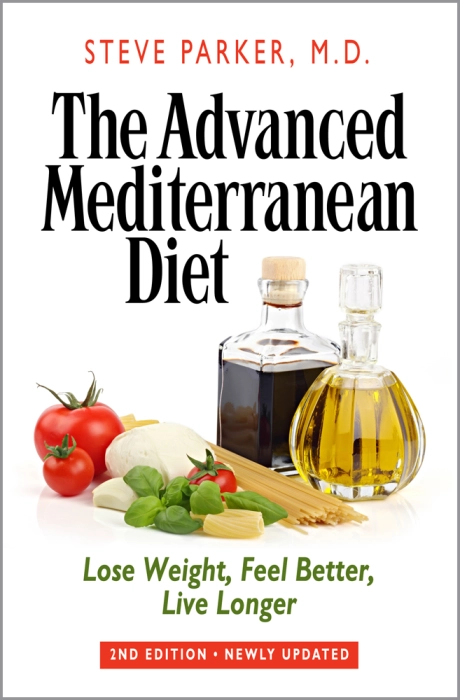
Comments Off on Red Meat Might Cause Type 2 Diabetes
Posted in Uncategorized

Mr Benz alleges that the waves of online speech censorship we’ve seen since ~2018 are due to collusion between the legacy media/social media giants and the U.S. State Department, Department of Homeland Security, FBI, CIA, NGOs, and the Department of Defense. And it’s not limited to the U.S. In fact, it started with efforts to by the CIA and DoD to combat international terrorism and meddle in other countries’ politics.
Click for the Foundation For Freedom Online website.
The Deep State does not appreciate this interview. I hope Mr Benz has a hefty life insurance policy. He should have stated for the record that he is not now nor has he ever been suicidal, and he’d never kill himself. I would not knowingly get in an airplane or in a car with him.
If you can impeach Mr Benz’s credibility, please share in the Comments.
This interview is more important the Tucker’s recent interview of Putin.
Steve Parker, M.D.
Comments Off on Mild-Blowing Interview by Tucker Carlson of Mike Benz, Exec. Director of Foundation For Freedom Online
Posted in Uncategorized

Physicians in the U.S. who prescribe opioids need a license from the Drug Enforcement Administration and it has to be renewed periodically. By the time of my next renewal, I must be able to prove to the DEA that I’ve had six (eight?) hours of approved continuing medical education on drug abuse and addiction. Because of the prescription opioid “epidemic” that reared it’s head several years ago, regulators are putting pressure on prescribers to reduce prescriptions. I’m not saying that’s a bad thing, but it can be taken too far, like expecting a patient with very recent knee or hip replacement surgery to be just fine with acetaminophen (aka paracetamol) alone. Big Pharma has convinced some prescribers to substitute opioids with Neurontin (aka gabapentin) or Lyrica (pregabalin). If not substitution, then augmentation of opioid effect at lower doses. I definitely see that in my part of the world.
Regarding that, here’s a thought-provoking article from Paul Ingraham:
One of the most notorious examples of Big Pharma living up to its reputation for evil-doing is the illegal promotion of anticonvulsant drugs like Neurontin and Lyrica for painful problems like back pain. Pfizer coughed up billions for lawsuit settlements and record-breaking fines. I think it’s safe to say that they didn’t actually pay enough to undo the damage, though…
Thanks to that horror show, and to research by Peet et al, we now know that there was a mighty 5× surge in gabapentin prescriptions in the 2000s and 2010s. That was — and continues to be — a chilling demonstration of the power of under-handed and well-funded marketing. Even as opioid prescriptions fell somewhat, gabapentin scrips rose dramatically, despite the dubious value for most of what it was being prescribed for (most kinds of pain).
Steve Parker, M.D.
Comments Off on Neurontin or Lyrica for Chronic Pain?
Posted in Diabetes, Uncategorized
If so, it may well be because of your genes according to an article at SBS.com. Particular genes determine whether you can detect a bitter chemical (called PTC) in broccoli and other brassicas like cauliflower and brussels sprouts.

“On average, about 70% of us can taste something bitter in broccoli or PTC, but those with two copies of the bitter sensitivity gene are closer to 20%, and they are much more likely to hate it.”
U.S. President George H.W. Bush said in March 1990, “I do not like broccoli. And I haven’t liked it since I was a little kid and my mother made me eat it. And I’m President of the United States and I’m not going to eat any more broccoli!” He banned it on Air Force One.
Most of us at the Parker Compound like broccoli. My wife usually sautes it in olive oil and seasons with garlic, other herbs, and salt.
Steve Parker, M.D.
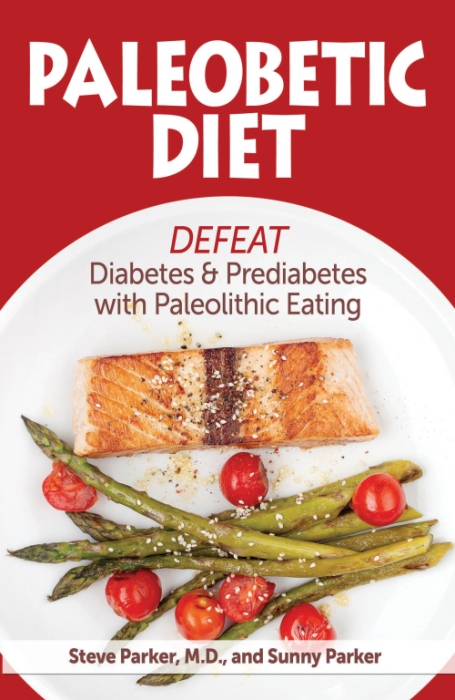
Click to purchase at Amazon.com. E-book also available at Smashwords. com.
Comments Off on Do You Hate Broccoli?
Posted in Uncategorized
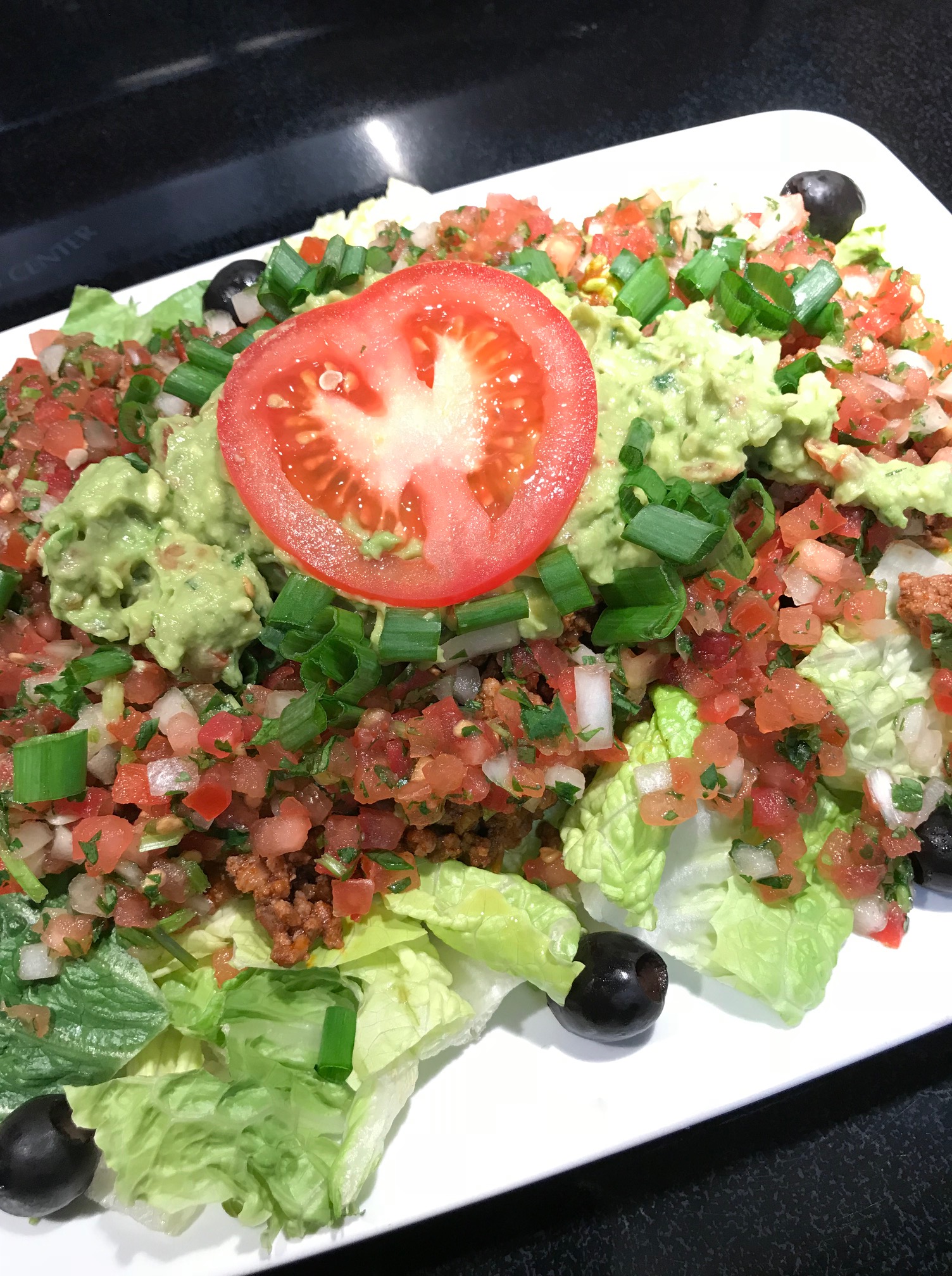
I found a review article at Animal Frontiers that makes the argument in favor of meat consumption. The authors admit little focus on the downsides of eating meat. I’ve been cutting back on my meat consumption out of sympathy for the animals. Here are some of the key points verbatim:
Steve Parker, M.D.
Comments Off on Why Eat Meat?
Posted in Uncategorized
Comments Off on Shawn Ryan’s Memorial Day Message 2023
Posted in Uncategorized
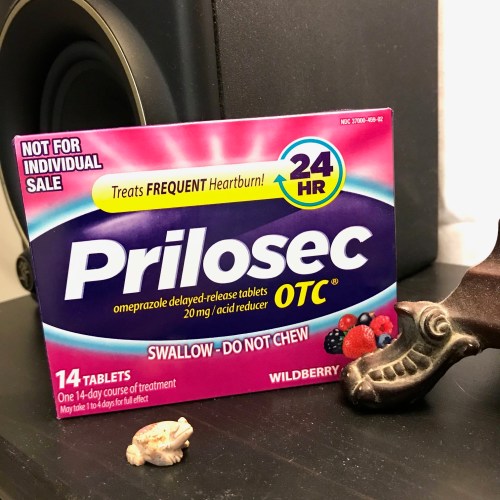
I’ve written several blog posts on the risks of chronic use of PPIs (proton pump inhibitors) for gastro-esophageal reflux disease (GERD). By “chronic use” I mean daily or several days every week. In order to avoid the risks of PPI usage, a recent commenter asked me about non-PPI management options.
I’ll assume that occasional use of antacids, H2 blockers (histamine 2 receptor agonists like famotidine), and proton pump inhibitors is not an adequate remedy. At some point (sooner rather than later), you’ll also want to be sure the diagnosis truly is GERD and not something else. This may well require a consultation with a gastroenterologist.
BTW, having to pop a couple Tums antacids for heartburn once every 2-3 months is not a disease. It’s not GERD. It’s occasional heartburn. Untreated GERD symptoms are much more frequent and may be more intense or more prolonged.
So here are some non-PPI options for management of GERD in adults. Some of these will help one person but not the next, and experimentation may be in order.
Medication alternatives to PPIs and H2 blockers (histamine 2 receptor agonists like famotidine):
Bothersome symptoms that are refractory to all usual treatment? Get EGD (esophagogastroduodenoscopy) and ambulatory esophageal pH-metry from a gastroenterologist.
Final options for refractory GERD:
There are probably other options for GERD suppression that I haven’t mentioned.
Finally, I’m not your doctor and don’t know any of the details of your situation. For all you know, I may not even be a real doctor. Work with your personal physician!
Steve Parker, M.D.
Click to purchase at Amazon.com. E-book also available at Smashwords. com.
Comments Off on How to Manage GERD Without Proton Pump Inhibitors
Posted in Uncategorized
I’ve written previously about how Paul Ingraham helped cure my patello-femoral pain syndrome.
More recently, Paul looked into hiccup cures because his father had an intractable case. What finally worked for dad? Breathing into a plastic bag.
Boosting blood CO2 (hypercapnia) by breathing in a PLASTIC bag. This one is quite plausible and is easy and safe to try. Hypercapnia definitely affects some kinds of hiccups. The story (from a smart source, a good “friend of PainSci”): “There’s an even easier way out of hiccups — at zero cost. Learned it from my uncle, who studied medicine in Brazil in the 50s. Anesthetized patients with hiccups were a pain, so they needed to get rid of it ASAP. Method: breathing in a PLASTIC bag, small enough for you to get to hypercapnia (get higher blood levels of CO2). You have to hold the bag REALLY tight around nose and mouth to prevent air from escaping, and if you have troubles with dizziness, it’s advisable to sit down for it. As soon as it gets uncomfortable, mostly after 4-6 breaths, you can stop, the hiccup will be gone. I don’t know what this does to the phrenic nerve, but it works 100%.”
Safety Note: Obviously there could be some danger with this method. If he’d had low O2 or was struggling for breath, we likely wouldn’t have dared. (On the other hand, if he’d been in that state, he would’ve been at the hospital.) But he was supervised, with no possibility of getting stuck, and a matter of only just a few breaths. Perhaps there was still some risk… but I think not treating those hiccups was also a risk.
I’ve never tried that method for my hiccups. My personal favorite home remedy is “drinking from the far side of the glass.” AKA, drinking water upside down. Watch this video of a good ol’ boy demonstrating the technique although I would aim for drinking at least 6-8 fl oz of water before quitting. Don’t ask me how it works; it may have something to do with the soft palate or diaphragm.
Steve Parker, M.D.
Click to purchase at Amazon.com. E-book also available at Smashwords. com.
Comments Off on Paul Ingraham on Hiccup Cures
Posted in Uncategorized
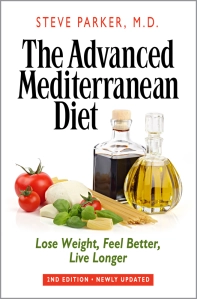
Click the pic to purchase at Amazon.com. E-book versions also available at Smashwords.com.


 Advanced Mediterranean Diet