Category Archives: Stroke

Documented Health Benefits of the Mediterranean Diet

The enduring popularity of the Mediterranean diet is attributable to three things:

1.Taste

2.Variety

3.Health benefits

For our purposes today, I use “diet” to refer to the usual food and drink of a person, not a weight-loss program.


The scientist most responsible for the popularity of the diet, Ancel Keys, thought the heart-healthy aspects of the diet related to low saturated fat consumption.He also thought the lower blood cholesterol levels in Mediterranean populations (at least Italy and Greece) had something to do with it, too.Dietary saturated fat does tend to raise cholesterol levels.


Even if Keys was wrong about saturated fat and cholesterol levels being positively associated with heart disease, numerous studies (involving eight countries on three continents) strongly suggest that the Mediterranean diet is one of the healthiest around.See References below for the most recent studies.


Relatively strong evidence supports the Mediterranean diet’s association with:

increased lifespan

lower rates of cardiovascular disease such as heart attacks and strokes

lower rates of cancer (prostate, breast, uterus, colon)

lower rates of dementia

lower incidence of type 2 diabetes


Weaker supporting evidence links the Mediterranean diet with:

slowed progression of dementia

prevention of cutaneous melanoma

lower severity of type 2 diabetes, as judged by diabetic drug usage and fasting blood sugars

less risk of developing obesity

better blood pressure control in the elderly

improved weight loss and weight control in type 2 diabetics

improved control of asthma

reduced risk of developing diabetes after a heart attack

reduced risk of mild cognitive impairment

prolonged life of Alzheimer disease patients

lower rates and severity of chronic obstructive pulmonary disease

lower risk of gastric (stomach) cancer

less risk of macular degeneration

less Parkinsons disease

increased chance of pregnancy in women undergoing fertility treatment

reduced prevalence of metabolic syndrome (when supplemented with nuts)

lower incidence of asthma and allergy-like symptoms in children of women who followed the Mediterranean diet while pregnant

Did you notice that I used the word “association” in relating the Mediterranean diet to health outcomes?Association, of course, is not causation.


The way to prove that a particular diet is healthier is to take 20,000 similar young adults, randomize the individualsin an interventional study to eat one of two test diets for the next 60 years, monitoring them for the development of various diseases and death.Make sure they stay on the assigned test diet.Then you’d have an answer for that population and those two diets.Then you have to compare the winning diet to yet other diets.And a study done in Caucasians would not necessarily apply to Asians, Native Americans, Blacks, or Hispanics.


Now you begin to see why scientists tend to rely on observationalrather than interventional diet studies.


I became quite interested in nutrition around the turn of the century as my patients asked me for dietary advice to help them lose weight and control or prevent various diseases.At that time, the Atkins diet, Mediterranean diet, and Dr. Dean Ornish’s vegetarian program for heart patients were all prevalent.And you couldn’t pick three programs with more differences!So I had my work cut out for me.


After much scientific literature review, I find the Mediterranean diet to be the healthiest for the general population.People with particular medical problems or ethnicities may do better on another diet. People with diabetes or prediabetes are probably better off with a carbohydrate-restricted diet, such as the Low-Carb Mediterranean Diet.


Dan Buettner makes a good argument for plant-based diets in his longevity book, The Blue Zones.The Mediterranean diet qualifies as plant-based.


Steve Parker, M.D.


     Sofi, Francesco, et al. Accruing evidence about benefits of adherence to the Mediterranean diet on health: an updated systematic review and meta-analysis. American Journal of Clinical Nutrition, ePub ahead of print, September 1, 2010. doi: 10.3945/ajcn.2010.29673

     Buckland, Genevieve, et al. Adherence to a Mediterranean diet and risk of gastric adenocarcinoma within the European Prospective Investigation into Cancer and Nutrition (EPIC) cohort study. American Journal of Clinical Nutrition, December 9, 2009, epub ahead of print. doi: 10.3945/ajcn.2009.28209

     Fortes, C., et al. A protective effect of the Mediterraenan diet for cutaneous melanoma. International Journal of Epidmiology, 37 (2008): 1,018-1,029.

Sofi, Francesco, et al. Adherence to Mediterranean diet and health status: Meta-analysis. British Medical Journal, 337; a1344. Published online September 11, 2008. doi:10.1136/bmj.a1344

     Benetou, V., et al. Conformity to traditional Mediterranean diet and cancer incidence: the Greek EPIC cohort. British Journal of Cancer, 99 (2008): 191-195.

Mitrou, Panagiota N., et al. Mediterranean Dietary Pattern and Prediction of All-Cause Mortality in a US Population, Archives of Internal Medicine, 167 (2007): 2461-2468.

     Feart, Catherine, et al. Adherence to a Mediterranean diet, cognitive decline, and risk of dementia. Journal of the American Medical Association, 302 (2009): 638-648.

Scarmeas, Nikolaos, et al. Physical activity, diet, and risk of Alzheimer Disease. Journal of the American Medical Association, 302 (2009): 627-637.

     Scarmeas, Nikolaos, et al. Mediterranean Diet and Mild Cognitive Impairment. Archives of Neurology, 66 (2009): 216-225.

Scarmeas, N., et al. Mediterranean diet and Alzheimer disease mortality. Neurology, 69 (2007):1,084-1,093.

     Fung, Teresa, et al. Mediterranean diet and incidence of and mortality from coronary heart disease and stroke in women. Circulation, 119 (2009): 1,093-1,100.

Mente, Andrew, et al. A Systematic Review of the Evidence Supporting a Causal Link Between Dietary Factors and Coronary Heart Disease. Archives of Internal Medicine, 169 (2009): 659-669.

     Salas-Salvado, Jordi, et al. Effect of a Mediterranean Diet Supplemented With Nuts on Metabolic Syndrome Status: One-Year Results of the PREDIMED Randomized Trial. Archives of Internal Medicine, 168 (2008): 2,449-2,458.

     Mozaffarian, Dariush, et al. Incidence of new-onset diabetes and impaired fasting glucose in patients with recent myocardial infarction and the effect of clinical and lifestyle risk factors. Lancet, 370 (2007) 667-675.

     Esposito, Katherine, et al. Effects of a Mediterranean-style diet on the need for antihyperglycemic drug therapy in patients with newly diagnosed type 2 diabetes. Annals of Internal Medicine, 151 (2009): 306-314.

     Shai, Iris, et al. Weight Loss with a Low-Carbohydrate, Mediterranean, or Low-Fat Diet. New England Journal of Medicine, 359 (2008): 229-241.

     Martinez-Gonzalez, M.A., et al. Adherence to Mediterranean diet and risk of developing diabetes: prospective cohort study. British Medical Journal, BMJ,doi:10.1136/bmj.39561.501007.BE (published online May 29, 2008).

     Trichopoulou, Antonia, et al. Anatomy of health effects of the Mediterranean diet: Greek EPIC prospective cohort study. British Medical Journal, 338 (2009): b2337. DOI: 10.1136/bmj.b2337.


     Barros, R., et al. Adherence to the Mediterranean diet and fresh fruit intake are associated with improved asthma control. Allergy, vol. 63 (2008): 917-923.

     Varraso, Raphaelle, et al. Prospective study of dietary patterns and chronic obstructive pulmonary disease among US men. Thorax, vol. 62, (2007): 786-791.

DASH Diet Reduces Risk of Heart Disease and Stroke in Women

U.S News and World Report recently ranked the DASH diet as the No.1 Healthiest Diet.  Today I partly explain why.

The Dietary Approaches to Stop Hypertension (DASH) diet has been shown to lower blood pressure.  Another study associated a DASH-style diet with lower incidence of heart attack and stroke.

The DASH diet is low in total and saturated fats and cholesterol, moderate in low-fat dairy products, high in fruits and vegetables, low in salt, low in sweetened beverages, moderate in whole grains, and low in animal protein but has substantial amounts of plant protein from nuts and legumes.

The DASH diet was designed as a healthy way of eating, not a weight-loss diet.  It is promoted by the National Heart, Lung, and Blood Institute for the prevention and treatment of high blood pressure.  It is also included as an example of a healthy diet in the 2005 Dietary Guidelines for Americans.  Yet many people still have never heard of it.

Researchers affiliated with multiple Boston and Atlanta institutions looked at the participants in the massive Nurses Health Study.  88,517 middle-aged women free of stroke, diabetes, and coronary heart disease were followed between 1980 to 2004.  They filled out food frequency questionnaires designed to assess average food intake over the preceding year.  The researchers constructed a DASH diet score and graded all the study participants in terms of adherence or conformity to the ideal DASH diet.

Over the course of the study, there were 2129 cases of nonfatal heart attack, 976 deaths from coronary heart disease, and 2317 strokes.  (If you read the original study, please note that some numerical errors were corrected in a later journal issue.)

Women with the highest adherence to the DASH Diet had 24% lower risk for coronary heart disease, compared with the women who had the lowest conformity.  Again comparing the same two groups for stroke, the high-adherence women had 18% less incidence of stroke.  There were clear trends for less coronary heart disease and stroke as adherence to the DASH diet increased.

Blood samples were analyzed for a subset of participants.  Higher DASH compliance was significantly associated with lower plasma levels of interleukin-6 and C-reactive protein.  These are markers for the inflammation felt to underlie atherosclerosis and cardiovascular disease.  You want to avoid high inflammatory markers.  The DASH diet scores in this study were not associated with serum lipid changes, although other DASH studies found lower LDL cholesterol and an undesirable reduction in HDL cholesterol.

The researchers examined causes of death in participants, yet did not report any association – positive, negative, or neutral – with DASH score.  I wonder why?  It’s possible that higher DASH scores were associated with higher overall death rates even though they had fewer heart attacks and strokes.  I imagine they also had access to cancer death statistics.  Why no mention?  Academicians are under pressure to publish research reports.  Are they saving the mortality and cancer data for future articles?  Abscence of all-cause mortality numbers is a major weakness of this study.

The DASH diet is similar in composition to the traditional Mediterranean diet.  The main differences are that the Mediterranean diet ignores salt intake, allows wine and other alcohol, and places more emphasis on olive oil and whole grains.  The Mediterranean diet has numerous supportive studies showing prolonged lifespan and less chronic disease: fewer heart attacks and strokes, less cancer, less dementia.  And very recently the Mediterranean diet was associated with a lower incidence of type 2 diabetes mellitus.

Steve Parker, M.D.

References:

Fung, Teresa, et al.  Adherence to a DASH-Style Diet and Risk of Coronary Heart Disease and Stroke in Women.  Archives of Internal Medicine, 168 (2008): 713-720.

Your Guide to Lowering Your Blood Pressure with DASH, from the National Heart, Lung, and Blood Institute

Mediterranean Diet Linked to Fewer Strokes

The Mediterranean diet reduces the risk of strokes seen on brain MRI scans, according to a study last year in Annals of Neurology.

Brain researchers at various U.S. institutions studied a multi-ethnic population in upper Manhattan (the WHICAP cohort). Average age of the 707 study participants was 80. Baseline diet was determined by a questionairre. A Mediterranean diet score was calculated to quantify adherence—or lack thereof—to the Mediterranean diet. Participants without dementia at baseline underwent MRI scanning initially, then again an average of six years later.

What Did They Find?

One third of participants had MRI evidence for a stroke. Higher adherence to the Mediterranean diet was linked to significantly lower odds of stroke. Compared to those eating least like the Mediterranean diet, those with the highest adherence had 37% lower odds of an stroke being found on MRI scan. Those with medium adherence had 20% lower odds.

So What?

This is the first study to show such an association between strokes on an MRI scan and the Mediterranean diet. Be aware that you can find a stroke on an MRI scan in someone who thought they were perfectly healthy; in other words a clinically silent stroke. The authors note only one previous report finding lower risk of clinically obvious stroke with the Mediterranean diet, in women—I thought there were more.

This same group of researchers had previously demonstrated that higher compliance with the Mediterranean diet is linked to lower risk of Alzheimers disease and mild cognitive impairment.

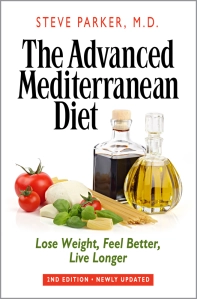
If I wanted to protect my brain from stroke, I’d be sure follow a Mediterranean-style diet, keep my blood pressure under 140/90 mmHg, stay physically active, keep my weight under control, and not smoke. The Advanced Mediterranean Diet combines weight management, exercise, and the Mediterranean diet.

Steve Parker, M.D.

Reference: Scarmeas, N., Luchsinger, J., Stern, Y., Gu, Y., He, J., DeCarli, C., Brown, T., & Brickman, A. (2011). Mediterranean diet and magnetic resonance imaging-assessed cerebrovascular disease Annals of Neurology, 69 (2), 257-268 DOI: 10.1002/ana.22317

Does Olive Oil Protect Against Stroke?

Older adults with high olive oil consumption have a lower risk of stroke, according to French investigators.

Caprese salad: mozzarella cheese, tomatoes, basil, extra virgin olive oil

The Mediterranean diet, rich in olive oil, has long been linked to lower rates of stroke.  The French researchers wondered if that might be attibutable to higher olive oil consumption.  Triglyceride esters of oleic acid comprise the majority of olive oil, and oleic acid blood levels reflect olive oil consumption.

Have you heard of monounsaturated fatty acids?  Oleic acid is one.

Methodology

Over 7,000 older adults without history of stroke were surveyed with regards to olive oil consumption.  Oleic acid plasma levels were measured in over a thousand of the study participants.  Over the course of five years, 175 strokes occurred.

Compared with those who never used olive oil, those with the highest consumption had a 41% lower risk of stroke.  The researchers made adjustments for other dietary variables, age, physical activity, and body mass index.

In looking at the plasma oleic acid levels, those in the highest third of levels had 73% lower risk of stroke compared to those in the lowest third.

Comments

Results suggest that the olive oil in the Mediterranean diet  may help explain the diet’s protection against stroke.  They also support my inclusion of olive oil in the Low-Carb Mediterranean Diet and Advanced Mediterranean Diet.

Steve Parker, M.D.

Reference:  Samieri, C. et al.  Olive oil consumption, plasma oleic acid, and stroke incidence: the Three-City StudyNeurology, Published online before print June 15, 2011, doi: 10.1212/WNL.0b013e318220abeb