Category Archives: Longevity

Vegetarians Less Healthy Than Omnivores

From Independent:

Vegetarians are less healthy than meat-eaters, a controversial study has concluded, despite drinking less, smoking less and being more physically active than their carnivorous counterparts.

A study conducted by the Medical University of Graz in Austria found that the vegetarian diet, as characterised by a low consumption of saturated fat and cholesterol, due to a higher intake of fruits, vegetables and whole-grain products, appeared to carry elevated risks of cancer, allergies and mental health problems such as depression and anxiety.

While not mentioned in the Independent article, the full PLOS One report defined “vegetarian”:

While 0.2% of the interviewees were pure vegetarians (57.7% female) [vegan, then?], 0.8% reported to be vegetarians consuming milk and eggs (77.3% female), and 1.2% to be vegetarians consuming fish and/ or eggs and milk (76.7% female).

I haven’t read the whole thing, but if you’re a vegetarian, you should digest it. Note the study was done in Austria. And if vegetarians are so unhealthy, why do Seventh Day Adventists in Loma Linda, CA, seem to have a longevity benefit. Do ya think maybe there’s more involved than diet, like culture or genetics?

Steve Parker, M.D.

Steve Parker MD, Advanced Mediterranean Diet

Click the pic to purchase at Amazon.com

Your PPI Might Kill You

Proton pump inhibitors (PPIs) are widely used in the U.S. to treat or prevent heartburn and ulcers. For example, omeprazole is the 6th most prescribed drug in the U.S. according to one source. PPIs reduce acid production by the stomach. But doesn’t it make sense that God or Nature gave us that stomach acid for a reason?

From the British Medical Journal:

Taking PPIs is associated with a small excess of cause specific mortality including death due to cardiovascular disease, chronic kidney disease, and upper gastrointestinal cancer. The burden was also observed in patients without an indication for PPI use. Heightened vigilance in the use of PPI may be warranted.

Source: Estimates of all cause mortality and cause specific mortality associated with proton pump inhibitors among US veterans: cohort study | The BMJ

Click for UPI’s coverage.

If you suffer from frequent heatburn, try cutting down on carbohydrates.

Steve Parker, M.D.

Steve Parker MD, Advanced Mediterranean Diet

Click the pic to purchase at Amazon.com

Nobody Gets Out Alive: Sugary Beverages Increase Risk of Death

From JAMA Network:

Question:  Is the consumption of sugary beverages (ie, sugar-sweetened beverages and fruit juices) associated with an increased mortality risk?

Findings:  In this cohort study of 13 440 black and white adults 45 years and older observed for a mean of 6.0 years, each additional 12-oz serving/d of sugary beverages was associated with an 11% higher all-cause mortality risk, and each additional 12-oz serving/d of fruit juice was associated with a 24% higher all-cause mortality risk. Similar associations were not observed for sugary beverage consumption and coronary heart disease mortality.

Meaning:  These results suggest higher consumption of sugary beverages, including fruit juice, is associated with increased mortality.

Source: Association of Sugary Beverage Consumption With Mortality Risk in US Adults: A Secondary Analysis of Data From the REGARDS Study | Cardiology | JAMA Network Open | JAMA Network

Steve Parker MD, Advanced Mediterranean Diet

Click the pic to purchase at Amazon.com

QOTD: Mark Steyn on D-Day and Pine Coffins

…simple pine coffins are what soldiers get buried in.

Sitting is the new smoking? No, it’s worse than that: Not exercising worse is for your longevity than smoking, diabetes AND heart disease

exercise for weight loss and management, dumbbells

At least he’s trying…

I’ve long advocated that life-and health-insurance companies base their premiums on results of individual treadmill exercise tests or similar. Here’s why.

From CNN:

We’ve all heard exercise helps you live longer. But a new study goes one step further, finding that a sedentary lifestyle is worse for your health than smoking, diabetes and heart disease.

Dr. Wael Jaber, a cardiologist at the Cleveland Clinic and senior author of the study, called the results “extremely surprising.”

“Being unfit on a treadmill or in an exercise stress test has a worse prognosis, as far as death, than being hypertensive, being diabetic or being a current smoker,” Jaber told CNN. “We’ve never seen something as pronounced as this and as objective as this.”

Source: Not exercising worse for your health than smoking, diabetes and heart disease – CNN

Most folks can improve their fitness by exercising regularly. But what about nonresponders?

Steve Parker, M.D.

PS: All of my weight-loss books recommend and teach you how to improve your level of fitness.

Steve Parker MD, Advanced Mediterranean Diet

Two diet books in one

Another Sacred Cow Slaughtered: Omega-3 Fatty Acids Have No Effect on Cardiovascular Disease or Longevity

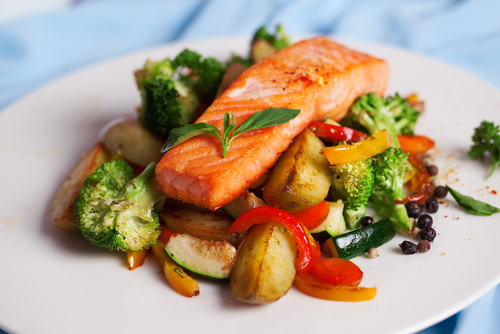
Salmon, a cold-water fatty fish, is a rich source of omega-3 fatty acids

That headline is the conclusion of a Cochrane systematic review of the evidence. As you read the summary below, be aware that the main omega-3 fatty acids are alpha-lenolinic acid (ALA), docosahexaenoic acid (DHA), and eicosapentaenoic acid (EPA).

From Cochrane Library:

Increasing EPA and DHA has little or no effect on all‐cause deaths and cardiovascular events (high‐quality evidence) and probably makes little or no difference to cardiovascular death, coronary deaths or events, stroke, or heart irregularities (moderate‐quality evidence, coronary events are illnesses of the arteries which supply the heart). EPA and DHA slightly reduce serum triglycerides and raise HDL (high‐quality evidence).

Eating more ALA (for example, by increasing walnuts or enriched margarine) probably makes little or no difference to all‐cause or cardiovascular deaths or coronary events but probably slightly reduce cardiovascular events, coronary mortality and heart irregularities (moderate/low‐quality evidence). Effects of ALA on stroke are unclear as the evidence was of very low quality.

There is evidence that taking omega‐3 capsules does not reduce heart disease, stroke or death. There is little evidence of effects of eating fish. Although EPA and DHA reduce triglycerides, supplementary omega‐3 fats are probably not useful for preventing or treating heart and circulatory diseases. However, increasing plant‐based ALA may be slightly protective for some heart and circulatory diseases.

Source: Omega‐3 fatty acids for the primary and secondary prevention of cardiovascular disease – Abdelhamid, AS – 2018 | Cochrane Library

Effects of Greek orthodox christian church fasting on serum lipids and obesity

Dead whole fish aren’t very appealing to many folks

Not mentioned often in scientific articles is the potential contribution of fasting to the health benefits of the Mediterranean diet.  What sort of fasting?

“Orthodox Christian holy books recommend a total of 180–200 days of fasting per year. The faithful are advised to avoid olive oil, meat, fish, milk and dairy products every Wednesday and Friday throughout the year. Additionally, there are three principal fasting periods per year: i) a total of 40 days preceding Christmas (meat, dairy products and eggs are not allowed, while fish and olive oil are allowed except on Wednesdays and Fridays), ii) a period of 48 days preceding Easter (Lent). During Lent fish is allowed only two days whereas meat, dairy products and eggs are not allowed. Olive oil consumption is allowed only at weekends, iii) a total of 15 days in August (the Assumption) when the same dietary rules apply as for Lent with the exception of fish consumption which is allowed only on August 6th. Seafood such as shrimps, squid, cuttlefish, octopus, lobsters, crabs as well as snails are allowed on all fasting days throughout the year. The Greek Orthodox fasting practices can therefore be characterized as requiring a periodic vegetarian diet including fish and seafood.”

Source: Effects of Greek orthodox christian church fasting on serum lipids and obesity

Fresh Praise for the Mediterranean Diet in NYT

Dead whole fish aren’t very appealing to many folks

From Paul Greenberg’s opinion piece in the New York Times (July 19, 2018):

In 1953, not long before President Dwight Eisenhower suffered a heart attack in office, the social scientist Leland Allbaugh published “Crete: A Case Study of an Underdeveloped Area.” The landmark analysis of the eating patterns of an isolated Greek population strongly suggested that a calorie-limited diet high in fresh fruits and vegetables, whole grains, and olive oil and low in animal protein, particularly red meat, could lower the risk of heart attacks and strokes, decrease chronic disease and extend life.

Medical research over the last half-century has largely borne out this initial finding. Weight-loss fads and eating trends come and go, but the so-called Mediterranean diet has stood fast. “Among all diets,” Dr. Walter Willett of Harvard’s T.H. Chan School of Public Health concluded in an email, “the traditional Mediterranean diet is most strongly supported for delivering long term health and wellbeing.”

Click for a more complete definition of the traditional Mediterranean Diet, which includes alcohol. More from Greenberg:

***

As the clinician Artemis Simopoulos pointed out to me, two meatless days a week are the norm in Greek Orthodox communities. This religious provision encouraged traditional communities to eat fish not only on Fridays but on Wednesdays as well. Recent epidemiological evidence links two portions of seafood a week with lower blood pressure, lower LDL cholesterol and lower triglycerides. In spite of this, American seafood consumption has stayed consistently low compared with other developed countries.

***

And for decades now, even Greeks have been abandoning their traditional foods and eating much more than they previously did. “In my view, the reason the diet worked to prevent heart disease on Crete was because they weren’t overeating,” said Marion Nestle, a professor of nutrition, food studies and public health at New York University. “By the time I got to Crete in the early 1990s, they were, and the hospitals were full of heart attacks and people with type 2 diabetes.”

***

Today, 65 years after Allbaugh returned from Crete, with modern America plagued by one of the highest obesity rates in the world and failing to meet life expectancy averages of almost every other developed nation, it’s worth circling back to the eating patterns of the ancients. For if the United States were to put itself on a Mediterranean diet, we would likely see huge improvements not only in human and environmental health, but also in rural economic stability.

RTWT for Greenberg’s roadmap to an American Mediterranean diet.

Steve Parker, M.D.
Steve Parker MD, Advanced Mediterranean Diet

Two diet books in one

Mediterranean and Paleo Diets Linked to Lower Risk of Death

The Journal of Nutrition in 2017 published a study that looked at baseline diet characteristics of over 21,000 folks, then over the next six years noted who died, and why. Guess how many died?

Here’s a clue. These U.S. study participants were at least 45 years old at the start of the study.

2,513 died. Seems high to me, so I bet the average age was close to 65.

Hank’s not worried about death

I can’t tell for sure from the report’s abstract, but it looks like the researchers were interested in the Mediterranean and caveman diets from the get-go. Study subjects who ate Paleo- or Mediterranean-style were significantly less likely to die over six years. They were less likely to die from any cause or from cancer or from cardiovascular disease.

Why not adopt some Mediterranean diet features? Lose weight with the Advanced Mediterranean Diet.

Also consider the paleo diet (click for my 2012 definition).

Steve Parker, M.D.

Reference:

Paleolithic and Mediterranean Diet Pattern Scores Are Inversely Associated with All-Cause and Cause-Specific Mortality in Adults. First published February 8, 2017, doi: 10.3945/​jn.116.241919. Authors:

  1. Kristine A Whalen
  2. Suzanne Judd
  3. Marjorie L McCullough
  4. W Dana Flanders
  5. Terryl J Hartman
  6. Roberd M Bostick

Abstract

Background: Poor diet quality is associated with a higher risk of many chronic diseases that are among the leading causes of death in the United States. It has been hypothesized that evolutionary discordance may account for some of the higher incidence and mortality from these diseases.

Objective: We investigated associations of 2 diet pattern scores, the Paleolithic and the Mediterranean, with all-cause and cause-specific mortality in the REGARDS (REasons for Geographic and Racial Differences in Stroke) study, a longitudinal cohort of black and white men and women ≥45 y of age.

Methods: Participants completed questionnaires, including a Block food-frequency questionnaire (FFQ), at baseline and were contacted every 6 mo to determine their health status. Of the analytic cohort (n = 21,423), a total of 2513 participants died during a median follow-up of 6.25 y. We created diet scores from FFQ responses and assessed their associations with mortality using multivariable Cox proportional hazards regression models adjusting for major risk factors.

Results: For those in the highest relative to the lowest quintiles of the Paleolithic and Mediterranean diet scores, the multivariable adjusted HRs for all-cause mortality were, respectively, 0.77 (95% CI: 0.67, 0.89; P-trend < 0.01) and 0.63 (95% CI: 0.54, 0.73; P-trend < 0.01). The corresponding HRs for all-cancer mortality were 0.72 (95% CI: 0.55, 0.95; P-trend = 0.03) and 0.64 (95% CI: 0.48, 0.84; P-trend = 0.01), and for all-cardiovascular disease mortality they were 0.78 (95% CI: 0.61, 1.00; P-trend = 0.06) and HR: 0.68 (95% CI: 0.53, 0.88; P-trend = 0.01).

Conclusions: Findings from this biracial prospective study suggest that diets closer to Paleolithic or Mediterranean diet patterns may be inversely associated with all-cause and cause-specific mortality.


Oldsters, Preserve Your Muscle Mass While You Lose Weight. Here’s How.

dementia, memory loss, Mediterranean diet, low-carb diet, glycemic index, dementia memory loss

“Honey, please come to the gym with me.”

From UPI.com:

Seniors who want to lose weight should hit the weight room while they cut calories, a new study suggests.

Older folks who performed resistance training while dieting were able to lose fat but still preserve most of their lean muscle mass, compared with those who walked for exercise, researchers report.

“The thought is if you lose too much lean mass, that this will exacerbate risk of disability in older adults,” said lead researcher Kristen Beavers, an assistant professor of health and exercise science at Wake Forest University in Winston-Salem, N.C. “Our findings show if your treatment goal is to maximize fat loss and minimize lean mass loss, then the resistance training is probably the way to go.”

We’ve know for a while that resistance training helps preserve muscle mass in younger folks during weight-loss programs. I’ve always figured the principle applied to older folks, too. It’s good to have proof. Average age of these study participants was 67.

Steve Parker, M.D.