Category Archives: Longevity

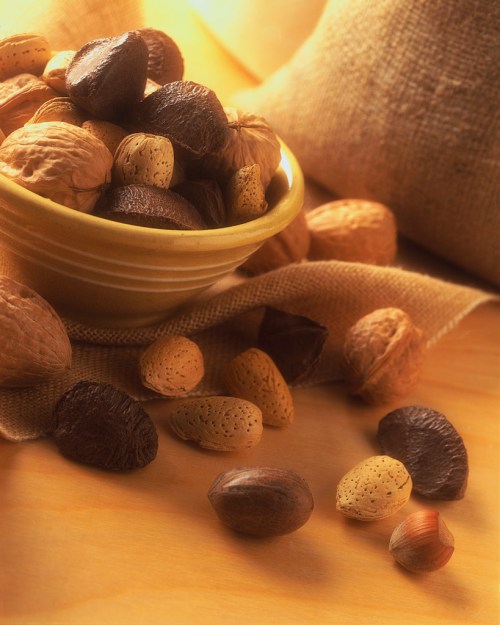
Nut Consumption Linked to Longevity

American Journal of Clinical Nutrition has the details.

h/t Ivor Goodbody

R.I.P.: A Horse Named Steve; and a Neurosurgeon Confronts His Own Death

The New York Times online has the story:

As soon as the CT scan was done, I began reviewing the images. The diagnosis was immediate: Masses matting the lungs and deforming the spine. Cancer. In my neurosurgical training, I had reviewed hundreds of scans for fellow doctors to see if surgery offered any hope. I’d scribble in the chart “Widely metastatic disease — no role for surgery,” and move on. But this scan was different: It was my own.

Well worth your time to read unless you’re in denial of death.

h/t Yoni Freedhoff.

*  *  *

A pall hangs over the Parker Compound since one of our horses died of colic yesterday. Certainly not the same as a human death, but still….  

My wife and daughter rescued Steve from appalling conditions  eight or nine years ago when he was about seven years old. They named him after me for some reason—his original name was Wyatt. Sunny paid $200 (USD) for Steve, which is one cheap horse. Many horses are like boats and airplanes in that they may not cost all the much initially—it’s the maintenance and repairs that get you.

The seller in Apache Junction, Arizona, had him in a large pen with 20 or 30 other horses. At feeding time, the owner threw a few flakes of hay into the pen and then it was “survival of the fittest” time. Horses are not by nature sharing creatures. Steve was not high up on the pecking order. If she hadn’t bought him, he may well have ended up in a meat market.

Steve was originally my daughter’s first horse, not mine. For reasons forgotten, we got her another horse, Buckwheat. Steve was to be my wife’s horse then. Soon enough Sunny broke her leg and was out of commission for months. Horses, like people, need exercise. The most fun way to exercise them is to ride them. That’s when I first started riding Steve, to give him exercise. My daughter and a cowgirl named Angel Antan were my instructors.

I had an odd experience with him one time when my daughter and I were on a trail ride to the Verde River from our home in Rio Verde. If you don’t know how to ride, note that a horse isn’t supposed to move or stop unless the rider gives the signal. You can’t let the horse be in charge. We were in a dry wash when Steve suddenly stopped and started sniffing the ground. I had no idea what was up and thought I’d just sit there waiting to see what would happen. Soon and without warning, Steve knelt down on his front legs, then his back ones, and was on his belly, starting to roll over! I jumped off and pulled him up by the reins before he did the deed. You do NOT want a horse rolling over on you, or your saddle for that matter. He never did that again, nor have I heard of that happening to others.

One of the cool things about our trail rides is that you can get close to coyotes. When you’re on horseback, the coyotes don’t perceive you as much of a threat.

Steve always liked men more than women. It was only in the last few months that my wife and he became quite fond of each other.

My wife gave him a great home. He was a good horse who taught me how to ride. I always felt safe when I was around him and on him, regardless of the near roll-over.

He “colicked” every year for the last five years. I’d like to think that Steve’s in horse heaven with his buddy Buckwheat, running over grassy  hills and wading through clear streams. RIP, Steve. No more pain, ever. 

Steve is the palomino on the right

Steve is the palomino on the right

You May Need to Rein In Your Doctors at the End of Your Life

The Wall Street Journal has a sad article about end-of-life care and being in control. Some statistics caught my eye:

This disconnect has ruinous economic costs. About a quarter of Medicare’s $550 billion annual budget pays for medical treatment in the last year of life. Almost a third of Medicare patients have surgery in their last year of life, and nearly one in five in their last month of life. In their last year of life, one-third to one-half of Medicare patients spend time in an intensive care unit, where 10 days of futile flailing can cost as much as $323,000. Medical overtreatment costs the U.S. health care system an estimated $158 billion to $226 billion a year.

But you don’t care about the money because you’re not paying for it, right? Remember that physicians are much less aggressive with end-of-life care when it comes to their own lives. It’s not about the money.

Read the whole thing.

Steve Parker, M.D.

2013 Was Good For the Mediterranean Diet

Larry Huston, a long-time writer on things cardiologic, notes that:

It was a good year for the Mediterranean Diet. The PREDIMED study provided the best supporting evidence yet, though it seems unlikely if anyone will ever be able to sort out the specific role of the individual components of the Mediterranean diet, which include wine, olive oil, nuts, fish, and, of course, less tangible things like sunshine and lifestyle. The nuts component received a separate boost from the publication of an influential paper in the New England Journal of Medicine.

Actually, Harvard and U. of Athens researchers have an idea which components of the Mediterranean diet prolong life.

Even If You Already Have Cardiovascular Disease, the Mediterranean Diet Helps

…to prevent future events—like heart attacks and strokes—and to prolong life. Details are at the American Journal of Clinical Nutrition.

You’re Still at Risk Healthwise Even If You’re “Metabolically Healthy”

I'll eat my hat if this dude doesn't have metabolic syndrome

I’ll eat my hat if this dude doesn’t have metabolic syndrome

See details at MedPageToday.

Some studies suggest you can be healthy and long-lived while obese as long as you are “metabolically healthy.” That is, if you have normal blood pressure, LDL cholesterol, triglycerides, blood sugar, and waist circumference. A new meta-analysis finds that ain’t so: you’re still at higher risk for death or cardiovascular events if you’re obese and free of metabolic syndrome features.

“Our results do not support this concept of ‘benign obesity’ and demonstrate that there is no ‘healthy’ pattern of obesity,” Kramer and colleagues wrote. “Even within the same category of metabolic status (healthy or unhealthy) we show that certain cardiovascular risk factors (blood pressure, waist circumference, low high-density lipoprotein cholesterol level, insulin resistance) progressively increase from normal weight to overweight to obese.”

Click for the scientific journal abstract.

This report does not directly address the “fat but fit” concept, whereby you can counteract some of the adverse health effects of obesity by being fit. By fit, I mean regularly exercising and achieving a decent level of capacity and tolerance for physical activity. Fat but fit still holds.

Steve Parker, M.D.

Why Are Nuts So Prominent in My Diet Plans?

Nuts with more omega-3 fatty acids (compared to omega-6) may be the healthiest

Nuts with the lowest omega-6/omega-3 fatty acid ratios may be the healthiest. In other words, increase your omega-3s and decrease omega-6s.

Conner Middelmann-Whitney explains in her recent post at Psychology Today. In a nutshell, they are linked to longer life and better health. For example:

In the largest study of its kind, Harvard scientists found that people who ate a handful of nuts every day were 20% less likely to die from any cause over a 30-year period than those who didn’t consume nuts. The study also found that regular nut-eaters were leaner than those who didn’t eat nuts, a finding that should calm any fears that eating nuts will make you gain weight.

The report also looked at the protective effect on specific causes of death. “The most obvious benefit was a reduction of 29% in deaths from heart disease—the major killer of people in America,” according to Charles S. Fuchs, director of the Gastrointestinal Cancer Treatment Center at Dana-Farber, the senior author of the report and a professor of medicine at Harvard Medical School. “But we also saw a significant reduction—11% —in the risk of dying from cancer,” added Fuchs.

Read the whole enchilada.

Nuts are integral to my Advanced Mediterranean Diet, Low-Carb Mediterranean Diet, Paleobetic Diet, and Ketogenic Mediterranean Diet.

Walnuts seem to have the lowest omega-6/omega-3 fatty acid ratio of all the common nuts. That may make them the healthiest nut. The jury is still out. Paleo dieters focus on cutting out omega-6s and increasing omega-3s. Julianne Taylor has a great post on how to do that with a variety of foods, not just nuts.

Steve Parker, M.D.

How Much Has Life Expectancy Increased Since 1960?

Worldwide life expectancy at birth has increased from 52 in 1960 to 70 in 2010. See now, things aren’t so bad.

Mediterranean Diet Prolongs Life Even If You Have Existing Cardiovascular Disease

More evidence in favor of the Mediterranean diet as the healthiest around

More evidence in favor of the Mediterranean diet as the healthiest around

We’ve known for years that the Mediterranean diet helps prolong life and prevent heart attacks, cancer, and strokes in folks who start out healthy.

What about patients with existing cardiovascular disease? I’m talking about history of heart attacks, strokes, angina, and coronary artery disease.

Yep. The Mediterranean diet helps them live longer, too.

Details of the study are at the American Journal of Clinical Nutrition. The research was done at Harvard.

May You Outlive Your Doctors

The world’s oldest man died recently at the age of 116. National Geographic has an article mentioning him, including an interview with Blue Zones author Dan Buettner:

Who is the most memorable Blue Zoner you’ve met?

Without question it’s Stamatis Moraitis, who lives in Ikaria. I believe he’s 102. He’s famous for partying. He makes 400 liters [100 gallons] of wine from his vineyards each year, which he drinks with his friends. His house is the social hot spot of the island.

He’s also the Ikarian who emigrated to the United States, was diagnosed with lung cancer in his 60s, given less then a year to live, and who returned to Ikaria to die. Instead, he recovered.

Yes, he never went through chemotherapy or treatment. He just moved back to Ikaria.

Did anyone figure out how he survived?

Nope. He told me he returned to the U.S. ten years after he left to see if the American doctors could explain it. I asked him what happened. “My doctors were all dead,” he said.

Read the rest.