Category Archives: Exercise

Faster Walking Speed May Prevent Type 2 Diabetes

You probably want to shoot for a speed of 3 miles per hour or higher.

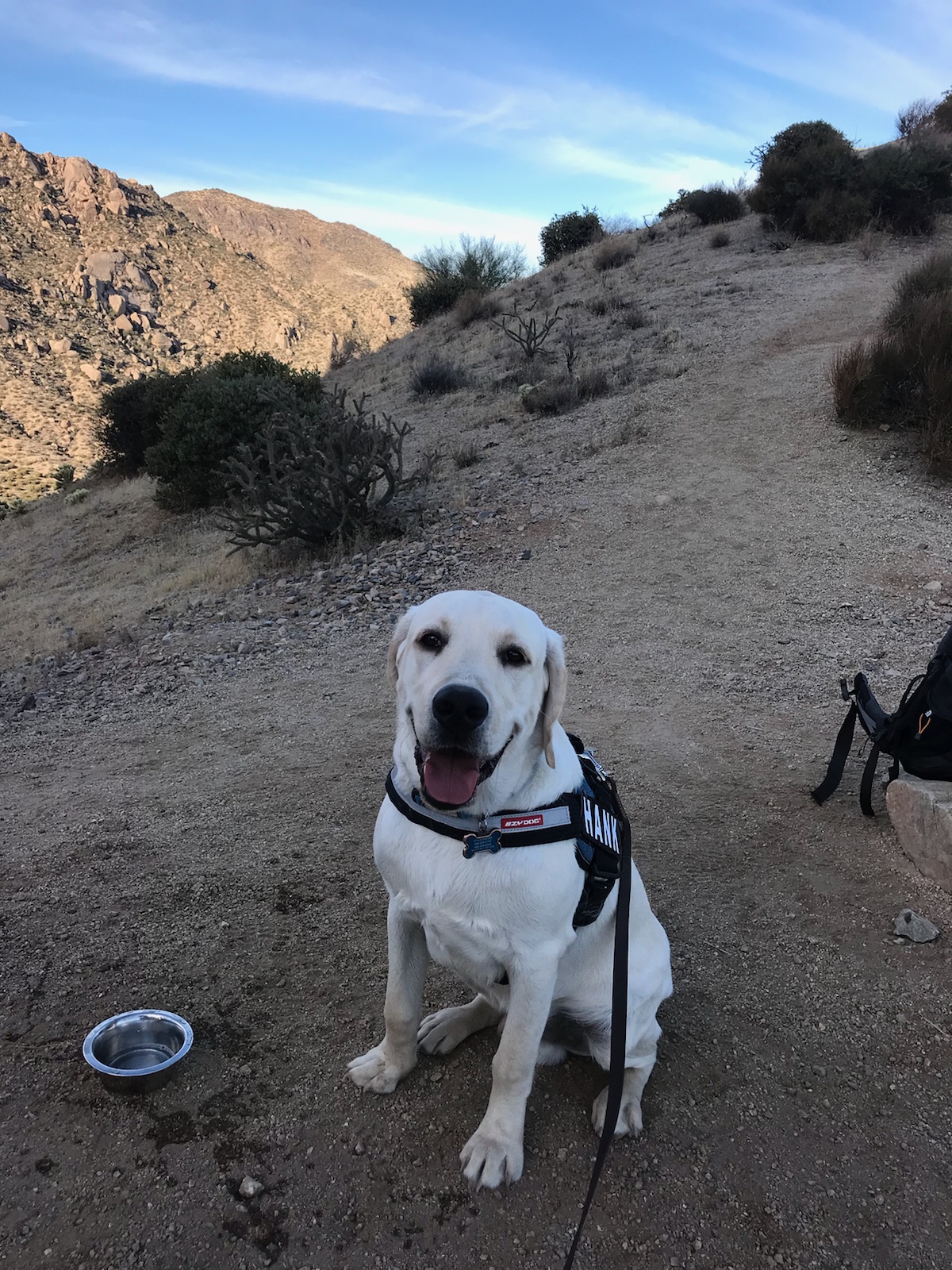
She is walking the rare amarillo labradorius gigantus

The British Journal of Sports Medicine published an article by researchers based in Iran. They analyzed 10 cohort studies that looked at average habitual walking speed and the incidence of type 2 diabetes. Study subjects were not in Iran, but in the U.S., U.K., and Japan.

An easy, casual walking speed is 2 miles per hour (mph) or less. Brisk walking speed is 3-4 mph. The researchers found that a habitual walking speed of even 2.5 mph was linked to a slightly lower risk of type 2 diabetes compared to the casual walkers. A more definitive reduction of diabetes incidence (25%) was seen in those who walk at 3 to 4 mph.

For those of you who think in terms of km/hr: An easy, casual walking speed is 3.2 km/hr or less. Brisk walking speed is 4.8-6.4 km/hr. The researchers found that a habitual walking speed of even 4 km/hr was linked to a slightly lower risk of type 2 diabetes compared to the casual walkers. A more definitive reduction of diabetes incidence (25%) was seen in those who walk at 4.8-6.4 km/hr.

This doesn’t necessarily mean that you’ll cut your risk of developing type 2 diabetes if you increase your habitual walking speed from an easy stroll to 3 mph or higher. But it is suggestive and there is physiological science to support that suggestion. The problem is that this study was observational. Which means it’s possible that faster walkers are simply overall healthier than slower ones. They walk faster because they’re healthier and are just constitutionally (genetically?) less prone to illness. To prove that faster walking speeds prevent some cases of type 2 diabetes, you’d have to take 2,000 slow walkers and somehow motivate 1,000 of them to walk faster habitually, while making sure the slow-pokes stay slow for 5-10 years. Keep everything else the same for all 2,000. After 5-10 years, you compare the incidence of diabetes. That study will not, probably cannot, be done.

  Steve Parker, M.D.

h/t to Diabetes Daily for a well-written article on this.
Update: My Fitness

It’s piss-poor.

I stopped exercising 18-24 months ago, I’m not even sure why. Probably just got busy with work or life and got out of the habit. I turn 70 next year and know that I must exercise regularly to improve and maintain my vigor as aging progresses. I expect big changes, and not for the better, over the next decade. My father died at 83; my mother is still alive and fairly healthy at 92.

Here’s the program I started yesterday:

  1. Push-ups.
  2. Dumbell overhead presses, Arnold style.
  3. One-arm bent-over rows with dumbell.
  4. Single-leg Romanian dead lifts with dumbell.
  5. Squats with dumbells.
  6. Bench presses (alternating flat and inclined).
  7. Walking the dogs for 2.5-4 miles, at least 2-3 times a week.

A recent visit with my brother-in-law Dale inspired me to start walking the famous “10,000 steps a day,” roughly five miles. That’s what he does. My dogs love it. I usually fail when I’m working a string of 12-hour shifts. If you’re an older woman, maybe 4,400 steps/day is enough for a longevity benefit. In other populations studied, 6,000 to 8,000 steps/day was optimal for the longevity benefit. I admitted a patient to the hospital a few days ago who told me her health insurer sends her a small check monthly if she meets their step goal. She’s saving them money via lower healthcare expenditures, and they’re sharing with her. I love it!

For exercises 1 through 5 above, I’ll do them for 90 seconds each, loading myself with enough weight to exhaust myself by the time I’m done. My cadence for them will be ~5 seconds each direction. E.g., for the bench press, 5 seconds slowly lifting the dumbells up, the 5 seconds slowly lowering them. Sort of like Chris Highcock’s Hillfit program.

Before you start a new fitness program, I suggest you take some baseline measurements.

As in May, 2012, I still weigh 168 lb (76.4 kg). But this required loss of 12 lb (5.5 kg) over the last year. Compared to 2012, however, I’m sure I’ve lost strength and muscle mass and gained girth. At the level of the umbilicus, my abdominal circumference while standing upright is 38.5 inches (98 cm). That number in May, 2012, was 36.5 inches (92.5 cm). If I measure my girth while supine, the number is three inches less. Assuming I’ve lost an inch of height over the last 15 years, my BMI is 23.4. Calculate your BMI here.

  Steve Parker, M.D.

Is “Cellular Exercise” the Key to Longevity?

I think it’s a cell. What say you?
Photo by Fayette Reynolds M.S. on Pexels.com

London researchers introduce the concept of “cellular exercise.”

Nutritional discipline and dietary restriction result in resistance exercise for our cells. Triggered by calorie restriction or physical exercise, our cells end up producing transcription factors that lead to protection against oxidation, inflammation, atherosclerosis, and carcinogenic proliferation. In the long-term, this results in longevity and a decrease in cancer, T2DM [type 2 diabetes], myocardial infarction, and stroke. Since centuries past, studies on humans, rhesus monkeys, and multilevel organisms have demonstrated the benefits of calorie restriction without malnutrition. Periodic fasting and calorie restriction show increases in regeneration markers and decreases in biomarkers for diabetes, CVD [cardiovascular disease], cancer, and aging.

The present review concluded that longevity can be increased through moderation of diet and exercise. Research shows that a concoction of the diverse diets modernly popularized— MED [Mediterranean], DASH, high-protein diets±—tempered by overall calorie restriction through periodic fasting or chronic calorie restriction, will provide protection against CVD, cancer, and aging. Exercise has also been shown to increase longevity in the general population, lower incidence of diabetes and cancer, and produce psychological benefits.

This review of research indicates that incorporating a moderate caloric restriction or fasting regimen could provide substantial benefits at low risk. Cellular exercise through calorie restriction and physical exercise can increase longevity and prevent the greatest killers of human society today—stroke and heart disease.


Caloric restriction is a form of hormesis. If interested, read more about it in free article from Journal of Physiological Anthropology.

Steve Parker, M.D.

front cover of paleobetic diet

Click to purchase at Amazon.com. E-book also available at Smashwords. com.

You Don’t Have to Lose Muscle as You Age

young woman, exercise, weight training, gym
Not enough weight!

Axel Sigurdsson, MD, PhD, published a great article on prevention of age-related sarcopenia (loss of muscle mass). Click through for details. To stay vigorous as you age, you want to preserve muscle mass and the strength it provides. If you’ve lost muscle mass, you can re-build it. Summary from the good doctor:

Age-related loss of muscle mass (sarcopenia) may start as early as in our thirties and appears to continue for the rest of our lives.

There is also a loss of muscle strength and muscle function. The consequences may often be severe, particularly in the elderly.

Increased physical activity and adequate nutrition are the most powerful tools at our disposal to delay age-related loss of muscle mass.

Well-rounded exercise programs consisting of aerobic and resistance exercises are believed to be most effective.

Modification of dietary habits may be an important tool to prevent the decline in muscle mass and function that occurs with aging.

Adequate protein intake is of key importance. Animal-derived protein may provide a higher and broader biological value than vegetable protein.

Fish consumption is recommended and fruits and vegetables should be consumed regularly.

Nutritional supplements containing essential amino acids may be helpful. This is particularly true for whey protein.

Fish-derived protein hydrolysates also appear promising.

Pro Tip: Hold your fish in front of your body with outstretched arms to make it look bigger!

Adequate intake of vitamin D is essential.

“Fish-derived protein hydrolysates” doesn’t sound very appetizing. I’ll stick with real fish for now, especially cold-water fatty fish.

Steve Parker, M.D.

front cover of paleobetic diet

Click to purchase at Amazon.com. E-book also available at Smashwords. com.

Resistance Training Improves Insulin Resistance in Overweight Men

Didn’t we already know this?

Insulin is a blood-borne hormone that the pancreas gland secretes in order to keep blood sugar levels from getting too high. (Insulin does many other things, but table that for now.) Insulin triggers certain body cells to absorb glucose from the bloodstream. “Insulin resistance” means that these cells don’t respond to insulin as well as they should, so either the pancreas secretes even more insulin (hyperinsulinemia) or blood sugar levels rise. Insulin resistance is a harbinger of type 2 diabetes mellitus. Most overweight or obese type 2 diabetics have insulin resistance. Many experts think hyperinsulinemia causes disease by itself, regardless of blood sugar levels. So it may be best to avoid insulin resistance and hyperinsulinemia.

The aim of the study was to investigate the effects of 6 weeks of resistance exercise training, composed of one set of each exercise to voluntary failure, on insulin sensitivity and the time course of adaptations in muscle strength/mass. Ten overweight men (age 36 ± 8 years; height 175 ± 9 cm; weight 89 ± 14 kg; body mass index 29 ± 3 kg m−2) were recruited to the study. Resistance exercise training involved three sessions per week for 6 weeks. Each session involved one set of nine exercises, performed at 80% of one‐repetition maximum to volitional failure. Sessions lasted 15–20 min. Oral glucose tolerance tests were performed at baseline and post‐intervention. Vastus lateralis muscle thickness, knee‐extensor maximal isometric torque and rate of torque development (measured between 0 and 50, 0 and 100, 0 and 200, and 0 and 300 ms) were measured at baseline, each week of the intervention, and after the intervention. Resistance training resulted in a 16.3 ± 18.7% (P < 0.05) increase in insulin sensitivity (Cederholm index). Muscle thickness, maximal isometric torque and one‐repetition maximum increased with training, and at the end of the intervention were 10.3 ± 2.5, 26.9 ± 8.3, 18.3 ± 4.5% higher (P < 0.05 for both) than baseline, respectively. The rate of torque development at 50 and 100 ms, but not at 200 and 300 ms, increased (P < 0.05) over the intervention period. Six weeks of single‐set resistance exercise to failure results in improvements in insulin sensitivity and increases in muscle size and strength in young overweight men.

Source: The effect of short‐duration resistance training on insulin sensitivity and muscle adaptations in overweight men – Ismail – 2019 – Experimental Physiology – Wiley Online Library

Steve Parker, M.D.

front cover of paleobetic diet

Click to purchase at Amazon.com. E-book also available at Smashwords. com.

Trainer Mark Rippetoe On the Impact of the Pandemic

young woman, exercise, weight training, gym
Not enough weight!
<p value="<amp-fit-text layout="fixed-height" min-font-size="6" max-font-size="72" height="80">Mark Rippetoe posted an interesting <a rel="noreferrer noopener" href="https://startingstrength.com/article/the-new-fitness-industry&quot; data-type="URL" data-id="https://startingstrength.com/article/the-new-fitness-industry&quot; target="_blank">article on changes in the fitness industry precipitated by the coronavirus pandemic</a>. He also appreciates the difference between exercise/recreation and <em>training</em>:Mark Rippetoe posted an interesting article on changes in the fitness industry precipitated by the coronavirus pandemic. He also appreciates the difference between exercise/recreation and training:

When the opportunity to expand the government’s control in the name of Public Health or Safety or Your Continued Well-being or Not Overwhelming the Healthcare System or whatever comes along next, suddenly your having fun is not nearly as important as obeying the commands of the petty little fucks that enjoy telling other people what to do. Fun is “non-essential,” you see. Your obedience isessential. And that is why your globogym is now closed. 

Depending on where you live and how much cash the corporation has on hand, it may be closed for a long time, or it might be closed permanently. Because it is viewed as Recreation, and is therefore “non-essential,” the petty fucks in charge feel no responsibility to ensure your fun – as if the kind of innocent fun a person has is their decision to make. 

And the government has already described their ideas about exercise. I wrote an article about this several years ago that shows you how completely divorced from our particular reality these fools are. It could be argued that their version of exercise is so utterly wasteful of time that you would in fact be better off locked in your house. And that is what they intend to do.

So it’s time for a paradigm shift. Training – the process we employ to intentionally increase our strength and our health over time – is fundamentally different than stopping by the club on the way home, catching a pump, catching a sweat, catching a shower, and finishing the trip having had fun. Training may actually be no fun at all. The results of training are enjoyable, but the process is hard, and it requires commitment, patience, and eventually the courage to do things you’re not sure you can do. It is an educational process, of teaching both your body and mind to be stronger.

Steve Parker, M.D.

front cover of paleobetic diet

Click to purchase at Amazon.com. E-book also available at Smashwords. com.

What’s the Best Type of Exercise to Reduce Obesity?

Steve Parker MD
Resistance training on left; treadmill on right can be high intensity

From Obesity Reviews:

Current international guidelines recommend people living with obesity should be prescribed a minimum of 300 min of moderately intense activity per week for weight loss. However, the most efficacious exercise prescription to improve anthropometry [measurements and proportions of the body], cardiorespiratory fitness (CRF) and metabolic health in this population remains unknown. Thus, this network meta‐analysis was conducted to assess and rank comparative efficacy of different exercise interventions on anthropometry, CRF and other metabolic risk factors.

* * *

Results reveal that while any type of exercise intervention is more effective than control [no particular exercise, if any], weight loss induced is modest. Interventions that combine high‐intensity aerobic and high‐load resistance training exert beneficial effects that are superior to any other exercise modality at decreasing abdominal adiposity, improving lean body mass and increasing cardiorespiratory fitness. Clinicians should consider this evidence when prescribing exercise for adults living with obesity, to ensure optimal effectiveness.

Source: What exercise prescription is optimal to improve body composition and cardiorespiratory fitness in adults living with obesity? A network meta‐analysis – O’Donoghue – – Obesity Reviews – Wiley Online Library

So, “combine high‐intensity aerobic and high‐load resistance training” to reduce body fat and increase fitness.

Steve Parker, M.D.


front cover of paleobetic diet

Click to purchase at Amazon.com. E-book also available at Smashwords. com.

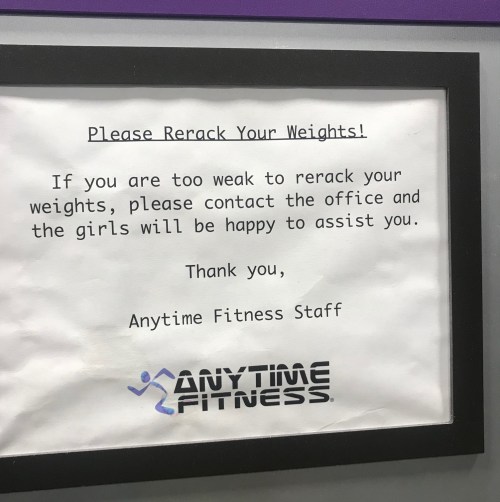
Image

Seen at my Local AnyTime Fitness #Humor

From ConsumersAdvocate: The Best Fitness Trackers For 2020

ConsumersAdvocate.org has an article comparing and contrasting some of the available fitness trackers:

young woman, exercise, weight training, gym
You go, girl!
HOW WE FOUND THE BEST FITNESS TRACKERFEATURES

We checked for fitness trackers with diverse features that users could choose to best match their lifestyle and goals. This includes multiple health and activity monitoring options.

CONNECTIVITY

Many fitness trackers sync with smartphones or Bluetooth to receive calls, get message notifications, and send data to their corresponding fitness apps. We looked at trackers that were easy to connect.

COST

Regular fitness trackers can range from $50 to $200, while hybrid smartwatches can cost over $400. We compared prices to special features to make sure consumers get the most out of their investment.

CUSTOMER EXPERIENCE

Fitness trackers should be durable, lightweight, and comfortable. We interviewed customers and read dozens of reviews and testimonies for thorough feedback on each product.

Source: The Best Fitness Trackers For 2020

Click through for details. I use none of these trackers, so have no dog in the fight.

Steve Parker, M.D.

Exercise Reduces Risk for Cancer By Up to 25 Percent

Recreation, not exercise

Exercise isn’t supposed to be fun. Ken Hutchins wrote, “Do not try to make exercise enjoyable.”  Getting your teeth cleaned isn’t supposed to be fun, either.

Once I got that through my thick skull, it made it easier for me to slog through my  twice weekly workouts.

Hutchins again: “We accept that both exercise and recreation are important in the overall scheme of fitness, and they overlap to a great degree. But to reap maximum benefits of both or either they must first be well-defined and then be segregated in practice.”

Back on topic…

From UPI:

In findings published Thursday in the Journal of Clinical Oncology, researchers at the National Cancer Institute, the American Cancer Society, and the Harvard T.H. Chan School of Public Health report that people who engaged in physical activity as recommended by the National Institutes of Health were able to reduce their risk for seven different types of cancer by as much as 25 percent.

This included common—and deadly—forms of the disease like colon and breast cancers, as well as endometrial cancer, kidney cancer, myeloma, liver cancer, and non-Hodgkin lymphoma.

*  *  *

Updated federal guidelines for physical activity recommend that people should aim for two and a half to five hours per week of moderate-intensity activity or 75 to 150 minutes per week of “vigorous activity.”

Source: Exercise may reduce risk for cancer by as much as 25 percent – UPI.com

Steve Parker, M.D.

Steve Parker MD, Advanced Mediterranean Diet

Click the pic to purchase at Amazon.com. E-book versions also available at Smashwords. com.