Monthly Archives: April 2012

Alcohol Consumption Linked to Lower Rates of Death and Heart Attack

Canadian and U.S. researchers report that moderate alcohol consumption seems to reduce 1) the incidence of coronary heart disease, 2) deaths from coronary heart disease, and 3) deaths from all causes. Reduction of death from all causes is a good counter-argument to those who say alcohol is too dangerous because of deaths from drunk driving, alcoholic cirrhosis, and alcohol-related cancers such as many in the esophagus.

Remember, we’re talking here about low to moderate consumption: one drink a day or less for women, two drinks or less a day for men. That’s a max of 12.5 alcohol for women, 25 g for men. No doubt, alcohol can be extremely dangerous, even lethal. I deal with that in my patients almost every day. Some people should never drink alcohol.

The recent meta-analysis in the British Medical Journal, which the authors say is the most comprehensive ever done, reviewed all pertinent studies done between 1950 and 2009, finally including 84 of the best studies on this issue. Thirty-one of these looked at deaths from all causes.

Compared with non-drinkers, drinkers had a 25% lower risk of developing coronary heart disease (CHD) and death from CHD. CHD is the leading cause of death in develop societies.

Stroke is also considered a cardiovascular disease. Overall, alcohol is not linked to stroke incidence or death from stroke. The researchers did see strong trends toward fewer ischemic strokes and more hemorrhagic strokes (bleeding in the brain) in the drinkers. So the net effect was zero.

Compared with non-drinkers, the lowest risk of death from any cause was seen in those consuming 2.5 to 14.9 g per day (one drink or less per day), whose risk was 17% lower. On the other hand, heavy drinkers (>60 g/day) had 30% higher risk of death.

In case you’re wondering, the authors didn’t try to compare the effects of beer versus wine versus distilled spirits.

On a related note, scientists at the Medical University of South Carolina found that middle-aged people who took up the alcohol habit had a lower risk of stroke and heart attack. Wine seemed to be more effective than other alcohol types. They found no differences in overall death rates between new drinkers persistent non-drinkers, perhaps because the study lasted only four years and they were following only 442 new drinkers.

This doesn’t prove that judicious alcohol consumption prevents heart attacks, cardiac deaths, and overall deaths. But it’s kinda lookin’ that way.

Steve Parker, M.D.

Reference: Ronksley PE, Brien SE, Turner BJ, Mukamal KJ, & Ghali WA (2011). Association of alcohol consumption with selected cardiovascular disease outcomes: a systematic review and meta-analysis. BMJ (Clinical research ed.), 342 PMID: 21343207

Low-Carb Diet Beats Low-Calorie for Treating Fatty Liver

Loss of excess weight is a mainstay of therapy for nonalcoholic fatty liver disease. A very-low-carb diet works better than a reduced-calorie diet, according to a study in the American Journal of Clinical Nutrition.

Nonalcoholic fatty liver disease (NAFLD) occurs in 20 to 40% of the general population, with most cases occuring between the ages of 40 and 60. It’s an accumulation of triglycerides in the liver. For every week I work in the hospital, I see five or 10 scans (either CT scans or sonograms) that incidentally show fat build-up in the liver.

Nonalcoholic steatohepatitis (NASH) is a subset of NAFLD, perhaps 30% of those with NAFLD. Steatohepatitis involves an inflammatory component, progressing to cirrhosis in 3 to 26% of cases.

Researchers at the University of Texas Southwestern Medical Center assigned 18 obese subjects (average BMI 35) to either a very-low-carb diet (under 20 grams a day) or a low-calorie diet (1200 to 1500 calories a day) for two weeks. Liver fat was measured by magnetic resonance technology. The low-carb groups’ liver fat decreased by 55% compared to 28% in the other group. Weight loss was about the same for both groups (4.6 vs 4 kg).

Bottom Line

This small study needs to be replicated, ideally with a larger group of subjects studied over a longer period. Nevertheless, it appears that a very-low-carb diet may be one of the best dietary approaches to nonalcoholic fatty liver disease. And I bet it’s more sustainable than severe calorie restriction. The Ketogenic Mediterranean Diet, by the way, provides 20-30 grams of carb daily.

Steve Parker, M.D.

Reference: Browning, Jeffrey, et al. Short-term weight loss and hepatic triglyceride reduction: evidence of a metabolic advantage with dietary carbohydrate restriction. Am J Clin Nutr, May 2011 vol. 93 no. 5 1048-1052. doi: 10.3945/ajcn.110.007674

Mediterranean Diet Good for Diabetics

In 2009, Current Diabetes Reports published “The usefulness of a Mediterranean-based diet in individuals with type 2 diabetes,” by Catherine M. Champagne, Ph.D., R.D., L.D.N. Unfortunately, the full article isn’t available to you at no cost. But I read it. Her article is a review of available scientific evidence related to the Mediterranean diet as applied to a diabetic population. Dr. Champagne wrote:

This diet is a viable treatment option; advisors should stress not only adherence to a fairly traditional Mediterranean eating plan but also a lifestyle that includes sufficient physical activity.

Dr. Champagne was very favorably impressed with the DIRECT trial of Shai et al, which I covered extensively elsewhere. DIRECT compared three diets over 24 months: Atkins, Mediterranean/calorie-restricted, and low-fat/calorie-restricted. Mind you, it was a weight loss study, but a fair number of diabetics participated. Mediterranean-style eating showed the most beneficial effects for diabetics.

I think the Mediterranean diet could be even healthier for people with diabetes if it had fewer carbohydrates. That’s why I composed the Low-Carb Mediterranean Diet.

Dr. Champagne also mentions evidence that a modified Mediterranean diet may help counteract the build-up of fat in the liver, seen in up to 70% of type 2 diabetics. I wrote recently about how a very-low-carb diet beat the low-fat diet so often recommended for this condition (hepatic steatosis or non-alcoholic fatty liver disease).

If you want full online access to Champagne’s 6-page article, you can purchase it for $34 (USD) at SpringerLink. I cite many of the same scientific sources and provide a whole lot more in my 216-page Conquer Diabetes and Prediabetes: The Low-Carb Mediterranean Diet, at Amazon.com for $16.95 or $9.99 (the Kindle edition) or in multiple ebook formats from Smashwords.

Steve Parker, M.D.

Reference: Champagne, Catherine (2009). The usefulness of a Mediterranean-based diet in individuals with type 2 diabetes. Current Diabetes Reports DOI: 10.1007/s11892-009-0060-3

Mediterranean Diet Prevents Sudden Cardiac Death in Women

A Mediterranean-style diet is one of four factors helping to greatly reduce the risk of sudden cardiac death in women, as reported by Reuters on June 5, 2011. The other factors reducing risk were maintainence of a healthy weight, regular exercise, and not smoking.

The study involved women only, so we don’t know if the research, reported in the Journal of the American Medical Association, applies to men.

This study confirms many earlier ones linking the Mediterranean diet with longevity and reduced rates of heart disease.

Steve Parker, M.D.

Target Heart Rate

To get the full health benefits of regular physical activity, you need to put some effort into it. A leisurely hour-long stroll in the mall while window-shopping doesn’t pass muster, although that’s better than nothing.

One rough way to gauge whether you are working hard enough during aerobic exercise is to monitor your heart rate, also known as pulse. Subtract your age from 220. The result is your theoretical maximum heart rate in beats per minute. Your heart rate goal, or target, during sustained aerobic exercise is a pulse that is 60 to 80 percent of your theoretical maximum pulse. For example: maximum heart rate for a 40-year-old is 180 (220 – 40 = 180), so the target heart rate zone during exercise is between 108 and 144 (60 to 80 percent of 180). Exceeding the upper end of the target zone is usually too uncomfortable to be sustainable. Exercise heart rates below the target zone suggest you’re not working hard enough to reap the full long-term benefits of aerobic exercise.

Here’s how to determine your pulse. After five or 10 minutes of exercise, stop moving and place the tips of your first two fingers lightly over the pulse spot inside your wrist just below the base of your thumb. Count the pulsations for 15 seconds and multiply the number by four. The result is your pulse or heart rate. It will take some practice to find those pulsations coming from your radial artery. If you can’t find it, ask a nurse or doctor for help.

Like all rules-of-thumb, this target heart rate zone isn’t always an accurate gauge of cardiovascular workout intensity. For instance, it is of very little use in people taking drugs called beta blockers, which keep a lid on heart rate.

As you become more fit, you’ll notice that you have to work harder to get your heart rate up to a certain level. This is a sure sign that your heart and muscles are responding to your challenge. You may also want to monitor your resting heart rate taken in the morning before you get out of bed. Unfit, sedentary people have resting pulses of 60 to 90. Athletes are more often in the 40s or low 50s. Their hearts have become more efficient and just don’t need to beat as often to get the job done.

As you become more fit, you’ll also notice that you have more energy overall and it’s easier to move about and handle physical workloads. You’ll feel more relaxed and have a sense of accomplishment. Expect these benefits eight to 12 weeks after starting a regular exercise program.

Steve Parker, M.D.

Nuts Improve Blood Sugar and Cholesterol in Diabetics

Eating nuts improves blood sugar control and cholesterol levels in type 2 diabetics, according to a research report in Diabetes Care.

Canadian researchers randomized 117 type 2 diabetics to eat their usual types of food, but also to be sure to eat either

  • mixed nuts (about 2 ounces a day)
  • muffins (I figure one a day)
  • or half portions of each.

They did this daily for three months. Compared to the muffin group, the full nut group ate quite a bit more monounsaturated fatty acids. (I don’t have full study details because I have access only to the article abstract.)

Results

Hemoglobin A1c, a reliable measure of blood sugar control, fell by 0.21% in the mixed nut group. That’s a move in the right direction. LDL cholesterol, the “bad cholesterol” linked to heart and vascular disease, also dropped significantly.

So What?

The investigators suggest that replacement of certain carbohydrates with 2 ounces of daily mixed nuts is good for people with type 2 diabetes.

I must mention that nuts are a mandatory component of the Ketogenic Mediterranean Diet and the Low-Carb Mediterranean Diet, and a recommended option on the Advanced Mediterranean Diet.

Steve Parker, M.D.

References: Jenkins, David J.A., et al. Nuts as a replacement for carbohydrates in the diabetic diet. Diabetes Care, June 29, 2011. doi: 10.2337/dc11-0338

PS: The lead author of this study is the same David Jenkins of glycemic index fame.

Mediterranean Diet Ranked No.2 Overall

US News and World Report last year ranked 20 popular diets for weight loss, overall healthfulness, and diabetes and heart disease management. Overall best diet was awarded to the DASH diet. Mediterranean came in No.2. The Mayo Clinic has free info on the DASH diet. Here’s my definition of the Mediterranean diet.

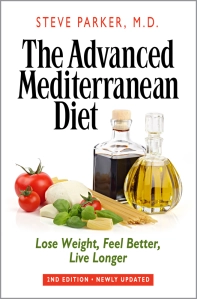
Click for my weight-loss version of the Mediterranean diet: The Advanced Mediterranean Diet (2nd Edition).

Steve Parker, M.D.

Spanish Ketogenic Mediterranean Diet Cures Metabolic Syndrome

The very-low-carb Spanish Ketogenic Mediterranean Diet cures metabolic syndrome, according to investigators at the University of Córdoba in Spain. The metabolic syndrome is a collection of clinical factors that are linked to high risk of developing type 2 diabetes and heart disease. Individual components of the syndrome include elevated blood sugar, high trigylcerides, low HDL cholesterol, high blood pressure, and abdominal fat accumulation.

Spanish researchers put 26 people with metabolic syndrome on the Spanish Ketogenic Mediterranean Diet for twelve weeks and monitored what happened. At baseline, average age was 41 and average body mass index was 36.6. Investigators didn’t say how many diabetics or prediabetics were included. No participant was taking medication.

What’s the Spanish Ketogenic Mediterranean Diet?

Calories are unlimited, but dieters are encouraged to keep carbohydrate consumption under 30 grams day. They eat fish, lean meat, eggs, chicken, cheese, green vegetables and salad, at least 30 ml (2 tbsp) daily of virgin olive oil, and 200-400 ml of red wine daily ( a cup or 8 fluid ounces equals 240 ml). On at least four days of the week, the primary protein food is fish. On those four days, you don’t eat meat, chicken, eggs, or cheese. On up to three days a week, you could eat non-fish protein foods but no fish on those days.

How’s this different from my Ketogenic Mediterranean Diet? The major differences are that mine includes one ounce (28 g) of nuts daily, less fish overall, and you can mix fish and non-fish protein foods every day.

Regular exercisers were excluded from participation, and my sense is that exercise during the diet trial was discouraged.

What Were the Results?

Metabolic syndrome resolved in all participants.

Three of the original 26 participants were dropped from analysis because they weren’t compliant with the diet. Another one was lost to follow-up. Final analysis was based on the 22 who completed the study.

Eight of the 22 participants had adverse effects. These were considered slight and mostly appeared and disappeared during the first week. Effects included weakness, headache, constipation, “sickness”, diarrhea, and insomnia.

Average weight dropped from 106 kg (233 lb) to 92 kg (202 lb).

Body mass index fell from 36.6 to 32.

Average fasting blood sugar fell from 119 mg/dl (6.6 mmol/l) to 92 mg/dl (5.1 mmol/l).

Triglycerides fell from 225 mg/dl to 110 mg/dl.

Average systolic blood pressure fell from 142 mmHg to 124.

Average diastolic blood pressure fell from 89 to 76.

So What?

A majority of people labeled with metabolic sydrome continue in metabolic sydrome for years. That’s because they don’t do anything effective to counteract it. These researchers show that it can be cured in 12 weeks, at least temporarily, with the Spanish Ketogenic Mediterranean Diet.

Very-low-carb diets are especially good at lowering trigylcerides, lowering blood sugar, and raising HDL cholesterol. Overweight dieters tend to lose more weight, and more quickly, than on other diets. Very-low-carb diets, therefore, should be particularly effective as an approach to metabolic syndrome. It’s quite possible that other very-low-carb diets, such as Atkins Induction Phase, would have performed just as well as the Spanish Ketogenic Mediterranean Diet. In fact, most effective reduced-calorie weight-loss diets would tend to improve metabolic syndrome, even curing some cases, regardless of carb content.

Most physicians recommend that people with metabolic syndrome either start or intensify an exercise program. The program at hand worked without exercise. I recommend regular exercise for postponing death and other reasons.

Will the dieters of this study still be cured of metabolic syndrome a year later? Unlikely. Most will go back to their old ways of eating, regaining the weight, and moving their blood sugars, triglycerides, and HDL cholesterols in the wrong direction.

Steve Parker, M.D.

Reference: Pérez-Guisado J, & Muñoz-Serrano A (2011). A Pilot Study of the Spanish Ketogenic Mediterranean Diet: An Effective Therapy for the Metabolic Syndrome. Journal of medicinal food PMID: 21612461

Quote of the Day

Success is the sum of small efforts, repeated day in and day out…

—Robert Collier

Waist-Hip Ratio: What Is It, and What’s Yours?

A comment left under my recent Diabetic Mediterranean Diet blog post on healthy weight ranges reminded me about the waist-hip ratio.

The risk of heart and vascular disease is more closely linked to distribution of excess fat than with degree of obesity as measured by overall weight or body mass index. Waist-hip ratio (WHR) is a measure of abdominal or central obesity, the type of fat distribution associated with coronary artery disease. A high ratio indicates the android body habitus. To determine your waist-hip ratio:

  1. While standing, relax your stomach—don’t pull it in. Measure around your waist mid-way between the bottom of the rib cage and the top of your pelvis bone. Usually this is at the level of your belly button, or an inch higher. Don’t go above the rib cage. Keep themeasuring tape horizontal to the ground and don’t compress your skin.
  2. Then measure around your hips at the widest part of your buttocks. Keep the tape horizontal to the ground and don’t compress your skin.
  3. Divide the waist by the hip measurement.The result is your waist-hip ratio.

For example, if your waist is 44 inches (112 cm) and hips are 48 inches (122 cm): 44 divided by 48 is 0.92, which is your waist-hip ratio.

Scientists haven’t yet determined the ideal WHR, but it is probably around 0.85 or less for women, and 0.95 or less for men. Ratios above 1.0 are clearly associated with risk of cardiovascular disease such as heart attacks. The higher the ratio, the higher the risk. Compared with body mass index, WHR is a much stronger predictor of coronary artery disease. Several of the other obesity-related illnesses are also correlated with WHR, but the relationship between WHR and cardiovascular disease is particularly strong.

Steve Parker, M.D.