Monthly Archives: March 2013

Why Does the U.S. Rank Poorly In Longevity?

In the news once again is the poor ranking of the U.S. in terms of longevity compared to other developed countries.  As always, this will spark discussion about what can be done to improve our ranking.

The New England Journal of Medicine in 2007 published an article looking at the determinants of premature death (and poor health, by implication).  Here are some quotations from the article:

  • Health is influenced by factors in five domains – genetics, social circumstances, environmental exposures, behavioral patterns, and health care. When it comes to reducing early deaths, medical care has a relatively minor role.  [These five domains are the article author’s determinants of premature death.]
  • Even if the entire U.S. population had access to excellent medical care – which it does not – only a small fraction of these [early] deaths could be prevented.
  • The United States spends more on health care than any other nation in the world, yet it ranks poorly on nearly every measure of health status.
  • . . . inadequate health care accounts for only 10% of premature deaths . . .
  • The single greatest opportunity to improve health and reduce premature deaths lies in personal behavior [emphasis added].  In fact, behavioral causes account for nearly 40% of all deaths in the United States.
  • Although there has been disagreement over the actual number of deaths that can be attributed to obesity and physical inactivity combined, it is clear that this pair of factors and smoking are the top two behavioral causes of premature death.
  • If the public’s health is to improve, however, that improvement is more likely to come from behavioral change than from technological innovation.

Parker here again.

Behavioral patterns cause 40% of poor health and premature death.  Since healthcare determines only 10% of health status and premature death, let’s focus our health-promotion attention on the other 90%—behavioral patterns, social circumstances, genetics, and environmental exposure.  Bigger bang for the buck.

Don’t we the people already know what to do to improve our health?  Execution is the problem.

We’re smart enough to solve this problem.  But are we too lazy and spineless?

Steve Parker, M.D.

Exercise Isn’t Supposed To Be Fun

MP900049602Melanie Thomassian’s recent blog post on physical activity reminded me of a Ken Hutchins essay called “Exercise vs Recreation.”

One of the key take-away points of the essay for me is that exercise isn’t supposed to be fun.  Ken wrote, “Do not try to make exercise enjoyable.”  Getting your teeth cleaned isn’t supposed to be fun, either.

Once I got that through my thick skull, it made it easier for me to slog through my  twice weekly workouts.  Another excerpt:

We accept that both exercise and recreation are important in the overall scheme of fitness, and they overlap to a great degree.  But to reap maximum benefits of both or either they must first be well-defined and then be segregated in practice.

Read the whole thing.

Mel Thomassian’s Advice on Getting Started With Exercise

Here’s her post.  A snippet:

4. Change Your Mind Set

I’m not going to lie, it is a long, slow process to change how you think about some things. But, you need to begin somewhere.

If you’re always telling yourself that you’re no good at exercising, or you never have time to exercise, you will never be able to change for good.

It is imperative that you believe you can change, to actually see change.

So, start believing you can enjoy exercise.

Start believing you could fit it in to your schedule a few times each week.

Start believing you could even enjoy it.

There’s a saying that goes, fake it till you make it! Well, that’s the kind of thing I’m talking about here;

  • Self belief in your ability to perform well in a particular activity.
  • Congratulating yourself for your efforts.
  • Reinforcing the fact that you are doing something really good for your body.

On the other hand, Ken Hutchins says, “Do not try to make exercise enjoyable.  Do not try to make recreation exercise.”

Not So Fast: Sugar Consumption May Not Be a Cause of T2 Diabetes

Remember that recent report implicating sugar intake as a cause of type 2 diabetes?

GI News weighs in on its validity:

“A new study in Plos One reports an association between global sugar availability and diabetes prevalence. Despite the headline hype, this study does not in fact provide any strong new evidence that sugar causes type 2 diabetes. Many other better designed studies already provide much stronger evidence that sugar does in fact not cause diabetes. The glycemic and glycemic load are much more powerful predictors of type 2 diabetes risk.”

Sean Preuss on Fasting: Effects On Weight Loss, Health, and Longevity

Sean writes: 

“I do not recommend fasting for people who are pregnant, have eating disorders, or demonstrate unstable blood glucose. On the other hand, fasting can be an effective tool for weight loss and health improvement. Based on the research above, I think fasting with days of absolutely no calorie intake should be avoided to prevent muscle loss. When using other fasting techniques, pay extra attention to your daily protein intake to prevent or minimize muscle loss.”

Sean may be getting a little ahead of the science on this one.  I’m skeptical about his reference No. 4.  We clearly need more human research.  But that’s not going to help those who want to take action today.

Cellulitis Is Often MisDiagnosed

…according to an article at MedPageToday.  It’s not under-diagnosed, it’s over-diagnosed.  The problem instead may be stasis cellulitis or contact dermatitis, among others.

Drug Overdoses Below Age 50 Are a Major Contributor to U.S. Deaths

…in men, compared to other modern countries.  From the MedPageToday article: 

“Ho noted that 64% of deaths before age 50 were from accidental poisoning and among those, 91% were drug overdoses.”

Anaphyllactic shock from a dose of penicilin is one kind of accidental poisoning.  Miscalculating the dose of heroin you need to get high is not quite comparable.

Poor Sleep Quality? One Expert Says Avoid Caffeine For Entire Eight Hours Before Bedtime

Click for details at the Wall Street Journal.

QOTD: The Jaminet’s on Industrial Food Flavors

“Flavorists at [the food company] Givaudan go into orchards and fields to find natural flavors that can be chemically isolated and introduced into food to make it more pleasing.  Among the flavors they’ve found: castoreum, which beavers secrete in urine to mark their territory.  Castoreum tastes like raspberry and vanilla and is listed on labels as “natural raspberry flavor.”

For decades, manufacturers have been learning how to make prepared foods out of the most inexpensive ingredients, not necessarily the most healthful ones, and improving the taste with chemically isolated flavoring compounds.  This explains the long ingredient lists on packaged foods.

Many researchers believe that these industrial foods are contributing to the obesity epidemic.  It’s plausible: people stopped cooking at home and increased their intake of industrial foods at about the time the obesisty epidemic started, in the 1970s; and since the 1970s industrial foods have increasingly diverged from natural foods.”

—Paul and Shou-Ching Jaminet, Perfect Health Diet, 2012

Life Span for U.S. Women May Be On the Decline

From the Wall Street Journal:

The latest research found that women age 75 and younger are dying at higher rates than previous years in nearly half of the nation’s counties—many of them rural and in the South and West. Curiously, for men, life expectancy has held steady or improved in nearly all counties.

The study is the latest to spot this pattern, especially among disadvantaged white women. Some leading theories blame higher smoking rates, obesity and less education, but several experts said they simply don’t know why.

Researchers also don’t know exactly how many women are affected. Ms. Montez says a good estimate is roughly 12%.

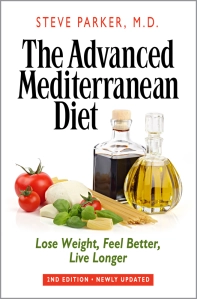
It’s time to get serious about a healthy lifestyle.  May I suggest The Advanced Mediterranean Diet?