Health on Today reports on a survey of gym gross-outs.
I have a home gym: Schwinn Air-Dyne stationary bike, treadmill, weight bench, and a set of dumbbells. No gym fees, travel time, or gross-outs.

Health on Today reports on a survey of gym gross-outs.
I have a home gym: Schwinn Air-Dyne stationary bike, treadmill, weight bench, and a set of dumbbells. No gym fees, travel time, or gross-outs.
Posted in Uncategorized
“…weight belts seem to provide one major benefit (limiting rotation). On the other hand, they provide no protection from another vulnerable movement (flexion), pose an additional threat for the cardiovascular system, and provide a sense of overconfidence that could increase orthopedic or muscular injury risk.”
Read the rest at Sean Preuss’ blog. He’ll remind you how to lift heavy objects more safely.
Comments Off on Should You Wear a Lumbar Weight Belt When Strength Training?
Posted in Uncategorized
In the 1950s, John Yudkin wrote a book, Pure, White, and Deadly, blaming sugar as the primary cause of heart disease (coronary heart disease). The idea didn’t gain enough traction and the dietary fat theory of heart disease became the reigning dogma. Now that the latter theory has been discredited, researchers are looking at sugar again.
The British Medical Journal has a pertinent article you may enjoy, if you enjoy these sorts of things. I quote:
“In recent years, and slowly, the sugar hypothesis has been making a comeback, driven in part by the emerging perception of heart disease as a consequence of what’s now described as the metabolic syndrome: obesity, dyslipidaemia, raised blood pressure, and insulin resistance. Although there is still no consensus about the causes of the syndrome, an excess of fat in the liver—a response to dietary sugar—is one of the acknowledged possibilities. Fructose, found in large quantities in nearly all added sugars, is known to increase lipogenesis in the liver and the synthesis of hepatic triglyceride.”
Comments Off on Is Sugar Replacing Fat as the Cause of Heart Disease?
Posted in Uncategorized
At least in the general population according to a new meta-analysis reviewed at Forbes. We still have a question about high egg consumption linked to heart attacks in diabetics.
Posted in Uncategorized

Resistance or weight training may be just as effective as, or even superior to, aerobic training in terms of overall health promotion. Plus, it’s less time-consuming according to a 2010 review by Stuart Phillips and Richard Winett.
I don’t like to exercise but I want the health benefits. So I look for ways to get it done quickly and safely.
Here’s a quote:
A central tenet of this review is that the dogmatic dichotomy of resistance training as being muscle and strength building with little or no value in promoting cardiometabolic health and aerobic training as endurance promoting and cardioprotective, respectively, largely is incorrect.
Over the last few years (decade?), a new exercise model has emerged. It’s simply intense resistance training for 15–20 minutes twice a week. It’s not fun, but you’re done and can move on to other things you enjoy. None of this three to five hours a week of exercise some recommend. We have no consensus on whether the new model is as healthy as the old.
More tidbits from Phillips and Winett:
Our thesis is that an intrinsically oriented (i.e., guided by a high degree of effort intrinsic to each subject) program with at minimum of one set with 10–15 multiple muscle group exercises (e.g., leg press, chest press, pulldown, overhead press) executed with good form would be highly effective from a public health perspective.
The authors cite 60 other sources to support their contentions.
These ideas are the foundation of time-efficient resistance training of the sort promoted by Dr. Doug McGuff, Skyler Tanner, Fred Hahn, Chris Highcock, James Steele II, and Jonathan Bailor, to name a few.
Only a minority will ever exercise as much as the public health authorities recommend. This new training model has real potential to help the rest of us.
Steve Parker, M.D.
Reference: Phillips, Stuart and Winett, Richard. Uncomplicated resistance training and health-related outcomes: Evidence for a public health mandate. Current Sports Medicine Reports, 2010, vol. 9 (#4), pages 208-213.
“Young and middle-age women whose diet included high levels of anthocyanins — the flavonoids present in red and blue fruits such as strawberries and blueberries — had a significantly reduced risk for myocardial infarction (MI), a large prospective study found.”
Read the rest at MedPageToday.
The protective dose seems to be “over three servings” strawberries or blueberries per week. Does it work for men, too? This report didn’t address that. I’m eating my berries!
Berries are part of all my diet programs (Advanced Mediterranean, Low-Carb Mediterranean, and Ketogenic Mediterranean).
Comments Off on Women Cut Risk of Heart Disease With Berries
Posted in Uncategorized
“Children and teens who ate fast foods multiple times a week were at an increased risk for severe asthma, rhinoconjunctivitis, and eczema, researchers found.”
Read the rest at MedPageToday.
This is likely related to the improvement in asthma seen in followers of the Mediterranean diet. Do ya’ think it’s something in the food?
Comments Off on Fast Food Linked to Allergies in Kids
Posted in Uncategorized
“Finally, young people need to understand how much their grandparents’ generation has ruined things for them. The average American retires with less than $70,000 in savings, but an elderly man and woman receive about $275,000 in medical care during that time — and you kids are paying for it by inheriting trillions upon trillions in Medicare bills that granny and grandpa never intended to pay and will be too dead to worry about soon.”
Comments Off on QOTD: Bryan Goldberg on Generational $ Transfer
Posted in Uncategorized
Avocado consumption linked to better diet quality overall and lower risk of metabolic syndrome. http://www.nutritionj.com/content/12/1/1/abstract
Comments Off on The Next Superfood? Avocado Linked to Lower Risk of Metabolic Syndrome
Posted in Uncategorized
“If exercise is a miracle drug, as it has been recently described, then it is a drug that is not prescribed enough for the prevention of cardiovascular disease. And if exercise is a “central and indispensable component” of a strategy in the primary prevention of coronary artery disease, then it is even more valuable in secondary prevention, according to a new viewpoint in the Journal of the American Medical Association.”
Comments Off on Exercise Reduces Risk of Death by 20% in Heart Attack Patients
Posted in Uncategorized
Tagged coronary artery disease, execise, heart attack, ischemic heart disease
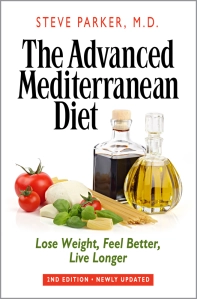
Click the pic to purchase at Amazon.com. E-book versions also available at Smashwords.com.

 Advanced Mediterranean Diet