Monthly Archives: July 2012

Think Diets Don’t Work? Think Again

Claims that “diets don’t work” are based on the assumption that any weight lost is simply gained back quickly.

The Endocrine Society met in Toronto in June of 2007.  Experts presented data on maintenance of weight loss by overweight people.  What percentage of people who lost 10% of their weight kept the weight off for one year?  About 20%.  Not great, but better than many would expect.  That’s a 200-pounder losing down to 180 and staying at 180 pounds for a year.  This degree of weight loss will improve many cases of high blood pressure, knee arthritis, and type 2 diabetes mellitus.

The U.S. Centers for Disease Control and Prevention reports even better data.  Almost 60% of 1,310  people in the National Health and Nutrition Examination Survey who lost 10% of body weight maintained 95% of the loss for one year.

How do they keep the weight off?  Characteristics of “successful losers” include a low-calorie diet (probably 1,6oo-1,800 on average), weighing at least once per week, and burning about 2,600 calories per week in physical activity.  (A 150-pound person expends 1260 calories a week by walking 3-4 mph for 30 minutes daily.)

Many successful losers cycle through weight loss and gain several times before determining which combination of diet and physical activity ultimately works for them.

So don’t give up!

Steve Parker, M.D,

References:

McGuire, M.T., et al.  International Journal of Obesity, 23[12] (1999): 1,314-1,319.

Weiss, E.C., et al.  American Journal of Preventive Medicine, 33[1] (2007): 34-40.

Berry Science

The Mediterranean diet was originally found to be a healthy diet by comparing populations who followed the diet with those who didn’t.  The result?  Mediterranean diet followers had less cardiovascular disease, less cancer, and longer life.

Over the last 15 years, researchers have been clarifying exactly how and why this might be the case.  A study from Finland is a typical example.

The traditional Mediterranean diet has an abundance of fresh fruit, including berries.  Berries are a rich source of polyphenols and vitamin C, substances with the potential to affect metabolic and disease processes in our bodies.

The Finnish researchers studied 72 middle-aged subjects, having half of them consume moderate amounts of berries, and half consume a placebo product over 8 weeks.  Compared with the placebo group, the berry eaters showed inhibited platelet funtion, a 5% increase in HDL cholesterol (the “good” cholesterol), and a 7-point drop in systolic blood pressure.

What does platelet function have to do with anything?  Platelets are critical components of blood clots.  Blood clots can stop life-threatening bleeding, but also contribute to life-threatening heart attacks and strokes.  Inhibition of platelet function can decrease the occurence of blood clots that cause heart attacks and strokes.  That’s why millions of people take daily aspirin, the best known platelet inhibitor.

Cardiovascular disease is a group of conditions that include high blood pressure, heart attacks, poor circulation, and strokes.  Berry consumption in this small Finnish study resulted in favorable changes in blood pressure, HDL cholesterol, and platelet function.  These changes would tend to reduce the occurence and severity of cardiovascular disease.

So berries don’t just taste good, they’re good for us.  If price is a concern, focus on the berries that are in season or use frozen berries.

Steve Parker, M.D.

Reference: Erlund, I., et al, Favorable effects of berry consumption on platelet function, blood pressure, and HDL cholesterol.  American Journal of Clinical Nutrition, 87 (2007): 323-331.

Informercial Superstar Found In Contempt of Court

Kevin Trudeau, author of The Weight Loss Cure “They” Don’t Want You to Know About and numerous other books, has been in trouble with the law over many years.

The twice-convicted felon was banned in 2004 from using infomercials to sell most products except for books and other publications.  The exception required that he not make false claims in infomercials.  The 2004 settlement regarding false claims also required him to pay $2 million.

Informercials for the aforementioned book began running in 2006.  In the commercials, Trudeau claims that his weight-loss plan is easy, simple, and you can do it at home.  “When you’re done, eat whatever you want and you don’t gain weight back.”

In reality, the book describes a complicated system involving daily intramuscular injections of human chorionic gonadotrophin (HCG), a prescription drug not approved by the U.S. FDA for weight loss.  You’ll have great difficulty finding a U.S. physician willing to prescribe this.  (The FDA last year told HCG marketers to cease and desist.)  The plan involves specialized cleanses and supplements.  One phase involves eating only 500 calories per day for 21 to 45 days, which is considered severe caloric restriction even for someone on a diet.  (Most people eat 1,500-2,5000 cal/day to maintain weight.)  Trudeau recommends 15 “colonics”  from a licensed colon therapist.  The book lists severe dietary prohibitions for life.

Trudeau’s felony convictions were in the 1990s: depositing bad checks, and credit card fraud.

On November 16, 2007, U.S. District Court Judge Robert W. Gettleman found Trudeau in comtempt of court for violating the 2004 injunction.

Trudeau’s Weight Loss Cure made it onto bestseller lists of the New York Times, the Wall Street Journal, and USA Today.

Go figure.

Steve Parker, M.D.

References:

FTC, plaintiff v. Kevin Trudeau et al, FTC news release 9/14/07

U.S. District Court for Northern District of Illinois, Eastern Division, File # 032 3064, Civil Actions # 03 C3904 and 98-C-0168.

How to Prevent Heart Attacks in Women

Researchers studied 24,444 Swedish women over the course of 6.2 years, analyzing dietary patterns, healthy lifestyle choices, and body weight.  Information on the women was obtained mostly by surveys at the start and end of the study.  The women were aged 48 to 83 at the start of the study and were free of diabetes mellitus, cardiovascular disease, cancer, and coronary artery disease.

Heart attacks in the study cohort were identified in the Swedish Hospital Discharge Registry and the Cause of Death Registry.  Over the course of six years there were 308 heart attacks.

The study authors noted a greatly reduced incidence of heart attacks in women with the following characteristics:

  1. high consumption of fruits, vegetables, whole grains, legumes, and fish
  2. moderate consumption of alcohol
  3. avoidance of overweight, especially abdominal fat (waist-hip ratio < 0.85)
  4. physically active (at least 40 minutes daily of walking or bicycling and 1 hour weekly of leisure-time exercise
  5. non-smokers

Women meeting these criteria had a 92% lower risk of having a heart attack!  Such women were only 5% of the cohort, however.  I suspect the physical activity criterion knocked a lot of women out of the super heart-healthy subset.

The authors conclude that “most [heart attacks] in women may be preventable by consuming a healthy diet and moderate amounts of alcohol, being physically active, not smoking, and maintaining a healthy weight.”

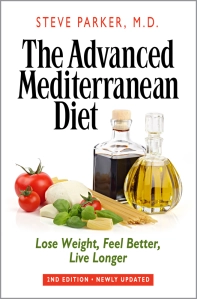
I see little reason to doubt that these findings apply to the typical woman in the U.S. or Europe, and not just to Swedes.  The traditional Mediterranean diet of the mid-20th century fulfills the dietary prescription for a healthy heart.  The Advanced Mediterranean Diet incorporates these healthy diet and lifestyle choices while simultaneously working to control weight.

Steve Parker, M.D.

Reference:  Akesson, Agneta, et al.  Combined Effect of Low-Risk Dietary and Lifestyle Behaviors in Primary Prevention of Myocardial Infarction in Women.  Archives of Internal Medicine, 167 (2007): 2,122-2,127.

Prevention of Weight Regain Is NOT Impossible

I often hear from the general public, and even my physician colleagues, that losing weight and keeping it off is a hopeless goal.  So, why try?

Because it’s not hopeless.

The March 12, 2008, edition of the Journal of the American Medical Association includes an article from the Weight Loss Maintenance Collaborative Research Group.  Researchers identified a group of 1,032 overweight or obese adults who lost at least 8.8 pounds (4 kg) during a 6-month weight loss program.  These adults had high blood pressure, blood lipid abnormalities, or both.  38% were African American and 63% were women.

Average weight of the group before losing weight was 213 pounds (96.7 kg).  The weight-loss program consisted of 20 weekly group sessions, exercise goal of 180 minutes per week (26 minutes per day, usually walking), reduced caloric intake, and adoption of the Dietary Approaches to Stop Hypertension eating pattern.  The goal rate of weight loss was 1 or 2 pounds per week (0.45 to 0.91 kg per week).  Study subjects were taught how to keep records of their caloric intake and physical activity.

Except for the weekly group sessions, this program is similar to the Advanced Mediterranean Diet.

So each of these folks lost at least 8.8 pounds on this program.  Researchers followed them over the next 30 months to see how much weight would be regained.  Average weight loss for the entire group actually was 19 pounds (8.6 kg).  As expected, many people did regain weight over the next 30 months, between 6 and 9 pounds on average.  Of course, some individuals lost much more weight initially, and didn’t gain any back.  Some regained all of the lost weight, plus extra.

Overall, 42% of participants “maintained at least 4 kg [8.8 pounds] of weight loss compared with entry weight…” over the 30 months of follow-up.  37% remained at least 5% below their initial weight.

The “5%” figure stands out, for me, because we see improvement in obesity-related medical problems with loss of just 5 to 10% of body weight.

The authors cite studies indicating that “each kilogram [2.2 pounds] of weight loss is associated with a decrease in systolic blood pressure of 1.0 to 2.4 mmHg and a reduction of incident diabetes of 16%.”

To summarize the weight changes:  Study participants weighed 213 pounds before the behavioral weight-loss program.  Average weight loss was 19 pounds, down to 194 pounds.  Average weight regain over 30 months was in the range of 6 to 9 pounds.  Participants were still pretty big, but 37% of them probably saw some improvement in their medical status.

A huge amount of effort went into this study, on the part of both researchers and study participants.  Nevertheless, average results are relatively modest.  Keep in mind, however, that the numbers are averages, and you are not average.  I’m sure some of the participants went from 220 pounds down to 150 pounds and stayed there.  That could be you.

Steve Parker, M.D.

Reference: Svetkey, Laura et al.  Comparison of Strategies for Sustaining Weight Loss: The Weigth Loss Maintenance Randomized Controlled Trial.  Journal of the American Medical Association, 299 (2008): 1,139-1,148.

FDA Approves Qsymia for Weight Loss

“These are flying off the shelves!”

On July 17, 2012, the U.S. Food and Drug Administration approved the combination of phentermine and topiramate for weight loss and management.  They will be marketed in the U.S. as Qsymia.  Don’t ask me how to pronounce it.

The drugs individually had been approved by the FDA years ago for other purposes, so we already know a lot about them.  If memory serves me, phentermine alone is FDA-approved for weight loss, but only for up to 12 weeks.

The press releases from the FDA and Vivus, Inc., don’t say how long the combo drug can be used.  I’m guessing up to one year since that’s how long the clinical trials lasted.

Who Can Take Qsymia?

Obese adults with a body mass index 30 or higher.  Or overweight adults with BMI 27 or higher if they have one or more weight-related condition such as high blood pressure, type 2 diabetes, or high cholesterol.

You Should NOT Take Qsymia If You Have or Are:

  • Pregnant
  • Glaucoma
  • Overactive thyroid
  • Recent stroke
  • Recent unstable heart disease

If I Take the Pill, Do I Still Have to Exercise and Watch My Calories?

Yes.

What’s the Dose?

Phentermine 7.5 mg and topiramate 46 mg daily.  A double strength pill (15 + 92 mg) is available for select patients.

Final Thoughts

Lorcaserin (Belviq) is a weight loss drug approved by the FDA within the last month.  These are the first new weight loss drugs on the U.S. market since 1999.

Abbott voluntarily withdrew Meridia (sibutramine) from the U.S. market in 2010 due to concern about it causing heart attacks and strokes.

In 2008, the European Medicines Agency withdrew prescription-writing for the weight-loss drug rimonabant, citing concern about psychiatric side effects.

Between 1997 and 2007, five weight-loss drugs were removed from various markets around the world due to safety or effectiveness considerations: phenylpropanolamine HCl, dexfenfluramine HCl (e.g., Redux), fenfluramine HCl (Pondimin), diethylpropion HCl (Tenuate), and phentermine HCl (e.g., Ionamin).

It’s unknown whether weight-loss drug therapy reduces the morbidity and mortality of obesity over the long run.

I’ll wait at least two or three years before giving these new drugs to my patients—I’ve seen too many drugs withdrawn from the market because of adverse effects showing up years after drug approval.

Without permanent changes in lifestyle, lost weight is likely to return after you stop taking any weight-loss pill.

Clearly, drugs are no panacea.

Steve Parker, M.D.

Science In Support of the Mediterranean Diet

Atherosclerosis is the formal term for “hardening of the arteries.”  Who cares how hard they are, as long as the arteries deliver blood to our organs, right?

Atherosclerosis in the arteries that supply blood to the heart – essentially a hollow muscle that pumps blood – is called coronary heart disease disease (CHD) or coronary artery disease (CAD).

LDL cholesterol is the “bad cholesterol” that is associated with atherosclerosis.  Generally, the higher the LDL, the worse the atherosclerotic complications: plaque build-up leads to poor circulation to vital organs, arterial blood clots, even death of tissue due to blocked arteries.  Oxidation of LDL cholesterol facilitates atherosclerosis.

People at high risk for coronary heart disease include type 2 diabetics, smokers, people with high blood pressure or cholesterol abnormalities, and people with a family history of coronary heart disease.  Advanced age is another strong risk factor.

The ongoing PREDIMED Study is designed to test the the effects of the traditional Mediterranean diet in primary prevention of coronary heart disease in a high risk population.  9000 study participants will be assigned to one of three diets:  1) low-fat, 2) Mediterranean plus extra olive oil, or 3) Mediterranean plus extra nuts.  The Mediterranean diet is moderate in percentage of calories derived from fat, and the main source of fat is olive oil.  Virgin olive oil has a particularly high content of antioxidant phenolic compounds.  Nuts are also a rich source of antioxidant phytochemicals.  These antioxidants can prevent the harmful transmogrification of plain LDL into oxidized LDL.

A group of 372 early study enrollees were randomly assigned to one of the three diet groups.  In both of the Mediterranean diet groups, researchers found reduced oxidized LDL, reduced blood pressures, lower total cholesterol, and lower total-HDL cholesterol ratios, more than in the low-fat diet group.

These observed changes would tend to reduce the incidence and severity of atherosclerotic complications.  When PREDIMED is completed, we’ll know whether the traditional Mediterranean diet, compared with a low-fat diet, is better at preventing death and disease from coronary heart disease.  That’s where the rubber meets the road.

Steve Parker, M.D.

References:

Montserrat, Fito, et al.  Effect of a Traditional Mediterranean Diet on Lipoprotein Oxidation: A Randomized Controlled Trial.  Archives of Internal Medicine, 167 (2007): 1,195-1,203.

Prevencion con Dieta Mediterranea Study (PREDIMED)  http://www.predimed.org

Potential Health Benefits of Alcohol

For centuries, the healthier populations in the Mediterranean region have enjoyed wine in light to moderate amounts, usually with meals. Epidemiologic studies there and in other parts of the world have associated reasonable alcohol consumption with prolonged lifespan, reduced coronary artery disease, diminished Alzheimer’s and other dementias, and possibly fewer strokes.

Alcohol tends to increase HDL cholesterol (the good stuff), have an antiplatelet effect, and may reduce C-reactive protein, a marker of arterial inflammation. These effects would tend to reduce cardiovascular disease. Wine taken with meals provides antioxidant phytochemicals (polyphenols, procyanidins) which may protect against atherosclerosis and some cancers.

What’s a “reasonable” amount of alcohol? An old medical school joke is that a “heavy drinker” is anyone who drinks more than the doctor does. Light to moderate alcohol consumption is generally considered to be one or fewer drinks per day for a woman, two or fewer drinks per day for a man. One drink is 5 ounces of wine, 12 ounces of beer, or 1.5 ounces of 80 proof distilled spirits (e.g., vodka, whiskey, gin). The optimal health-promoting type of alcohol is unclear. I tend to favor wine, a time-honored component of the Mediterranean diet. Red wine in particular is a rich source of resveratrol, which is thought to be a major contributor to the cardioprotective benefits associated with light to moderate alcohol consumption. Grape juice may be just as good—it’s too soon to tell.

Steve Parker, M.D.

References:

Standridge, John B., et al.  Alcohol consumption: An overview of benefits and risks.  Southern Medical Journal, 97 (2004): 664-672.

Luchsinger, Jose A., et al.  Alcohol intake and risk of dementia.  Journal of the American Geriatrics Society, 52 (2004): 540-546.

Adverse Effects of Alcohol

I’ve discussed frequently in these pages the potential benefits of judicious alcohol consumption on longevity, coronary artery disease, and dementia.

I have no intention of overselling the benefits of alcohol. If you are considering habitual alcohol as a food, be aware that the health benefits are still somewhat debatable. Consumption of three or more alcoholic drinks per day is clearly associated with a higher risk of breast cancer in women. Even one or two drinks daily may slightly increase the risk. Folic acid supplementation might mitigate the risk. If you are a woman and breast cancer runs in your family, strongly consider abstinence. Be cautious if there are alcoholics in your family; you may have inherited the predisposition. If you take any medications or have chronic medical conditions, check with your personal physician first.

For those drinking above light to moderate levels, alcohol is clearly perilous. Higher dosages can cause hypertension, liver disease, heart failure, certain cancers, and other medical problems. And psychosocial problems. And legal problems. And death. Heavy drinkers have higher rates of violent and accidental death. Alcoholism is often fatal. You should not drink alcohol if you:

  • have a history of alcohol abuse or alcoholism
  • have liver or pancreas disease
  • are pregnant or trying to become pregnant
  • may have the need to operate dangerous equipment or machinery, such as an automobile, while under the influence of alcohol
  • have a demonstrated inability to limit yourself to acceptable intake levels
  • have personal prohibitions due to religious, ethical, or other reasons

Steve Parker, M.D.

References: Lieber, Charles S.  Alcohol and health: A drink a day won’t keep the doctor away.  Cleveland Clinic Journal of Medicine, 70 (2003): 945-953.

What Is the Traditional Mediterranean Diet?

Some of my casual readers may have misconceptions as to the definition of the traditional Mediterranean diet.  I use the word “diet” here not as a weight-loss program, but “the usual food and drink of a person or animal.”  Twenty-one countries have a coastline of the Mediterranean sea, and additional countries are in the Mediterranean region.  “Traditional” refers to the mid-20th century.  Observational studies around that time associated the Mediterranean diet with longer life spans, reduced rates of chronic disease (less cardiovascular disease and dementia), and fewer cancers of the colon, breast, prostate, and uterus.

There is no monolithic, immutable, traditional Mediterranean diet.  But there are similarities among many of the regional countries that tend to unite them, gastronomically speaking.  Greece and southern Italy are particularly influential in this context.

So here are the characteristcs of the traditional, healthy Mediterranean diet:

  • It maximizes natural whole foods and minimizes highly processed ones
  • Small amounts of red meat
  • Less than four eggs per week
  • Low to moderate amounts of poultry and fish
  • Daily fresh fruit
  • Seasonal locally grown foods with minimal processing
  • Concentrated sugars only a few times per week
  • Wine in low to moderate amounts, and usually taken at mealtimes
  • Milk products (mainly cheese and yogurt) in low to moderate amounts
  • Olive oil as the predominant fat
  • Abundance of foods from plants: vegetables, fruits, beans, potatoes, nuts, seeds, breads and other whole grain products
  • Naturally low in saturated fat, trans fats, and cholesterol
  • Naturally high in fiber, phytonutrients, vitamins (e.g., folate), antioxidants, and minerals (especially when compared with concentrated, refined starches and sugars in a modern Western diet)
  • Naturally high in monounsaturated and polyunsaturated fats, particularly as a replacement for saturated fats

Be aware that the documented health benefits may be related to a physically active lifestyle and other social and cultural issues.  For example, traditional Mediterranean mealtimes were leisurely family affairs, not a MacDonald’s Happy Meal eaten off your lap on your drive home from work.

Steve Parker, M.D.

Reference:  Oldways Preservation Trust