Monthly Archives: June 2013

Low-carb Diet Killing Swedes

MPj04384870000[1]A recent Swedish study suggests that low-carbohydrate/high protein diets increase the risk of cardiovascular disease in women.  I’m not convinced, but will keep an eye on future developments.  This is a critical issue since many women eat low-carb/high protein for weight loss and management.

Researchers followed 43,000 women, 30–49 years of age at enrollment, over the course of 16 years.  In that span, they had 1,270 cardiovascular events: ischemic heart disease (heart attacks and blocked heart arteries), strokes, subarachnoid brain hemorrhages,  and peripheral arterial disease.  Food consumption was estimated from a questionnaire filled out by study participants at the time of enrollment (and never repeated).

In practical terms, … a 20 gram decrease in daily carbohydrate intake and a 5 gram increase in daily protein intake would correspond to a 5% increase in the overall risk of cardiovascular disease.

So What?

To their credit, the researchers note that a similar analysis of the Women’s Health Study in the U.S. found no such linkage between cardiovascular disease and low-carb/high protein eating.

The results are questionably reliable since diet was only assessed once during the entire 16-year span.

I’m certain the investigators had access to overall death rates.  Why didn’t they bother to report those?  Your guess is as good as mine.  Even if low-carb/high protein eating increases the rate of cardiovascular events, it’s entirely possible that overall deaths could be lower, the same, or higher than average.  That’s important information.

I don’t want to get too far into the weeds here, but must point out that the type of carbohydrate consumed is probably important.  For instance, easily digested carbs that raise blood sugar higher than other carbs are associated with increased heart disease in women.  “Bad carbs” in this respect would be simple sugars and refined grains.

In a 2004 study, higher carbohydrate consumption was linked to progression of blocked heart arteries in postmenopausal women.

It’s complicated.

Steve Parker, M.D.

PS: I figure Swedish diet doctor Andreas Eenfeldt would have some great comments on this study, but can’t find them at his blog.

Reference: Lagiou, Pagona, et al.  Low carbohydrate-high protein diet and incidence of cardiovascular diseases in Swedish women: prospective cohort study.  British Medical Journal, June 26, 2012.  doi: 10.1136/bmj.e4026

Dietitian Franziska Spritzler’s Six-Month Ketogenic Diet Trial Results

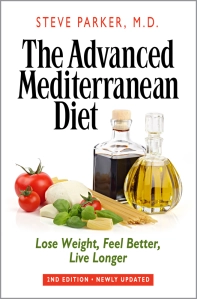
Steve Parker MD, Advanced Mediterranean Diet

Two diet books in one: 1) portion control, and 2) ketogenic

Ketogenic diets help many folks lose excess weight, return blood sugar levels toward normal, and move HDL cholesterol and triglycerides to a healthier range. I include a ketogenic diet as an option in my Advanced Mediterranean Diet (2nd Ed.). They are not for everybody.

Read about Franziska Spritzler’s experience with a ketogenic diet (not my version). Some quotes:

Well, after consistently consuming 30-45 grams of net carbs a day for six months, I have only positive things to say about my very-low-carb experience. Not only are my blood sugar readings exactly where they should be — less than 90 fasting and less than 130 an hour after eating — but I truly feel healthier,  less stressed, and more balanced than ever.

My diet consists of lots of fat from avocados, nuts and nut butters, olive oil, and cheese; moderate amounts of fish, chicken, beef, Greek yogurt, and eggs; and at least one serving of nonstarchy vegetables at every meal and a small serving of berries at breakfast.  It’s truly a rich, satisfying, and luxurious way to eat.

Simvastatin (and Other Statins?) May Block Response to Exercise Training

…according to an article in the Journal of the American College of Cardiology. In addition, mitochondrial content fell by 4.5% over the 12-week course of exercise. Mitochondria are the power plants of our body cells. 

h/t David Mendosa

QOTD: Are You Sure You Don’t Have Anything to Hide?

“The Heritage Foundation recently launched an informational campaign to raise awareness of overprosecution and regulatory overreach, appropriately called “USA vs. You” (www.heritage.org/usavsyou). Heritage reports there are now more than 4,500 federal criminal laws on the books, and a whopping 300,000 federal criminal regulations. Throw in state statutes and local ordinances, and our governments have criminalized everyday life to the point that everyone is breakin’ the law — and subject to egregious abuses of authority.

Take the 2011 case of 11-year-old Virginia resident Skylar Capo. She rescued a baby woodpecker from a cat and brought the bird inside a home improvement store, so it wouldn’t suffer in the heat of her mother’s car. A U.S. Fish and Wildlife agent also was at the store, Heritage reported, and read the riot act to Ms. Capo and her mother for violating the Migratory Bird Treaty Act. The Capos released the bird upon returning home and notified the U.S. Fish and Wildlife Service. Yet that same agent, with a Virginia state trooper as backup, showed up at their house two weeks later to serve notice of a $535 federal fine and possible jail time. Public backlash led to all charges being rescinded.

Editorial at Las Vegas Review-Journal

Fans of Flip Flops Fall and Fracture

Whitecoat has the details, calling flip flops the orthopedist’s favorite footwear. They’re good for business.

Wonder Why Healthcare Costs So Much in the U.S.?

Nathaniel Givens explains nearly all of it in a blog post.

Imagine if grocery shopping worked like health insurance.  Let’s call it “food insurance”.

First of all, you’d better hope that you’re not self-employed or unemployed. You see, way back in World War II the United States created strict wage controls as part of theStabilization Act of 1942. Since employers still wanted to compete for the best employees–even in wartime–they had to get creative. Instead of offering higher salaries (which was now illegal), they began to offer fringe benefits. The most important of these was healthcare insurance. Let’s pretend that food insurance started in the same way. That would mean that, today, if you get your food insurance through an employer-provided plan you not only get a nice tax advantage on your own premiums, but you can also rely on the employer to pay some of your costs as a matter of traditional expectations. But if you’re self-employed, you not only lose the tax-advantage, but also the ability to get the lower rates that come with buying insurance for bigger groups.

Now let’s imagine what actually shopping for groceries would look like.

One thing Nathaniel left out is the cost of our legal system, which is significant. Adopting the “English Rule” (loser pays legal fees) would be a major step in the right direction.

Read the rest.

Is Strength Training Good or Bad for Blood Pressure?

Trainer Sean Preuss has a new post on the issue. Well worth a read. For example:
The nine studies analyzed included 341 people between the ages of 20 and 72 years old. The studies ranged from six to 26 weeks long. The average blood pressure reduction was 3.2/3.5 mmHg.
Those reductions have value but are not life-altering. However, these studies were mostly performed with healthy people with desired blood pressure numbers. In general, people with less room to improve will do just that: improve to a smaller degree. Men and women with hypertension are likely to see greater improvements.

QOTD: Mark Steyn on the Militarization of the IRS

A bureaucracy is bad. A politicized bureaucracy is worse. A paramilitary politicized bureaucracy is nuts. And, in fact, evil. There is no reason in a civilized society why the Deputy Assistant Commissioner of Paperwork should have his own SEAL Team Six.

Mark Steyn

QOTD: Are You SURE You Don’t Have Something to Hide?

Estimates of the current size of the body of federal criminal law vary. It has been reported that the Congressional Research Service cannot even count the current number of federal crimes. These laws are scattered in over 50 titles of the United States Code, encompassing roughly 27,000 pages. Worse yet, the statutory code sections often incorporate, by reference, the provisions and sanctions of administrative regulations promulgated by various regulatory agencies under congressional authorization. Estimates of how many such regulations exist are even less well settled, but the ABA thinks there are ”nearly 10,000.”

James Duane, law school professor

(Note that state, county, and city laws and regulations are not included here.)

Mediterranean Diet Among The Best For Type 2 Diabetes

…announces an article at Reuters.  An excerpt:

Ajala and her colleagues reviewed the results of 20 studies comparing the effect of seven popular diets on adults with type 2 diabetes. Mediterranean diets, low-carb diets, high-protein diets and low glycemic index diets – which rank foods by how quickly their carbs turn into glucose – all lowered participants’ blood sugar.

After following the diet for at least six months, the people on a Mediterranean eating plan also lost an average of 4 pounds. No other diet had a significant impact on weight, according to the findings published in the American Journal of Clinical Nutrition.

“We were quite surprised by the Mediterranean diet in particular,” Ajala said. “I would have thought that low-carb would have been the best for losing weight, but Mediterranean seems to be better.”

Beautiful woman smiling as she is wine tasting on a summer day.Here’s the traditional healthy Mediterranean diet.

The researchers also found that HDL cholesterol (“good cholesterol) and triglycerides improved on the Mediterranean diet, low-carb diets, and low glycemic index diets.  Those moves tend to protect against heart disease.

Steve Parker, M.D.