Monthly Archives: September 2012

Is Fructose the Cause of Our Obesity Epidemic?

Mainly because of its low cost, HFCS [high fructose corn syrup] consumption replaced approximately one-third of the total sugar consumption in the USA between 1970 and 2000, paralleling to some extent the increasing prevalence of obesity during this period. Consequently, HFCS has been a particular focus of possible blame for the obesity epidemic. However, HFCS consumption has remained very low in other parts of the world where obesity has also increased, and the most commonly used form of HFCS contains about 55% fructose, 42% glucose, and 3% other sugars, and hence is associated with similar total fructose and glucose intakes as with sugar. Furthermore, sucrose is hydrolyzed in the gut and absorbed into the blood as free glucose and fructose, so one would expect HFCS and sucrose to have the same metabolic consequences. In short, there is currently no evidence to support the hypothesis that HFCS makes a significant contribution to metabolic disease independently of the rise in total fructose consumption.

Given the substantial consumption of fructose in our diet, mainly from sweetened beverages, sweet snacks, and cereal products with added sugar, and the fact that fructose is an entirely dispensable nutrient, it appears sound to limit consumption of sugar as part of any weight loss program and in individuals at high risk of developing metabolic diseases. There is no evidence, however, that fructose is the sole, or even the main factor in the development of these diseases…

— Luc Tappy in BMC Biology, May 21, 2012 (the article is a review of fructose metabolism and potential adverse effects of high consumption)

PS: Luc Tappy believes that excessive calorie consumption is an important cause of overweight and obesity.
Steve Parker, M.D.

For Weight Loss, What’s More Important: Exercise or Food?

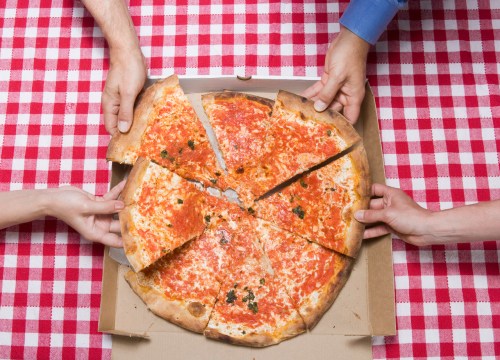
This is NOT diet food

What you eat, and how much, are more important than your physical activity.  By far.

  • Your genetics largely determines your response to an exercise program
  • Physical activity isn’t a great way to lose weight
  • School-based or other programs to increase childhood physical activity probably won’t reverse childhood obesity statistics
  • Disregarding weight loss, exercise has other worthwhile metabolic advantages
  • Highly advanced societies shouldn’t blame our overweight problem on decreased levels of physical activity

Skyler Tanner slaughters some sacred cows in his blog post June 4, 2012. I pulled these bullet points from his post. Click on his embedded links for details.

Steve Parker, M.D.

How Many Diabetic Diets Are There?

Elizabeth Woolley reviews most of them at her About.com column on type 2 diabetes. I don’t endorse everything there; just thought you might be interested.

I still see doctors at the hospital order “ADA diet” (American Diabetes Association) for their patients with diabetes.

There is no ADA diet.

-Steve

Berry Science, or Berriology

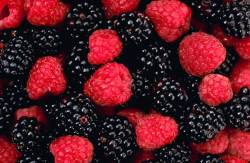
Mmm, mm, good! And they’re low carb

The Mediterranean diet was originally found to be a healthy diet by comparing populations who followed the diet with those who didn’t.  The result?  Mediterranean dieters enjoyed longer lifespans and less heart disease, cancer, strokes, diabetes, and dementia.

Over the last 15 years, researchers have been clarifying exactly how and why this might be the case.  A study from Finland is a typical example.

The traditional Mediterranean diet provides an abundance of fresh fruit, including berries.  Berries are a rich source of vitamin C and polyphenols, substances with the potential to affect metabolic and disease processes in our bodies.

The Finnish researchers studied 72 middle-aged subjects, having half of them consume moderate amounts of berries, and half consume a placebo product over 8 weeks.  Compared with the placebo group, the berry eaters showed inhibited platelet funtion, a 5% increase in HDL cholesterol (the “good” cholesterol), and a 7-point drop in systolic blood pressure.

What does platelet function have to do with anything?  Platelets are critical components of blood clots.  Blood clots can stop life-threatening bleeding, but also contribute to life-threatening strokes and heart attacks.  Inhibition of platelet function can decrease the occurence of blood clots that cause heart attacks and strokes.  That’s why millions of people take daily aspirin, the best known platelet inhibitor.

Cardiovascular disease is a group of conditions that include high blood pressure, heart attacks, poor circulation, and strokes.  Berry consumption in this small Finnish study resulted in favorable changes in blood pressure, HDL cholesterol, and platelet function.  These changes would tend to reduce the occurence and severity of cardiovascular disease.

So berries don’t just taste good, they’re good for us.  If price is a concern, focus on the berries that are in season or use frozen berries.

Steve Parker, M.D.

Reference: Erlund, I., et al, Favorable effects of berry consumption on platelet function, blood pressure, and HDL cholesterol.  American Journal of Clinical Nutrition, 87 (2007): 323-331.

Arizona Lava Tubes Camp-Out

My son’s boy scout troop and I camped out near Lava River Cave last weekend.  We were about 15 miles northwest of Flagstaff, Arizona, in the Coconino National Forest.  Most of the locals refer to the cave simply as “the lava tubes.”

“Any tender young scouts in there?”

Our campsite was on the south side of FR 812, a quarter mile east of FR 171, at the base of Antelope Hill.  The Forest Service allows dispersed, primitive camping just off the dirt roads in the area.  The roads could be a problem for passenger cars if it rains much.  We were fortunate to have perfect weather: clear skies, high of about 80°F and low of 32°.  I think the wide gap between high and low reflects the altitude of 8,000 ft above sea level.

After setting up camp, we hiked to the top of Antelope Hill, about 1.5 miles round trip.  It’s a moderately strenuous walk since we went straight up rather than doing switchbacks.  You blaze your own trail.  The scouts caught and released a 3.5-inch long horned lizard at the top.  I hear they’re fairly common up here.

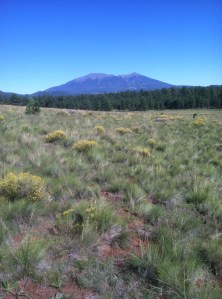
Mount Humphries as seen from Antelope Hill

After some campfire skits by the scouts we hit the hay, listening to bugling elk and howling coyotes during the night.  The cattle were even louder, but the noises didn’t interfere with sleep.  Some of us were caught off guard by the low temp during the night.

After breaking camp the next morning, we drove the 1.5 miles to Lava River Cave and dove right in, so to speak.  Round-trip mileage for the cave is 1.5-2 miles.  I and many of the others in our group had never seen anything like it.

It was an enjoyable trip and I can see why troop 131 makes it every two or three years.

Steve Parker, M.D.

Notes

Other adults in attendance were Scott H, Ryan W, Mark Z, Kathy S, Paul G, and Jeff L.  The scouts were Paul P, Matthew Z, JD H, Nathan H, Cole W, Christian R, Trevor L, Jacob F, and Riley G.  Let me know if I left anyone out.

Salt Restriction May Do More Harm Than Good

Unfairly demonized?

I’ve been a salt-restriction skeptic for a couple decades.  The American Council on  Science and Health has a brief review of the latest research on salt restriction, and it’s not supportive of population-wide sodium restriction.

Remember, table salt molecules contain one sodium atom and one chloride atom.  Salt-restricted and low-sodium diets are usually designated by the amount of sodium, not salt.

That being said, I do believe some individuals have elevated blood pressure related to relatively high sodium intake.  This may apply to one of every five adults with high blood pressure.  To find out if you’re one of the five, you could go on a low-sodium diet—1.5 to 3 grams a day—for one or two months and see what it does to your blood pressure.  Get your personal physician’s blessing first.

Steve Parker, M.D.

Huge U.S. Study Confirms Health and Longevity Benefits of the Mediterranean Diet

This is a reprint of the very first blog post I ever did, from December 24, 2007, at my old Advanced Mediterranean Diet Blog.  

We now have results of the first U.S. study on mortality and the Mediterranean dietary pattern.  380,000 people, aged 50-71, were surveyed on their dietary habits and scored on their conformity to the Mediterranean diet.  They were visited again 10 years later.  As you would expect, some of them died.  12,105 to be exact: 5985 from cancer, 3451 from cardiovascular disease, 2669 from other causes.  However, the people with the highest adherence to the Mediterranean diet had better survival overall, and specifically better odds of avoiding death from cardiovascular disease and cancer.  Compared to the people with low conformity to the Mediterranean diet, the high conformers were 15-20% less likely to die over the 10 years of the study.  The study authors, funded by the National Institutes of Health, noted eight similar studies in Europe and one in Australia with similar results.

Nothing to do with this post…I just like this picture

Once again, my promotion of the Mediterranean diet is vindicated by the scientific literature.  I’m not aware of any other diet that can prove anywhere near this degree of health benefit.  If you are, please share

Steve Parker, M.D.

Reference: Mitrou, Panagiota N., et al.  Mediterranean Dietary Pattern and Prediction of All-Cause Mortality in a US Population,  Archives of Internal Medicine, 167 (2007): 2461-2468.


14 Indispensable Weight-Loss Tips

“Look…the soda’s not for me, OK?”


These have worked for lots of my patients.  Take what works for you and discard the rest.

  1. Plan on grocery shopping, meal preparation, and taking meals to your workplace.
  2. Keeping a record of your food consumption is often the key to success.
  3. Accountability is another key.  Do you have a friend or spouse who wants to lose weight?  Start the same program at the same time and support each other.  That’s one of many ways to have accountability.
  4. If you tend to over-eat or snack too much, floss and brush your teeth after you’re full.  You’ll be less likely to go back for more anytime soon.
  5. Eat at least two or three meals daily.  Eat breakfast every day.  Ignore the diet gurus who say you must eat every two or three hours.
  6. Eat slowly and allow yourself time to enjoy the delicious recipes in this book; you’ll also be a better judge of when your’re full.
  7. Don’t eat while watching TV.
  8. Give yourself a specific reward for every 10 pounds (4.5 kg) of weight lost.  Consider a weekend get-way, jewelry, new clothes, an evening at the theater, a professional massage, etc.  Choose the reward in advance, to give you something to work toward.
  9. Don’t start a diet during a time of stress.
  10. Maintain a consistent eating pattern throughout the week and year.
  11. If you know you’ve eating enough at a meal to satisfy your nutritional requirements yet you still feel hungry, drink a large glass of water and wait a while.  Or try a sugar-free psyllium fiber supplement: three grams of fiber in 8 oz (240 ml) of water.
  12. Weigh yourself frequently: daily during your active weight-loss phase and during the first two months of your maintenance-of-weight-loss phase.  Weekly thereafter.
  13. Be aware that you’ll probably regain five or 10 pounds (2.3 or 4.5 kg) of fat now and then.  That’s normal.  Just get back on your original weight-loss plan for a month or two.
  14. Tell your housemates you’re on a diet and ask for their support.  You may also need to tell your co-workers and others with whom you spend significant time.  If they care about you, they’ll be careful not to tempt you off the diet.

Indispensable?  OK, maybe that’s a little over the top.  But each of these tips has  proven indispensable to at least one of my patients.

Steve Parker, M.D.